
What is clinoptilolite zeolite?
A portrait of the special zeolite used in medicine and naturopathy
Reading time approx. 7 minutes
Zeolite in the form of clinoptilolite zeolite: its properties and health benefits
What is clinoptilolite zeolite? The best-known form of zeolite is clinoptilolite zeolite, which, due to its special physical properties, is a unique and important mineral within the zeolite group. Due to its special structure and effect, it plays an outstanding role and is the only zeolite used to promote and support health in humans and animals.
What does the term clinoptilolite zeolite mean?
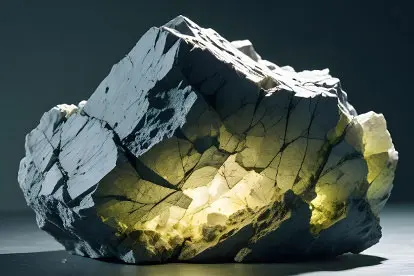 The name ”clinoptilolite” may seem complicated at first glance, but its meaning is deeply rooted in the Greek language and explains some fascinating background information. The word “clinoptilolite” is composed of the Greek terms “klino,” “ptilos,” and “lithos”: “Klino” means ‘slanted’ or “inclined,” which refers to the slanted crystal faces of this mineral. This special structure gives clinoptilolite its unique physical properties. “Ptilos” means ‘feather’ or “feathered.” This description fits perfectly with the fine, fibrous structure that this mineral often takes on, reminiscent of delicate, feather-like formations. Finally, “lithos” means “stone,” a universal term for minerals and rocks. Together, the name ‘clinoptilolite’ means “sloping feather stone,” which aptly describes both the appearance and crystalline structure of this fascinating mineral.
Clinoptilolite zeolite: The superstar among minerals for health
Clinoptilolite zeolite is not just any mineral – it is, to put it bluntly, the superstar among natural zeolites! What makes it so special, why is it so successful in medicine, and why is its use becoming increasingly important today? The network structure of its silicon and aluminum tetrahedra, which are connected by oxygen atoms, gives clinoptilolite zeolite incredible stability and the ability to exchange ions—you can think of it as an extremely fine-meshed sieve that captures and retains pollutants. In addition, this form of zeolite is robust enough to withstand heavy mechanical stress and has a huge surface area that enables it to adsorb very large quantities of pollutants.
Clinoptilolite zeolite: its impressive surface area is the secret to its effectiveness
This surface area is typically between 30 and 50 square meters per gram (m²/g) of clinoptilolite zeolite in its natural state and can even be increased to up to 75 m²/g through certain treatment and refinement processes, which transform the clinoptilolite zeolite into the well-known PMA zeolite.
How can I imagine this surface?
Imagine you have one gram of clinoptilolite zeolite in your hand. That’s about as much as a small pinch of salt. But this tiny amount has an impressive active surface area that can be up to 4,000 square meters per gram That’s hard to imagine, so let’s think about it again: Take a small sponge that fits in the palm of your hand. As we know, a sponge has many tiny pores and cavities that can absorb water. If this sponge had the capacity and number of cavities of a zeolite, it could actually absorb a thousand times its own weight in water! This huge surface area is the key to the impressive adsorption and ion exchange capabilities of clinoptilolite zeolite. This volcanic rock is like a giant invisible sponge that can absorb enormous amounts of pollutants and toxins despite being so tiny itself.

Why is the large surface area of clinoptilolite zeolite so important?
Thanks to this large surface area, clinoptilolite zeolite can most effectively bind pollutants and heavy metals such as lead, cadmium, mercury, or arsenic from the environment or ammonium (ammonium is a form of ammonia that is produced in the human body and is mainly converted into urea in the liver) from the human body. This property makes it an indispensable aid in water treatment and environmental technology, but above all in medicine and health applications.
Stability in acidic environments: an important unique feature of clinoptilolite zeolite
Another unique feature is its stability in acidic environments. While other zeolites can lose their shape in acidic conditions, clinoptilolite remains stable. This is particularly important for its work in the gastrointestinal tract, where it can safely bind harmful substances without losing its effectiveness and without producing any relevant side effects.
Clinoptilolite zeolite: Medical applications and scientific evidence
The central effect of clinoptilolite zeolite is the detoxification and elimination of heavy metals from the human and, of course, animal body. This is because clinoptilolite zeolite is a proven remedy when it comes to removing harmful heavy metals from the body. Thanks to its unique porous structure, clinoptilolite can bind heavy metals such as lead, mercury, cadmium, and aluminum and safely excrete them through the stool. This ability has long been confirmed in numerous studies (most of which apply to the special PMA zeolite researched and produced by the research and development company PANACEO), which showed that clinoptilolite can significantly reduce the concentration of these toxins in the body without affecting important electrolytes such as calcium and magnesium or removing other substances such as vitamins or micronutrients from the body.
Our immune system: The center of our health has a powerful supporter in clinoptilolite zeolite
 In addition to its detoxifying effect, clinoptilolite zeolite also has positive effects on the immune system. It has an antioxidant effect by neutralizing free radicals, thereby helping to reduce oxidative damage in the body. In addition, it promotes the health of the gut microbiome, which plays a central role in a strong immune system. Clinoptilolite zeolite can strengthen the barrier function of the intestine, reduce inflammation—including so-called “silent inflammation”—and thus improve overall immune function. Numerous studies have investigated the efficacy and, above all, the safety of clinoptilolite zeolite in medical applications. One remarkable study showed that participants who took a suspension of activated clinoptilolite daily had increased excretion of heavy metals in their stools without any clinically significant changes in electrolyte levels. This confirms the safe use and effective detoxification effect of clinoptilolite zeolite (see: “Zeolite – Scientific Studies”).
Clinoptilolite zeolite: Safety aspects and possible side effects
Clinoptilolite zeolite is considered safe when used as an approved medical product and in the recommended dosages. Its structure makes it inert, which means that it is not metabolized in the body and does not release any toxic by-products. This has been confirmed in numerous clinical studies in which no significant side effects were observed. Although clinoptilolite zeolite is generally well tolerated, some individuals may experience mild side effects such as stomach discomfort or constipation, especially when taken in high doses and when not drinking enough fluids. In this case, it is recommended to start slowly and increase the dosage gradually to allow the body to adjust. Pregnant and breastfeeding women and people with serious health problems should consult their doctor or other health professionals before using clinoptilolite zeolite.
A look to the future: clinoptilolite zeolite in modern medicine
Clinoptilolite zeolite has already established itself as a valuable remedy in medicine, but the future promises even more. At a time when environmental pollution and toxic exposure are on the rise, clinoptilolite zeolite could play a key role in combating many health challenges. Research is increasingly showing that clinoptilolite zeolite can do much more than just bind and eliminate heavy metals. Current studies are investigating its antioxidant and anti-inflammatory properties, which could be particularly important in the treatment of neurodegenerative diseases such as Alzheimer’s and Parkinson’s. Alzheimer’s, other forms of dementia, Parkinson’s, but also neurophysiological disorders such as autism, ADHD, and depression have long since become global pandemics, meaning that prevention is also playing an increasingly important role.
Clinoptilolite zeolite: Great potential in additive cancer treatment
 An important area of research is the use of clinoptilolite zeolite in oncology. Although cancer research has made important advances in recent years, the number of cancer cases continues to rise sharply, partly due to increasing environmental pollution and the high stress levels of modern life, especially among younger people. Initial studies have already shown that clinoptilolite zeolite can be used as an additive, i.e., supportive therapy for cancer. Its ability to bind toxins and strengthen the immune system supports the effectiveness of conventional cancer treatments and significantly reduces the side effects of the cytostatic drugs used, enabling patients to tolerate chemotherapy much better. Continuous research and positive results from clinical studies suggest that clinoptilolite zeolite could become an integral part of modern medicine in the future. Its versatile properties and ability to address a wide range of health issues make it an indispensable tool for doctors and scientists worldwide. In a world increasingly burdened by environmental toxins, clinoptilolite zeolite offers a promising and natural solution for promoting health and fighting disease. The future of medical applications for the amazing mineral clinoptilolite zeolite looks very promising, and we can look forward to new discoveries and applications in the years to come.


