
What is zeolite?
Zeolite: a group of minerals that are indispensable today
Reading time approx. 6 minutes
The volcanic rock zeolite has unique properties
and a wide range of applications
Millions of years ago, nature formed a special group of minerals that play an important role in our lives today. When liquid lava flowed into the early oceans of our planet in ancient times, the boiling water caused a variety of chemical reactions.
After the ash and lava cooled and the primeval seas receded, a unique rock was left behind on land for the first time: zeolite. Throughout the history of our planet, chemical and physical interactions between volcanic ash layers and alkaline groundwater have repeatedly formed different types of zeolite rocks. It is therefore necessary to refer to a whole ‘group of zeolites’, as there is an impressive variety of zeolites found in nature.
A total of around 40 natural zeolite species have been identified, including well-known types such as analcime, chabazite, erionite, ferrierite, heulandite, laumontite, mordenite, phillipsite and, of course, clinoptilolite, which is the only member of the zeolite group used in medicine.
Zeolites are primarily silicate minerals that occur today in various volcanic regions in Europe, Asia, the USA, Australia and New Zealand. Natural zeolites form crystalline structures that are usually pale in colour and have well-formed crystals. They are relatively soft, with a Mohs hardness of 4 to 5 (a scale for determining the scratch resistance of minerals), and can therefore be easily ground into powder.
Silicon: Main component of zeolite and essential for health
Silicon is the second most abundant element on our planet after oxygen. However, unlike oxygen, it is not available to us in its elemental form, but in the form of various silicates. These play a central role in the composition of many minerals, including zeolites. Pure silicon has a diamond-like crystal structure in which each silicon atom is covalently bonded to four other silicon atoms. This tetrahedral arrangement gives silicon its hardness and unique electrical properties. In nature, silicon is mostly found in the form of silicon dioxide (SiO2), which is contained in sand and quartz, for example.
Silicon: The secret behind strong bones and radiant skin
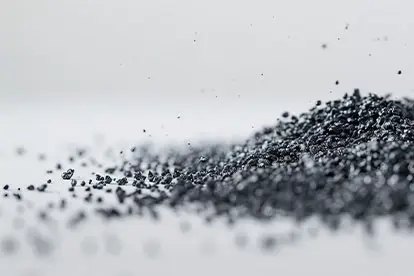 Silicon may not be as well known as calcium or iron, but it plays a crucial role in our health. Silicon could also be described as the hidden gem among minerals – it is all around us, yet very few people are aware of its importance. When you walk along a beach, for example, you are actually stepping on millions of tiny silicon dioxide crystals! Silicon is a real all-rounder when it comes to our bodies. It helps keep our bones strong and healthy by supporting collagen production. Collagen is like the scaffolding that holds our bones together and gives them strength. Without enough silicon, this scaffolding could weaken, making our bones more prone to fractures and osteoporosis. But silicon can do even more: it is also an important component of our connective tissue, which keeps our skin, hair and nails strong and elastic. Have you ever noticed how some people retain radiant skin and full hair as they age? Part of the secret could be sufficient silicon. As a chemical element, silicon is symbolised by Si and has the atomic number 14. It makes up around 27.7 per cent of the Earth’s crust. A total of around 800 different silicon compounds are known today, most of which are silicic acid compounds. They play an important role in nature and in the human and animal body.
What makes silicon special: it is an invisible protector for our organism
Silicon compounds act as invisible protectors in our body. Not only do they help keep our bones and connective tissue strong, they also play a role in detoxification. Silicon silicates help remove harmful heavy metals such as lead, arsenic and cadmium, as well as the light metal aluminium, from our bodies, which is particularly important for our brain and our general health.
Aluminium in zeolite: How can an aluminium carrier bind and remove aluminium itself?
Many people are surprised and put off by the fact that zeolite, including the medically used variant clinoptilolite, contains aluminium itself. But how can a mineral that contains aluminium also help to remove aluminium from the body? This sounds contradictory at first, but there is a fascinating physical-chemical phenomenon behind it: zeolite is an aluminosilicate mineral, which means it consists of a network of silicon and aluminium atoms connected by oxygen atoms. This structure forms tiny hollow cages and channels that are the hallmark of zeolites. However, the aluminium in zeolite is – and this is the key point – firmly bound into this crystalline lattice and cannot move freely or dissolve.
How does zeolite bind free aluminium in the body?
When we ingest zeolite, it acts like a sponge, absorbing harmful substances into its many tiny pores. Although zeolite contains aluminium in its structure, it has a strong negative charge that enables it to attract and bind positively charged ions (cations) such as heavy metals and toxins. This property is known as ion exchange capacity. The aluminium in zeolite is bound into the lattice and is not mobile, which means that it is not released into the body. Instead, zeolite captures free aluminium ions and other harmful substances from outside, in the case of the human organism from the digestive tract, and thus prevents them from being absorbed into the body. These bound toxins are then safely excreted in the stool.
Other important components of zeolites: elements of organic life
In addition to silicon or silicon compounds and the firmly anchored aluminium, zeolites consist of a variety of other elements. The most important of these are: Oxygen (O): Oxygen is the connecting element that holds the silicon and aluminium atoms together. Each oxygen atom is like a small bridge connecting two tetrahedrons, creating a strong, three-dimensional network. This network forms the pore structure that makes zeolites so special. Metal cations (M⁺): Metal cations such as sodium (Na⁺), potassium (K⁺), calcium (Ca²⁺) or magnesium (Mg²⁺) are found within this pore structure. These cations are exchangeable, which means that they can be easily exchanged for other ions. This ability makes zeolites excellent ion exchangers, which are used, for example, in water treatment and industrial catalysis. Water (H₂O): Water plays a crucial role in the cavities and channels of the zeolite lattice. It enables zeolites to adsorb and exchange molecules, similar to a sponge that absorbs and releases water. This property makes zeolites effective adsorbents that are used in many applications, from purification to environmental technology.
Zeolites are not only used in medicine: protection against radiation in Chernobyl and Fukushima
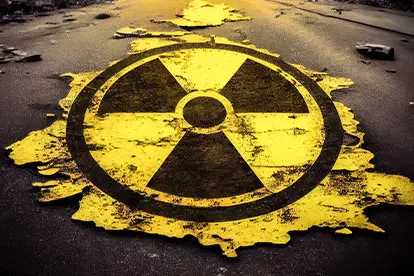 Due to their aforementioned properties, zeolites are known to be important aids not only in medicine and empirical medicine. Their extensive benefits for humans, animals and the environment are exemplified by their use in Chernobyl and Fukushima, where two of the worst nuclear accidents in history took place. In both cases, zeolite played (and continues to play) a crucial role in containing radioactive contamination and protecting the population: After the reactor accident in Chernobyl in 1986, zeolite, especially clinoptilolite, was used on a large scale to control the spread of radioactive caesium and strontium. Over 500,000 tonnes of clinoptilolite zeolite were used to treat contaminated water and prevent radionuclides from entering the food chain. Zeolite acts like a sponge, absorbing the radioactive particles and thus significantly reducing radiation exposure. These measures helped to reduce radiation in the environment and drinking water to safer levels. Zeolite was also used in the 2011 Fukushima disaster to mitigate the effects of radioactive releases. Zeolites were added to seawater to bind radioactive caesium and strontium and thus reduce contamination of the ocean. Zeolites were also used to filter and treat contaminated water, further limiting the spread of radioactive substances. These measures helped to minimise radiation exposure to the population and protect the environment in the long term.
Clinoptilolite zeolite: The only zeolite used in medicine
While zeolites are useful in many areas, clinoptilolite zeolite is the only form of zeolite used for medical applications. This special zeolite is used for detoxification and health promotion due to its excellent properties. We explain what makes clinoptilolite zeolite so special here: ‘What is clinoptilolite zeolite’


