
Zeolite for osteoporosis
Natural support for strong bones
Reading time approx. 6 minutes
Studies with a special zeolite show significant results in bone loss
Osteoporosis, also known as bone loss, is a widespread disease that mainly affects older people, particularly women after the menopause. It leads to reduced bone density and increases the risk of bone fractures. Today, millions of people are affected by osteoporosis. But how exactly does osteoporosis develop, who is particularly at risk and how can zeolite help as a natural, complementary measure?
What is osteoporosis and who is particularly at risk of developing bone loss?
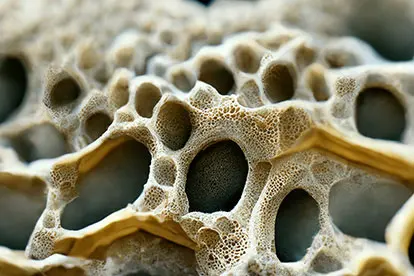 Osteoporosis is a chronic bone disease in which bone mass and density decrease, making the bones weaker and more porous. This increased fragility means that the bones can break even with minor stresses or falls. The spine, hips and wrists are particularly frequently affected. The process of bone formation and bone resorption is normally well balanced, but with increasing age, the formation of new bone slows down while resorption continues. This eventually leads to a decrease in bone density, resulting in osteoporosis. In principle, osteoporosis can affect anyone, but there are certain groups that are at particularly high risk of suffering from this disease. Bone density naturally decreases with age, which increases the risk of osteoporosis. Women are particularly at risk due to hormonal changes, especially after the menopause. In addition, an insufficient supply of calcium and vitamin D can impair bone strength and thus further increase the risk. Lifestyle also plays an important role: smoking, excessive alcohol consumption and lack of exercise contribute significantly to the development of osteoporosis. Finally, a genetic predisposition can also play a significant role, as a family history also increases the risk of developing osteoporosis.
Traditional treatment of osteoporosis – medication and lifestyle changes
The classic treatment of osteoporosis is based on two main pillars: drug therapy and lifestyle changes. The aim is to slow down the progressive loss of bone density and reduce the risk of fractures, the most common and dangerous complication of osteoporosis.
Drug therapy: maintaining and improving bone density
 Drug treatment for osteoporosis focuses on maintaining and improving bone density. Bisphosphonates are the most commonly prescribed drugs. They work by inhibiting the activity of osteoclasts – cells responsible for bone resorption. This slows down bone resorption and bone strength can stabilize or even improve. However, despite their effectiveness, bisphosphonates have potential side effects such as gastrointestinal discomfort, inflammation of the esophagus and, in rare cases, jaw necrosis, which makes their use problematic for some patients. Calcium and vitamin D supplements are also a key part of the treatment. Calcium is an essential building block of bones, and vitamin D is necessary for the body to absorb calcium from food. A deficiency of these nutrients can significantly affect bone strength, so adequate intake is crucial. These supplements help to support bone metabolism and reduce the risk of fractures. However, high doses of calcium can lead to kidney stones and other complications, so the dosage must be carefully monitored. Hormone replacement therapy (HRT) is also often considered for women after the menopause. This therapy replaces oestrogen, the production of which declines sharply after the menopause and which plays a key role in maintaining bone density. HRT can significantly reduce the risk of bone fractures, but also carries risks, including an increased risk of breast cancer, cardiovascular disease and thrombosis. The decision to use hormone replacement therapy must therefore be made on an individual basis and should be carefully considered.
Prevention and lifestyle changes – living with osteoporosis
 In addition to drug therapy, lifestyle changes play a crucial role in the prevention and treatment of osteoporosis. A balanced diet rich in calcium and vitamin D forms the basis for healthy bones. Dairy products, green leafy vegetables, nuts and fish are excellent sources of calcium, while oily fish, egg yolks and fortified foods are good sources of vitamin D. Sunlight is also an important source of vitamin D, which is why regular time spent outdoors is recommended. Regular physical activity, especially weight training and exercises to promote balance and coordination, is essential to maintain bone strength. Strength training promotes the development of muscle mass, which protects and stabilizes bones. Studies have shown that even moderate physical activity can help slow bone loss and reduce the risk of falls – and therefore fractures. Exercises such as yoga and tai chi can also be helpful in improving balance and flexibility, which further reduces the risk of falls. In addition, the lifestyle should be as smoke-free as possible, as smoking has a negative impact on bone metabolism and accelerates the loss of bone density. Excessive alcohol consumption should also be avoided, as alcohol can impair the absorption of calcium and weaken bones.
Zeolite can contribute to a significant improvement in bone density in osteoporosis
In addition to traditional treatment methods, zeolite is increasingly becoming the focus of causal osteoporosis treatment as a natural supplement. But how can zeolite also help with osteoporosis? PANACEO, the leading company in zeolite research, has made an important contribution to the holistic treatment of osteoporosis with its special PMA zeolite (Panaceo Micro-Activated Zeolite). A clinical study published in Frontiers in Medicine has shown that taking PMA zeolite led to a significant improvement in bone density. The study investigated the effect of PMA zeolite on bone health and found that this particular zeolite preparation positively influences calcium metabolism and increases bone strength (Terrain Health).
The role of PMA zeolite in bone health
 The PMA zeolite developed by PANACEO is characterized by its particularly fine structure, which is achieved through a special activation process. This micro-activation enhances the natural properties of zeolite, resulting in greater effectiveness. The study results for PMA zeolite can therefore not be transferred to other zeolites. The study mentioned above showed over a period of five years that PMA zeolite not only contributes to detoxification , but also directly supports bone healthby regulating the calcium balance in the body. This is particularly important as a balanced calcium level is crucial for bone density and strength. There was also a significant reduction in the number of fractures and falls in the patients, who also suffered less pain.
Zeolite: A natural protective shield for the bones
In addition to improving bone density, zeolite naturally also offers protection against oxidative stress, which plays a role in the development of osteoporosis. Thanks to its antioxidant properties, zeolite can neutralize free radicals that could otherwise damage the bone structure. This means that zeolite can not only have a preventative effect, but also slow down the progression of osteoporosis. Zeolite, especially the specially activated PMA zeolite from PANACEO, is therefore a promising addition to traditional osteoporosis treatment. Through its ability to support calcium metabolism and reduce oxidative stress, zeolite can help maintain bone density and reduce the risk of fractures. For people looking for natural ways to protect and strengthen their bones, zeolite offers an effective and science-based option.


