First, Relieve the Gut; then, Rebuild the Gut Flora: Expert Henning Sartor on his 21-day program based on F.-X. Mayr for use at home and the role of the active ingredient PMA zeolite
Why not only environmental Toxins but also the Metabolic byproducts of our Gut bacteria can affect our Health – Gut Expert Dr. Henning Sartor on Acid-base Balance, the Gut Barrier, Fasting, and the 21-day Program for home use.
What do our gut bacteria have to do with chronic inflammation, environmental stressors, and the development of diseases? Much more than most of us have realized so far. The renowned physician and well-known gut expert Dr. Henning Sartor (author of the book “The Toxin Factor” and co-author of the current SPIEGEL bestseller “The Gut of the 100-Year-Olds”) – has been studying gut health for decades, focusing on the conditions under which it remains healthy – or, conversely, becomes unbalanced. In general, the conclusion of his decades of medical practice:
Caring for the gut is the foremost civic duty for health – the conditio sine qua non (indispensable prerequisite).
PD Dr. Henning Sartor
In an interview with ZEOLITH WISSEN, he explains why it is not only the composition of our gut flora that is decisive, but also what the microorganisms themselves produce in our gut and what a crucial role the gut barrier plays in this process.
External environmental toxins, internal toxin production: The underestimated toxin factor in our own gut
Pesticides, heavy metals, microplastics, or other environmental pollutants: Medical research is increasingly focusing on the long-term effects of such substances on our health and the development of nearly all diseases. They enter our bodies from the outside and are therefore referred to as exogenous pollutants.
But there is a second category that still receives too little attention: substances produced within the body itself, including potentially harmful metabolic byproducts of certain gut bacteria. Dr. Henning Sartor is an expert in this field.
ZEOLITH WISSEN (ZW): “Dr. Sartor, when we talk about problematic gut bacteria, most people think of pathogens in the microbiome. However, you say we should pay much closer attention to their own metabolic byproducts. Why?”
Dr. Henning Sartor (HS): “Until now, scientific research has primarily focused on identifying which bacteria are actually present in the gut, and we are still far from finished with that. But it is also highly relevant to know which substances these bacteria produce. We’re talking here about metabolites – that is, metabolic byproducts. Some of them are beneficial, others harmful. I like to use an analogy: Imagine a shooter with a rifle. It doesn’t really matter who this shooter is or what kind of weapon he’s carrying. What matters is the projectile that comes out of the weapon and causes damage. Applied to the gut, this means: We must focus not only on the bacteria themselves, but also on the substances they release.”
The metabolites produced by these bacteria – those are the bullets fired from the bacteria’s guns.
PD Dr. Henning Sartor
ZW: “In this context, you already used a wonderful expression during our preliminary discussion: the ‘criminal faction.’ What’s that all about?”
HS: “This term was coined by my longtime friend and colleague, the clinical pathologist and microbiologist Prof. Burkhard Schütz, to describe certain groups of bacteria that can produce highly problematic metabolic byproducts under unfavorable conditions. It’s important to note that the behavior of our bacteria depends primarily on the environment in which they live and the nutrients we provide them.
You can compare this to a soldier. On the front lines, he has to fight against other people. But when he comes home, that same person is a loving father and husband. So it all depends on the conditions he finds himself in. The situation is similar with certain gut bacteria. Depending on which nutrients we provide them and what conditions prevail in the gut, they can produce very different metabolic byproducts—meaning they can be either protective police officers or criminals.”
The Acidifying Flora: Why the Gut Environment Is So Fundamentally Important
ZW: “If the gut environment itself is so crucial, what happens when the ‘criminal faction’ gets out of hand?”
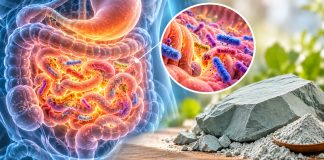
HS: “First, we need to distinguish between two levels here. The first concerns the interior of the gut – that is, the area where our gut bacteria live. Various groups of bacteria compete there. Some produce substances that allow them to displace other microorganisms. That’s why the so-called acidifying flora is fundamental. By this I mean those bacteria that produce organic acids and thus contribute to a favorable gut environment. We can very easily compare these bacteria to a delicate flower. If it finds the right conditions, it thrives wonderfully. But if harmful substances enter its habitat, it can become weakened and quickly wither away. This is exactly what can happen in the gut: When the activity of the acidifying flora decreases, the conditions change. A relevant example is toxic ammonia, which is produced in the gut in dissolved form as ammonium during certain bacterial metabolic processes and can affect the pH level. This can then lead to a rather unfavorable cycle.”
ZW: “So you’re not just talking about individual good and bad bacterial strains, but about the entire ecosystem as such, which influences one another?”
HS: “Exactly. You always have to look at the entire environment: Which bacteria are present? What nutrients do they receive? What metabolic byproducts result from this? In my view, these are the most important questions if we want to maintain or restore a healthy gut flora. Because simply taking probiotics blindly isn’t enough here.”
The Gut Barrier: When the Balance Is Disrupted
ZW: “Well, the bacteria don’t live in isolation in our gut. Surrounding them is the multilayered intestinal wall with its important barrier function. What happens there when toxic metabolic byproducts act on the intestinal barrier over an extended period of time?”
HS: “That’s the second level. The intestinal barrier isn’t just made up of the intestinal wall; it also houses our immune system, more specifically in the intestinal mucosa, which in turn is part of the intestinal barrier. Here, certain bacterial metabolic byproducts can impair important structures.
We know the consequences as ‘leaky gut’ syndrome, because toxins and harmful substances enter the entire body through the leaky gut. Added to this are inflammatory processes in the gut and changes in intestinal motility. All of these processes can then reinforce one another and, unfortunately, create a predisposition for a number of diseases.”
ZW: “In plain language, does that mean we should pay attention not only to the composition of the microbiome when it comes to our gut health, but also to the condition of our intestinal barrier?”
HS: “Exactly. The two are inextricably linked. In my decades of medical practice, I have repeatedly observed how patients’ symptoms and overall health improved when we were able to create favorable conditions for both the microbiome and the intestinal barrier. I therefore see a very close connection between healthy acid-producing flora, the intestinal environment, and the function of the intestinal barrier.”
The acid-base balance: We have not one, but two of them in our bodies
ZW: “This brings us to a point that’s often generalized a bit too much: We constantly hear about the acid-base balance. But you say that we actually have two very different balances here. What do you mean by that?”
HS: “We must distinguish between the contents of the gut and the tissues of our body. The intestinal lumen has its own chemical conditions. That’s where the bacteria live, and that’s where their metabolic byproducts influence the local acid-base balance.
On the other hand, we have our body’s cells, blood, and tissues. Here, entirely different physiological conditions apply. The pH of the blood, for example, is approximately 7.4 and is very strictly regulated by the body. In the gut, however, pH levels can and should vary significantly depending on the section – for example, around 4.5–5.5 in the small intestine or 6.0 in the large intestine. A sufficiently acidic environment is particularly important in connection with the acid-producing flora. Therefore, we cannot simply say that acidity is fundamentally bad and alkalinity is fundamentally good. It therefore always depends on which part of the body we’re considering.”
A balanced acid-base equilibrium—which varies greatly across different parts of the body – is fundamental to the body’s ability to regulate itself.
PD Dr. Henning Sartor
ZW: “Good to know. After all, the idea that the entire body must be as alkaline as possible is quite widespread.”
HS: “Exactly, that’s not true. What is physiologically necessary in the blood and tissues cannot simply be applied to the environment in the intestinal contents. And acid production by certain gut bacteria is an essential characteristic of a functioning microbial ecosystem.”
ZW: “The crucial question in an era of massive environmental stress, the aforementioned endogenous toxins, a compromised intestinal barrier, and an unbalanced microbiome is, of course: How can a disrupted intestinal environment be restored to health?”
HS: “For me, an F.X. Mayr regimen is the best approach to relieve the digestive system and sustainably improve conditions in the gut. I’ve been studying this for decades and have guided many patients along this path. The key here is that we comprehensively and fundamentally relieve the digestive tract and then, through an appropriate diet, reestablish favorable conditions for our gut flora. I consider the interplay of fasting, digestive function, and subsequent targeted nutrition to be particularly effective.”
A Friend with Crohn’s Disease and an F.X. Mayr regimen: How Dr. Sartor Himself Came to Intestinal Medicine
ZW: “You’ve made F.X. Mayr medicine an essential part of your medical practice. Yet you originally practiced conventional medicine. How did this change of direction come about?”
HS: “I initially worked as a young family physician in Neunkirchen in the Siegerland region. One day, a schoolmate of mine who suffered from Crohn’s disease came into my office. I hadn’t seen him in a long time and was surprised when he told me that he was now doing exceptionally well. He reported that his diarrhea and abdominal discomfort had disappeared, that he felt energetic again, and that he was no longer taking any medication.
I asked him what he had done. His answer was: a F. X. Mayr regimen. I had never heard of it and was understandably skeptical: fasting, chewing stale rolls, and liver wraps – were these really supposed to help with such a serious illness? So I wanted to understand what was behind it.”
ZW: “And then you decided to try this method yourself, since you weren’t in the best of health either?”
HS: “Yes, I myself suffered from atopic dermatitis and asthma. So I looked into the principles of this fasting method – which the Austrian physician Dr. Franz Xaver Mayr had developed back in the last century – and tried it out on myself while training to become an F. X. Mayr physician.
And lo and behold: During my first Mayr treatment, my symptoms improved quite significantly. After the second treatment, I practically no longer needed any medication for those conditions, and after the third, my condition was, as far as I could tell, permanently stable. That naturally impressed me greatly. It was one of the reasons why I subsequently devoted myself intensively to intestinal medicine for many years—and continue to do so today.”
Author’s note: Dr. Henning Sartor has not only been involved in F. X. Mayr medicine for decades, but has also played a key role in the training of numerous Mayr physicians. From 2007 to 2022, he served on the board of the international professional association and held the positions of scientific director and vice president.
The Benefits of Fasting, Autophagy, and the Microbiome
ZW: “What happens during such a treatment? What changes in our bodies when we fast?”
HS: “First of all, fasting promotes autophagy. This is a natural mechanism by which cells can break down and recycle damaged or no longer needed components. In simple terms, you could call it a cellular recycling program. Incidentally, research into these mechanisms was honored with the 2016 Nobel Prize in Medicine. Autophagy is now a very important therapeutic approach, especially in connection with aging and neurodegenerative diseases.
The second process that occurs during fasting involves our gut bacteria. When we fast, we don’t just alter the metabolism of our body’s cells; we also change the food supply available to the microorganisms in the gut. By starving our bacteria as well, they fast along with us – with numerous positive effects on our gut health. This is because the body’s own toxin production is reduced, and the balance of power among the bacterial populations is restored.”
We don’t just fast for our cells; we also let the guests in our hotel—the gut—namely the bacteria, fast as well.
PD Dr. Henning Sartor
ZW: “And after such a regimen, can you then focus on the right diet? Is that mainly dietary fiber?”
HS: “Yes, after that, dietary fiber and fermented foods are particularly important. Dietary fiber serves as food for numerous beneficial gut bacteria. This process produces, among other things, short-chain fatty acids, which play an important role in gut health. I recommend, for example, rolled oats, oat bran, and fiber-rich vegetables. In addition, there are fermented foods such as yogurt, kefir, sauerkraut, or kimchi.
Resistant starch is also important. It forms when we cool starchy foods – such as potatoes – after heating them and then eat them. The key is that, after a period of gut rest, we create conditions in which the protective microorganisms can thrive again.”
Additional support for the gut: Gut rest with PMA zeolite
ZW: “You’re also a big fan of PANACEO’s PMA zeolite. What do you think of this specific zeolite in the context of gut detoxification?”
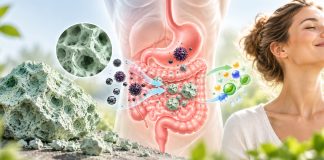
HS: “I’ve known the people at PANACEO for a long time and have exchanged ideas with them on several occasions. I’m very positive about the use of PMA zeolite, especially since, thanks to PANACEO, there’s a solid body of research supporting it. We also use it in our therapeutic practice. That’s because it has the ability to bind certain undesirable substances – such as heavy metals or the aforementioned ammonium – right in the intestinal lumen before these toxins can have adverse effects on the body. This makes it a veritable guardian angel for our bodies. What’s more, PMA zeolite is easy to incorporate into everyday life. After all, many people can’t just start an F.X. Mayr regimen right away when they have intestinal problems.”
ZW: “That’s why you developed your 21-day program together with Prof. Burkhard Schütz – a program that anyone can follow?”
HS: “That was exactly our idea. We simplified the core principles of Mayr medicine so that they can be integrated into everyday life without the need for a time-consuming spa stay. The program offers fundamental support for gut health.”
A Healthier Gut in 21 Days—The Path to Cell Regeneration, Gut Health, and Longevity
ZW: “Where can I find the 21-day program?”
HS: “It’s in our book *The Gut of the 100-Year-Olds* by Burkhard Schütz, Katharina Zeiss, and me. Together with Helen Loorents, I developed the 21-day ‘UPGRADERS’ program and wrote detailed guides with checklists and background explanations: What should I do in the morning, at noon, and in the evening? What should I eat? How do I plan my meals? Which foods are beneficial for detoxing, and which ones should I avoid? Among other things, we incorporate mindful eating breaks, use magnesium citrate powder and alkalizing powders, and help our readers sleep more soundly. The complete concept can also be found at
https://www.upgraders.com.”
It’s not enough to simply take probiotics. The key is to first improve the conditions in the gut.
PD Dr. Henning Sartor
ZW: “You also mention something very important that I’ve reported on several times: You should first relieve the gut and then rebuild the gut flora with probiotics. Why is this order so important to you?”
HS: “Because we first need to improve the conditions in the gut. It’s usually not enough to simply take probiotics if the gut environment remains unfavorable – these new bacterial strains cannot colonize under such conditions. That’s why we start by relieving the gut and then specifically support the gut flora.”
ZW: “To wrap up: Let’s say we meet again in 20 years. What changes would you like to see in medicine – and especially in prevention – by then?”
HS: “I hope that people will have a much better understanding of how important a healthy gut environment and corresponding preventive measures are. And also that so-called longevity measures aren’t just a fad, but an important field of science that can help us curb the development of today’s lifestyle-related diseases. After all, we all want to age healthily. If this fundamental knowledge becomes more widely understood among the general public and people act accordingly, then I believe we’ve already made significant progress. And I’m certain that this trend of taking greater control of one’s own health will continue.”
ZW: “Dr. Sartor, thank you very much for this insightful conversation.”
HS: “Thank you, Ms. Schmidt.”
Dr. Henning Sartor
 Dr. Henning Sartor has been working in the fields of gut health, the microbiome, nutrition, and modern F. X. Mayr medicine for nearly four decades. Among other roles, this experienced physician served as scientific director and vice president of the International Society for Mayr Medicine and trained doctors in this form of therapy for many years.
Today, Dr. Sartor no longer practices medicine himself. Instead, he shares his knowledge as an author, lecturer, and expert speaker, and develops practical concepts that enable people to take charge of their own gut health.
The 21-day program he developed with Helen Loorents can be found here:
https://www.upgraders.com
Further information on F. X. Mayr medicine: The International Society for Mayr Medicine provides information about the treatment concept and offers a search function for certified Mayr physicians and Mayr centers in Germany, Austria, Switzerland, and other countries.
https://www.fxmayr.com