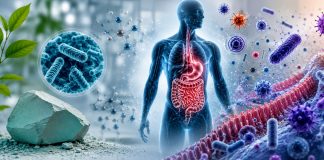
Does zeolite release aluminum into the body and deplete it of important minerals? Biochemist and human physiologist Prof. Peter Dartsch explains what the research actually shows
“Zeolite contains aluminum—so doesn’t that mean I’m also ingesting aluminum when I take zeolite?”
And: “If zeolite binds harmful substances, then it must also bind vitamins, minerals, and trace elements.”
These are the two main concerns that we at ZEOLITH WISSEN hear time and time again.
And at first glance, they even sound logical. After all, the volcanic rock clinoptilolite zeolite is an aluminosilicate and is known for its enormous adsorption and ion-exchange capacity.
So why, of all things, should the aluminum in zeolite stay where it is?
And how is a natural mineral supposed to “know” what it’s allowed to bind in the gut and what it isn’t?
The answers—namely, right off the bat, that zeolite does indeed “distinguish”—lie in the physical and chemical properties of the volcanic rock, which, while understood by chemists, physicists, and many medical professionals, are, pardon the expression, generally not understood by the general public. In the following, we therefore aim to shed some light on the matter, based on scientific evidence.
First of all: Zeolite is not a sponge that indiscriminately absorbs everything it encounters. Its crystalline structure, pore sizes, electrical charge relationships, and varying affinities for ions (which are electrically charged atoms or molecules) determine what can actually be bound or exchanged in the gastrointestinal tract—which is the only site where zeolite is active.
We spoke with a scientist who not only knows about zeolite from the literature but has also studied various zeolites himself in the laboratory: Prof. Dr. rer. nat. Peter C. Dartsch. The biochemist and human physiologist worked for many years at the University of Tübingen, where he earned his habilitation in human physiology. Since 2002, he has been running “Dartsch Scientific,” a research institute focused on cell biology-based—and thus animal-free—test systems, located on Lake Ammersee in Bavaria.
Prof. Dartsch’s work takes us into a world where things can quickly get complicated: cell cultures, free radicals, neutrophils, ion exchange, oxidative stress, chronic inflammation, the inner surface of zeolite—all highly complex topics. So let’s approach this from a different angle and start with a simple question:
What does zeolite actually do in our bodies?
Zeolite does not interfere with metabolism: It only works where it can cover layers of cells that are exposed to external stresses on the body
Most substances that we ingest—whether intentionally or unintentionally (such as pollutants like heavy metals, pesticides, and numerous other toxins)—first pass through the stomach into the intestines. After absorption, they enter the bloodstream, are distributed throughout the body, and interfere with biochemical processes. This applies not only to substances from our food and the liquids we drink, but also to dietary supplements and medications—they all actively interfere with our metabolism, with all the known positive and negative consequences.
With zeolite, the situation is completely different. This alone is why this volcanic rock is so often misunderstood: The type of zeolite used for medical purposes—with the somewhat cumbersome name “clinoptilolite”—acts solely within the gastrointestinal tract after oral ingestion due to its physicochemical properties. Its microporous crystal structure can be simply imagined as a tiny three-dimensional framework with countless cavities and channels. Certain substances can be bound to or exchanged for ions on and within this structure—while others simply cannot.
In an interview with ZEOLITH WISSEN, Prof. Dartsch succinctly sums up this unique characteristic:
“In my view, what’s interesting—and perhaps also misleading—about zeolite is precisely that it doesn’t actually do anything in the body. It’s simply there, coating the innermost layer of intestinal cells, trapping harmful substances, and then being excreted. It doesn’t need to interfere with any metabolic processes and therefore simply cannot place a burden on the human organism.”
This statement is highly relevant and explains a great deal. How did Prof. Dartsch come to study zeolite?
“At some point, manufacturers became aware of our cell biology test systems and wanted to know whether certain postulated properties of the zeolite mineral could be objectively measured in the lab. Before we began, I, too, had to delve deeply into the literature on zeolite. What subsequently happened in the lab struck me as extremely remarkable,” said Dartsch.
What happens to human cells under stress? Prof. Dartsch investigated zeolite in relation to regeneration, free radicals, and inflammatory processes
Cell research sounds abstract. In principle, however, one of its fundamental principles can be explained very simply: Scientists place living cells of various types in a specific situation—for example, under oxidative stress—under precisely defined conditions and then observe what changes occur on and within the cells as a result of administering a substance.
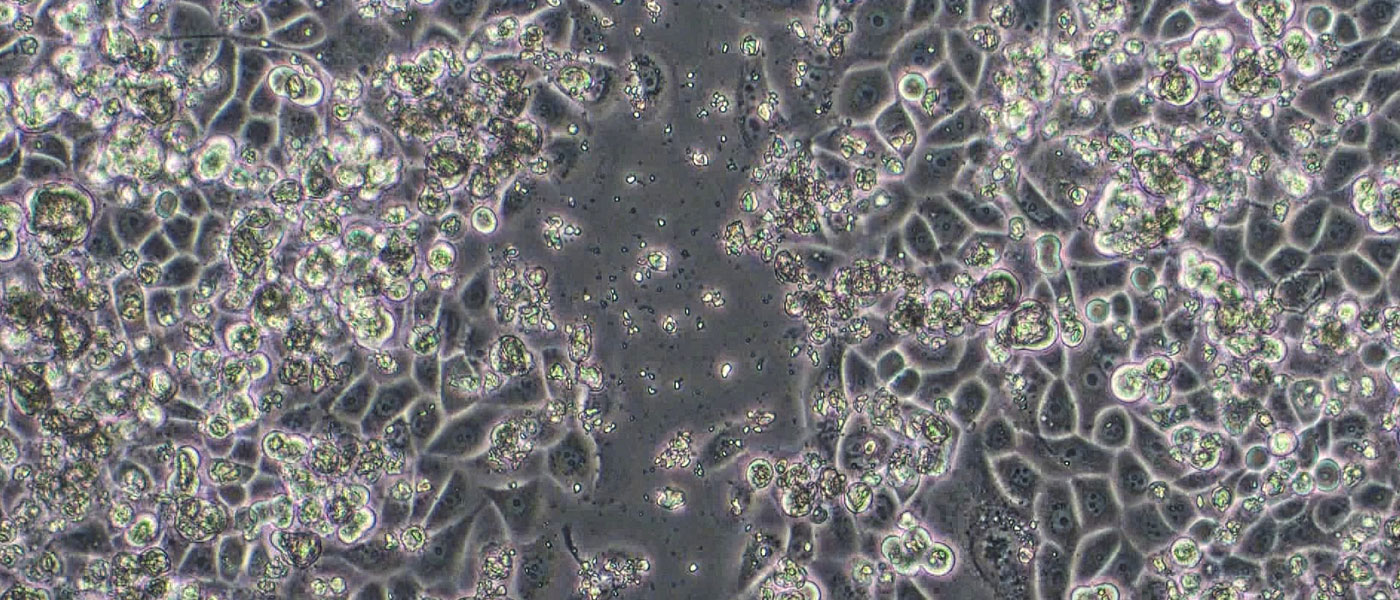
In his zeolite experiments, Dartsch also investigated cell regeneration. To do this, a defined cell-free area is created within a closed cell layer. The surrounding cells then begin to migrate into this gap and close it again.
It is, in a sense, a miniature version of what we all experience when we cut our finger: The tissue then automatically begins to close the resulting defect (incidentally, the human body possesses far more natural regeneration and repair mechanisms than most people realize; even the medical field is only now beginning to recognize the potential of regenerative medicine).
After adding the zeolite under investigation, Dartsch observed a significantly faster closure of this cell-free area in his cell model. The reduction in regeneration time was on the order of about 25 percent.
Dartsch also tested his zeolite samples in models of oxidative stress and inflammatory processes—both of which are excessive systemic reactions that can attack the body’s own cells, proteins, and even DNA, as well as cause permanent damage to tissues and organs, and have now been identified as contributing factors to numerous chronic diseases such as cardiovascular disease, diabetes, Alzheimer’s, depression, and even cancer.
In simple terms, oxidative stress can be thought of as a biological storm: Free radicals are produced even under completely normal conditions during cellular energy metabolism in the mitochondria and—in “fair weather,” so to speak—perform important functions. However, problems arise when everything gets out of balance and a persistent storm sets in. Then the body produces more and more reactive molecules than our antioxidant defense systems can neutralize. As a result, cell membranes, proteins, and other cellular components can suffer increasing damage.
In this context, Dartsch observed something very interesting that is of great significance to medicine: In his laboratory studies, the zeolites he examined demonstrated antioxidant and free-radical-scavenging effects. How so? In his inflammation model, cells were stimulated to produce oxygen radicals. If zeolite was present in the reaction mixture, it was able to scavenge some of these aggressive molecules—in a dose-dependent manner.
But does this mean that zeolite enters our body after ingestion and goes on the hunt for free radicals there? No—and this distinction is precisely what matters. After all, zeolite remains in the gastrointestinal tract. Dartsch’s cell experiments first demonstrate the physicochemical effects that are possible when zeolite comes into direct contact with a biological reaction system.
In humans, therefore, the intestine must be considered the site of action. If zeolite binds unwanted substances there and thereby reduces their contact with the intestinal mucosa, this may also influence processes related to oxidative stress and inflammation. Zeolite does not even need to enter the bloodstream to do this—it can act directly at the intestinal barrier and function as described in Dartsch’s series of experiments.
And then there is another property that has long been of particular interest with regard to zeolite and that illustrates this principle especially clearly: the binding of heavy metals and the light metal aluminum.
Clinoptilolite zeolite and the elimination of metals: In the laboratory, Prof. Dartsch investigated not only the binding of lead
© Prof. Peter Dartsch/Dartsch Scientific
Heavy metals such as lead, cadmium, arsenic, mercury, and nickel—as well as the light metal aluminum—are among the environmental pollutants from which we can hardly escape completely today. They can be absorbed through food, water, air, and other sources—and the consequences of human emissions have long since reached even the most remote regions of our planet.
Incidentally, a study on the Antarctic Peninsula published as recently as July 2026 illustrates just how widespread this pollution has become. Using 16 sediment cores, the scientists reconstructed the mercury cycle over the past 200 years or so. Since the beginning of industrialization, the rate of mercury accumulation in the marine sediments studied there has risen by about 160 percent. And there’s more: Increasing ice melt and erosion are also mobilizing mercury that had been stored in the Antarctic environment for a long time and was thus firmly bound. This terrestrial mercury input, driven by ice melt, has increased by about 550 percent since the Industrial Revolution. Antarctica is thus increasingly becoming a secondary source of mercury that was already present.
Prof. Peter Dartsch, for his part, has focused his laboratory research on another highly toxic heavy metal: lead. “We investigated zeolite in relation to water-soluble lead compounds,” reports Dartsch. “And it became very clear: The zeolite binds the lead. It disappears completely from the water-soluble fraction of the reaction mixture and remains in the sediment of insoluble substances. The reaction mixture can be equated with digestive juices.”
But for the scientist, this answered only half the question. This is because zeolite is a natural mineral and—depending heavily on its origin and quality—naturally contains various elements; some zeolites may also contain traces of heavy metals. So what happens to such a substance when the zeolite powder is swallowed and subsequently passes through the stomach into the intestines? Could the aggressive stomach acid leach out a heavy metal that is firmly bound within the mineral?
That is exactly what Dartsch investigated as well—again using lead as an example. To do this, he used a zeolite in which lead was already naturally present in a firmly bound form and subjected it to a simulated digestive process in his laboratory.
Simply put, he recreated what happens to the mineral as it passes through our digestive tract—including the highly acidic conditions of the stomach. The result: No lead was released from the zeolite and entered the digestive juices.
Dartsch explains the crucial difference as follows: “You have to distinguish between a heavy metal that comes into contact with the zeolite from the outside and is then actively bound by it, and an element that is already a component of the zeolite. I also investigated this with lead. This lead was intrinsic to the zeolite—that is, firmly bound within its structure. And I was able to determine: It is not released. Even when the zeolite is exposed to highly acidic conditions, such as those found in an empty stomach, absolutely nothing happens.”
In other words: A zeolite can bind lead that comes into contact with it from the outside—without, however, releasing the lead that is already an integral part of its own mineral structure. It is precisely this distinction that is crucial.
What Dartsch investigated here using lead leads us directly to the next—and presumably most-discussed—question regarding zeolite: What about the light metal aluminum?
“Zeolite contains aluminum—so aluminum enters my body”: Why this conclusion is incorrect
Yes, zeolite does indeed contain aluminum. This is no secret, nor is it a contaminant that manufacturers would need to conceal. After all, chemically speaking, zeolite belongs to the aluminosilicate family. Silicon and aluminum, along with oxygen, are the main components of its crystalline structure. But the key word “structure” is precisely the crucial point. The aluminum isn’t just lying around loosely in the pores, waiting to be flushed out by gastric juices. It is an integral part of the crystal lattice.
To put it simply: Anyone who concludes, based solely on the fact that “zeolite contains aluminum,” that this aluminum automatically becomes bioavailable is confusing the building blocks of a house with its movable furnishings. A chair can be carried out of a room. A stone in the wall, on the other hand, is an integral part of the structure.
We do not have to rely solely on theoretical considerations. In a clinical human study published in 2022 in *Frontiers in Medicine*, aluminum levels were examined in people who took the modulated PMA zeolite (PMA stands for “patented micro-activation” by the research and development company PANACEO), which is certified as a medical device. No increase in aluminum or lead in the blood—which would have suggested a release from the material—was detected one hour after ingestion. Even more relevant, however: even with long-term use over four years (!), aluminum levels in the PMA zeolite group were actually significantly lower. In plain language, this means—at least for PMA zeolite—that: Aluminum present in the zeolite itself remains bound, and aluminum present in the subject’s body is reduced.
However, the scientific context is also important here: The study used PMA zeolite, a clearly defined, certified clinoptilolite material. Results from a tested material cannot automatically be applied to just any zeolite powder from another source.
If zeolite binds substances, why doesn’t it also remove calcium, magnesium, iron, and zinc?
This brings us to the second major objection. And this one, too, cannot be dismissed out of hand. Zeolite is an ion exchanger. So why should it be interested exclusively in unwanted substances? Couldn’t regular intake eventually lead to the body lacking important minerals and trace elements?
Among others, the German physiologist and zeolite researcher Prof. Dr. Dr. Karl Hecht has already addressed this question; his extensive work and books were instrumental in first introducing zeolite to a broader public in German-speaking countries. Hecht had already demonstrated that natural clinoptilolite zeolites themselves contain numerous (Hecht mentioned 34 different) minerals and trace elements and can even release small amounts of certain elements to the human body as part of ion-exchange processes. However, zeolite does not absorb minerals and trace elements already present in the body.
The key point here is also this: ion exchange does not mean indiscriminate binding. Which ions a zeolite prefers to bind or exchange depends, among other things, on charge, size, hydration shell, concentration, pH value, and affinity for the zeolite framework. The mineral therefore does not function like a vacuum cleaner that indiscriminately sweeps out the contents of the intestine. Rather, the zeolite actually does select which substances to bind.
So what happens in the human gastrointestinal tract? This is precisely why the aforementioned clinical study from 2022 is of interest. In addition to metal levels, the researchers also analyzed mineral levels in different groups and over various intake periods—ranging from 28 days to twelve weeks to the aforementioned long-term observation spanning four years.
The results: With short-term use, no clinically relevant changes were observed in the physiological minerals studied—iron, sodium, potassium, calcium, magnesium, and zinc. The 12-week study also showed no loss of minerals.
There was, however, one exception, and it concerned patients diagnosed with osteoporosis. In this group, a more nuanced picture emerged: Levels of calcium, sodium, and copper were occasionally observed to fall below the reference ranges. The authors, however, attributed these changes to the bone remodeling occurring in these patients, which is generally associated with increased mineral consumption. The scientists therefore recommend monitoring certain mineral levels in osteoporosis patients after prolonged use.
But this is something entirely different from the generalized claim that zeolite “robs the body of minerals.” The available human data clearly refute the notion of nonspecific mineral depletion—and at the same time demonstrate why reputable science (keyword: osteoporosis) rarely uses the word “never.”
What does Prof. Dartsch have to say about this? “I don’t conduct human studies, but rather cell studies. From my own experience, I can’t say much about this because I haven’t conducted any research in this regard. However, when I look at the literature and draw on my knowledge of zeolite, I can’t imagine—based on physical and chemical principles alone—that zeolite, at least high-quality zeolite available as a medical device, would deplete the body of minerals. But that’s what human studies are for.”
What matters, then, is the specific zeolite material, its composition, its purity, its processing—and the data available specifically for that material. Prof. Dartsch offers a practical recommendation accordingly.
Not All Zeolites Are Created Equal: Why Prof. Dartsch Explicitly Recommends Tested Medical Devices
Anyone searching for zeolite online will find, within minutes, countless powders, capsules, and products in a wide range of price categories. However, clinoptilolite zeolite is a natural substance. But natural substances aren’t automatically pure just because “natural” is written on the packaging.
The origin of the raw material, geological deposit, purity, particle characteristics, processing, and quality control can all vary. Therefore, findings regarding a carefully tested clinoptilolite zeolite cannot simply be applied to every product labeled “zeolite” (see also: https://www.zeolith-wissen.de/en/zeolite-guide/buy-zeolite).
Dartsch makes his recommendation quite clear: “It’s absolutely essential to look beyond the surface and check whether the zeolite product in question is also an approved medical device. Then you have the appropriate quality control. That’s a very important prerequisite. And since most zeolites aren’t certified at all, the selection quickly becomes quite limited.”
Environmental toxins, oxidative stress, and prevention: Why Prof. Dartsch considers zeolite more important today than ever
But why should one take zeolite at all? For Prof. Dartsch, the answer points directly to our current environment. Even with a healthy diet and lifestyle, we can no longer avoid harmful substances—from heavy metals and pesticides to fine particulate matter and numerous other environmental chemicals. That is precisely why the cell biologist also considers prevention “extremely important” today.
When asked whether zeolite could, in a sense, serve as the foundation—that is, first binding harmful substances before we address the body’s optimal nourishment through a healthy diet, micronutrients, and other measures—Dartsch replies:
“In my view, that’s the right approach. Today we’re exposed to all these chemicals, xenobiotics, UV radiation, fine particulate matter, air pollution, and especially Wi-Fi radiation—which people still completely underestimate—and much more. Sometimes you don’t even know where to start or where to stop. Of course, you can’t just say, ‘I’ll take zeolite and then nothing bad will happen to me.’ But with this mineral, we can do something fundamentally valuable: remove many of these toxins and their resulting undesirable effects from our bodies before they can cause damage throughout the entire organism. It’s also important to note, by the way, that children and adolescents—whose bodies are still growing—are even more sensitive than adults. That’s why I think it makes sense to start taking zeolite as early as possible and help the body get rid of such toxins time and again.”
This is precisely what makes clinoptilolite zeolite so special: It isn’t meant to add anything to the body, but rather to bind harmful substances and flush them out through the intestines. Or to put it another way: Health isn’t just about giving the body what it needs—it’s also about ridding it of as much of what it doesn’t need as possible.
Source:
Kraljević Pavelić S. et al. (2022):
Clinical Evaluation of a Defined Zeolite-Clinoptilolite Supplementation Effect on Selected Blood Parameters of PatientsFrontiers in Medicine, Vol. 9, 851782.
DOI: 10.3389/fmed.2022.851782
The clinical study, published in 2022, specifically investigated whether taking a defined and certified clinoptilolite zeolite (PMA zeolite) affects mineral balance or can lead to the release of undesirable metals such as aluminum and lead.
Data from three clinical studies with different duration periods were analyzed: 28 days, 12 weeks, and—in the case of osteoporosis patients—up to four years. The study measured, among other things, iron, sodium, potassium, calcium, magnesium, and zinc, as well as various other metals.
With short- and medium-term use, the minerals and trace elements examined remained within the reference range; the data thus provide no indication that PMA zeolite nonspecifically “deprives” the body of important minerals. Similarly, no release of aluminum or lead from the zeolite into the blood was detected following ingestion.
A four-year study of osteoporosis patients revealed a more nuanced picture: calcium and sodium levels occasionally fell below reference values, and copper levels were also temporarily reduced but later returned to normal. The authors discuss these changes in the context of bone remodeling processes, among other factors, and recommend monitoring calcium, sodium, and copper levels during long-term use for osteoporosis.
About Prof. Dr. Peter C. Dartsch – Cell Biologist and Human Physiologist
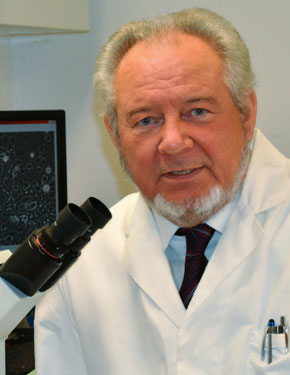
Prof. Dr. rer. nat. habil. Peter C. Dartsch holds a degree in biochemistry and is a habilitated human physiologist. Beginning with his master’s thesis (1985) and continuing with his doctoral dissertation (1989) and habilitation (1991), he focused at the Medical Faculty of the University of Tübingen on the cultivation of organ-specific primary cells and the development and establishment of cell culture models in the fields of physiology and occupational toxicology. In 1997, he was appointed adjunct professor. Until 2020, he served as an external member of the Medical Faculty of the University of Tübingen.
In 2002, Dartsch founded the private research institute “Dartsch Scientific,” which specializes in cell biology testing methods that do not involve animal experimentation.
His work focuses on cell culture models that can be used to investigate, among other things, regenerative processes, oxidative stress, and inflammatory processes. Dartsch has more than 35 years of experience in cell biology and toxicological research and has published approximately 150 scientific papers as well as 30 book chapters.
Dartsch has also investigated various clinoptilolite zeolites using his cell biology methods. He spoke with ZEOLITH WISSEN about his laboratory results, heavy metal binding, oxidative stress, and the role he believes zeolite can play in prevention today.
Contact:
Dartsch Scientific GmbH
Institute for Cell Biology Test Systems
Oberer Anger 1
86911 Dießen am Ammersee
Email: info@dartsch-scientific.com
Web: https://www.dartsch-scientific.com