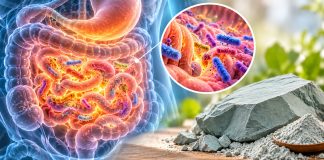
It has long been known that the gut is a central organ for our health. But it is only in recent years that it has become increasingly clear how profound this knowledge really is: science is increasingly discovering the extent of the connections between the gut and the brain, or the gut-liver axis and the gut-lung axis. These connections are much more significant than previously thought and research is showing that the gut is not just our digestive system: The gut is not just our digestive system, it is a key organ that is in direct exchange with many other bodily functions and can also be decisive for our mental well-being.
Zeolite Knowledge (ZW): “Dr. Mittermaier, as a doctor who works holistically and thinks far outside the so-called box, you repeatedly have patients undergoing treatment for whom it ultimately turns out that their intestines are the trigger for their ailments and illnesses, which at first glance one would not associate with this organ. Can you give us an example of this?”
Dr. Josef Mittermaier (JM): “The fact that the gut is the seat of health has been known for thousands of years from traditional Chinese medicine and Hippocrates. I myself realized during my training in manual medicine and osteopathy that the intestine plays a much greater role than was generally assumed at the time. For example, I realized early on that patients with back or neck complaints are often classic intestinal patients who need to have their intestines rehabilitated.”
“Excuse me? What’s the connection?”
“This is due to our anatomy: the lumbar spine is in the middle of the intestine, so to speak. Accordingly, any inflammation of the intestine, any of its malfunctions have a direct influence on the spine. For example, irritation of the muscles leads to a pelvic obliquity and, as a result, to chronic back problems. The intestine should never be viewed in isolation, the entire system should be considered: How does this organ function, how does digestion work, how can I support my intestinal health?”
“Do you have any tips on this?”
“Of course. It starts with what I eat and when. The recommendation to eat regionally and according to the season is not just a platitudinous advertising slogan. In winter, many foods have warming qualities that the body needs, such as fennel, millet, cinnamon, cloves and tea. In summer, on the other hand, our bodies need cooling properties, which we find in lemons and melons, for example. However, the way something is prepared and eaten is also particularly important. Unfortunately, many people have lost the culture of eating due to the hectic pace, stress and our modern lifestyle.”
“You mean eating consciously and slowly?”
“Yes, the way I eat is of central importance: quickly devouring a hamburger or a currywurst on the side while watching TV or in the car destroys our entire internal system in the long term. Healthy eating even begins in anticipation: when we think about a certain food, the taste buds in our mouths begin to prepare our stomach and intestines for the substances that are about to arrive. The whole system begins to work even before the meal, enzymes are prepared and the acid-base balance is regulated accordingly. However, if a meal arrives in the stomach and the various sections of the intestine completely unprepared and, what’s more, swallowed hastily without chewing properly, problems arise. This leads to maldigestion processes and, among other things, to an acid-base imbalance. Proteins, for example, putrefy and fermentation processes occur when carbohydrates are digested incorrectly. This leads to flatulence, bloating and nausea. And those who eat late and in a hurry often have problems sleeping, which has a long-term impact on their physical and mental health.”
If the intestine is constantly abused, it reacts with inflammations that often go unnoticed for a long time, so-called ‘silent inflammations’. These inflammations lead, for example, to the intestinal mucosa, i.e. the intestinal barrier, becoming permeable.
“In the long run, does this wrong food take revenge in many ways?”
“However. If the intestine is constantly abused, it reacts with inflammations that often go unnoticed for a long time, so-called ‘silent inflammations’. These inflammations lead, for example, to the intestinal mucosa, i.e. the intestinal barrier, becoming permeable. This results in leaky gut syndrome or irritable bowel syndrome, which are becoming increasingly common nowadays. What few people know: A leaky gut also causes a ‘leaky brain’, i.e. it also leads to problems in the brain. Unfortunately, this is still far too little known, even though it is possible to take preventative measures. In my practice, for example, I use zeolite to treat a leaky gut or irritable bowel syndrome.”
“And of course this lack of food culture also harms the microbiome, which is, quite literally, ‘on everyone’s lips’ these days?”
“Of course, the microbiome doesn’t just start in the gut, but is already present in our oral cavity, i.e. on the oral mucosa. This is also where I start with zeolite and, lo and behold, if I stabilize the entire digestive system with zeolite, then periodontitis treatments, for example, work much better because the oral mucosa can be better colonized with good bacteria again.”
Our digestive system is a well-balanced, multi-layered, strong but sensitive whole. Stress, poor nutrition, environmental pollution or even infections – as we are now seeing particularly with coronavirus – can cause extreme damage to the intestinal system.
“So our digestive system is much more complex and sensitive than most people assume. Can you summarize this for us again?”
“Our digestive system is a well-balanced, multi-layered, strong but sensitive whole. Stress, poor diet, environmental pollution or even infections – as we are now seeing particularly with coronavirus – can cause extreme damage to the intestinal system. Many people today are also causal stress patients. Stress means that the body, and especially the gut, can no longer regenerate. It doesn’t help if you only eat “organic” and spend a lot of money on high-quality food. Constant stress and a hectic pace lead to a loss of balance between stress and regeneration, our gut falls out of balance and our immune system goes off track.”
“And 80 percent of the immune system is known to be located in the gut.”
“At least a not insignificant part. A diseased gut leads to an impaired immune system that is no longer able to defend itself as well against pathogens such as viruses. If the balance in the microbiome is disturbed, this inevitably leads to deficits in the immune system. The mechanisms responsible for this are only gradually being understood and are the subject of current research. Overall, it can be said that a high diversity in the microbiome is very good for a functioning immune system. A microbiome that is out of balance leads to many people repeatedly suffering from bronchial infections and pneumonia, which we have seen particularly frequently since corona. However, the cause of this is actually found in the gut and not in the lungs themselves. The same applies to many skin diseases or seemingly sudden allergies. Here, it is important not to simply treat the symptoms, but to tackle the root cause and get the gut in order first.”
“What can you do as a sufferer to support your gut and microbiome?”
“First of all, there really is a need to reduce stress and create little islands of time out in everyday life. These can be short walks or switching off your cell phone for half an hour. You can also get into the habit of eating more consciously, which is really fun over time, as many of my patients confirm. A meal that I prepare myself and then eat with pleasure tastes and has a completely different effect to fast food or ready meals. And then there are natural remedies that anyone can use to strengthen and rehabilitate their gut.”
“You’re talking about the zeolite?”
“Yes, zeolite has a whole range of properties that make it the ideal intestinal supporter and therefore for the entire intestinal system. On the one hand, it is known to bind heavy metals such as lead, arsenic and cadmium, which pollute us all through food, air and water, and on the other hand it also binds ammonium in particular, a metabolic waste product produced by the digestive processes. This ammonium and all other toxins have to be transported via the bloodstream to the liver, which is the detoxification organ responsible for ridding the body of these toxins. This is hard work for the liver and it is no coincidence that so many people have liver problems these days, even without drinking too much alcohol. By administering zeolite and its unique ability to bind toxins, I can significantly relieve the liver.”
Starting from the intestine, our body consists of various cross-links, which we now refer to as intestinal axes. The intestine is actually connected to every other organ and all circulatory systems in the body.
“So everything is connected to everything?”
“Starting from the intestine, our body consists of various cross-links, which we now refer to as intestinal axes. The intestine is actually connected to every other organ and all the circulatory systems in the body. The supply of vitamins and minerals and the aforementioned acid-base balance also depend on intestinal health. Or to come back to the brain and our psyche: The production of serotonin, the so-called happiness hormone, takes place not only in the brain itself, but also primarily in the gut. If we produce too little serotonin, this can lead to depression or anxiety disorders – and we can see how massively these illnesses are on the rise. Antidepressants only mask the problem, they cannot cure these conditions.”
“Does this mean that we should all take better care of our gut health, both in terms of prevention and in the event of illness?”
“Exactly that. A healthy gut is as fundamental as the foundations and proper statics of a house. And it’s not that difficult to pay a little more attention to the gut. But many people have to start from scratch: They have to teach themselves how to eat and chew properly again, reduce everyday stress, practice more self-care and mindfulness. Incidentally, taking zeolite daily can provide wonderful support here. The catch, however, is that patients often believe that years of “intestinal abuse” can be compensated for within a few days or weeks. Unfortunately, this is not the case and patience is required. It takes a relatively long time for the digestive system to get back into shape. Depending on the condition, this can take six months or a whole year and consistency is crucial.”
“Keyword zeolite: How long should zeolite be taken and which zeolite do you recommend in practice?”
“Zeolite should be used as a cure, i.e. daily for several weeks or months. I can use it to fundamentally cleanse my intestines. It is important to make sure that the zeolite is of high quality and not to abuse my body with any junk from unknown sources. I use PMA zeolite from PANACEO. These are approved medical products that are subject to strict quality controls.”
“Dr. Mittermaier, thank you for this informative interview.”

 Josef Mittermaier is a general practitioner who is known as an integral physician and specializes in individualized solutions. He integrates the knowledge of complementary and alternative medicine (CAM) with conventional medicine and always sees the patient as an individual partner in diagnostics and therapy. Health concepts are developed jointly and emphasis is placed on synergistic (interacting) treatment methods so that individual effects can potentiate each other. His guiding principle is: “I treat my patients the way I would like to be treated myself.”