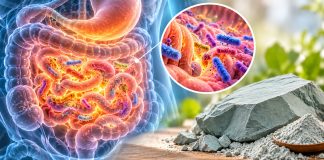
A new study in *Nature* shows that it’s not just which bacteria live in the gut that matters, but above all the biological environment—and this is exactly where PMA zeolite comes in.
“I can imagine that in the future, a microbiome profile will be added to the standard blood count during doctor’s visits.” So says Prof. Michael Wagner, one of the world’s most renowned microbiome researchers and deputy director of the Center for Microbiology and Environmental Systems Science at the University of Vienna, in an interview with the Austrian broadcaster ORF. This statement, made in connection with a new study published in the scientific journal NATURE, is far more than just an interesting vision of the future; in fact, it also describes the fundamental shift currently taking place in medicine—and especially in research on the gut and the microbiome.
After all, assessing the condition of the gut, the importance of an intact gut barrier, and thus a functioning microbiome are fundamental indicators of our health and should therefore have been incorporated into standard examinations long ago. But now we’re taking it a step further.
Until now, the question “Which bacteria actually live in our gut?” has been a central research topic. And this research alone—into the billions of bacteria and microorganisms that we host symbiotically in our bodies—will certainly keep scientists busy for decades to come. But being able to treat diseases more effectively in the future—or, ideally, prevent them from developing in the first place through preventive measures such as gut restoration using PMA zeolite, which is becoming increasingly relevant—is an entirely different matter.
“The pathogen is nothing; the environment is everything.” An old hypothesis once again confirmed by current research
It is also important to determine why certain microorganisms colonize specific locations in the first place, why some species disappear while others suddenly proliferate—and what role the biological environment in the gut plays in this process. Time is of the essence: Now that we know the gut—and in particular the condition of the intestinal barrier, the immune system, and the microbiome—plays a role that should not be underestimated in the development of diseases such as cancer, diabetes, irritable bowel syndrome, or Crohn’s disease, preventing gut health issues has become a top priority.
This high-profile study now provides an answer to one of these major pieces of the puzzle. In it, the authors demonstrate that the survival—and thus the quality—of these complex ecological communities depends to a significant extent on their environment. In other words: It is not individual bacterial strains alone that are decisive in the development of diseases, but rather the entire gut ecosystem and, consequently, its environment. Once again, this confirms the former hypothesis “The pathogen is nothing; the environment is everything,” put forward by the French physician and naturalist Antoine Béchamp (1816–1908), which has since been widely substantiated.
From “Who lives in the gut?” to “Why do they live there?” and “In what kind of environment can they even live?”
So instead of examining individual bacterial species in isolation, the researchers investigated the gut’s entire ecological structure for the first time. Their finding: Diseases appear to create very distinctive microbial habitats. When the biological environment changes, so do the living conditions for the microorganisms.
Some bacteria suddenly find ideal conditions and proliferate, while other species are suppressed or even disappear entirely. Accordingly, the gut environment is increasingly becoming the focus of current microbiome research, because this question is naturally of the utmost importance: If diseases alter the gut environment and thereby also influence the microbiome—can this relationship possibly be reversed?
The gut environment is taking center stage in preventive medicine
After all, for effective preventive measures—which, as scientists across all disciplines agree, are our most important task today in terms of health in general and, in fact, our best “therapy”—answering this question is essential: Could a gut environment that is as stable as possible, long before the onset of a disease, help ensure that a balanced microbiome develops and thus prevent diseases? Numerous research groups worldwide are now focusing on this pivotal issue.
Research into the factors that determine whether the delicate balance of the gut is maintained or disrupted is advancing, and the same influencing factors consistently emerge: Environmental pollutants—especially heavy metals, toxins, pesticides, and other harmful substances—lead to chronic inflammation, a weakened intestinal barrier, changes in the pH environment, and an increase in metabolic byproducts such as ammonium, which is produced during bacterial breakdown processes in the gut and, in excessively high concentrations, can place additional strain on the intestinal mucosa.
Why PMA Zeolite Fits Perfectly Into This New Scientific Understanding
All of this can be influenced—even as a preventive measure—using PMA Zeolite, an optimized form of the volcanic rock clinoptilolite zeolite. Thanks to its excellent body of research, PMA Zeolite has taken on a whole new significance today. For a long time, as is well known, it was primarily associated with the terms “detox” and heavy metal binding. These properties remain valid, important, and scientifically proven. However, current microbiome research shows that its true strength may be even more fundamental.
For if a healthy gut environment truly determines whether a stable microbiome can develop and fulfill its diverse roles for the immune system, metabolism, and health, then any measure that supports precisely this environment gains in importance.
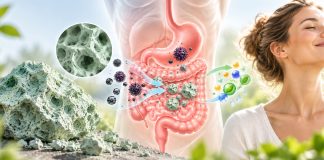
This is exactly what PMA zeolite does. It does not introduce new bacteria into the gut, but rather prepares the necessary environment: In addition to heavy metals and toxins, PMA zeolite binds, among other things, the metabolic waste product ammonium and certain pollutants, thereby regulating the intestinal barrier and helping to reduce harmful influences on the sensitive intestinal environment. In this way, it creates a favorable environment that allows the microbiome to perform its natural functions as optimally as possible.
The better science understands the connections between the intestinal environment, the microbiome, and chronic diseases, the clearer the role of PMA zeolite becomes. It is not simply just another supplement for the gut, but is increasingly becoming a cornerstone of modern prevention and longevity strategies that support health right where, according to current knowledge, it actually begins: in the gut.
Source:
Yu X.A., Strachan C.R. et al.: Genome-wide sweeps create ecological units in the human gut microbiome, Nature, 2026.
The international research group demonstrates that diseases are not only associated with individual bacterial species but also alter the entire ecological environment of the gut. This gives rise to characteristic microbial habitats, which in turn influence the composition of the microbiome. The study is considered an important contribution to the new understanding of microbiome research and underscores the central importance of a healthy gut environment for prevention and health.
Link to the study (Open Access): https://www.nature.com/articles/s41586-026-10476-w