Why Zeolite Isn’t Just Ideal as Cat Litter, but Also Has Versatile Uses
Virtually anyone in German-speaking countries who is interested in zeolite for human health and does research online will eventually come across its suitability as cat litter, even if they don’t own any cats—and therefore don’t have a litter box – and aren’t even looking for that information. The reason for this is an old online article that is periodically redated and updated with a corresponding, highly one-sided list of sources.
In this way, the article in question has managed to carry over into the year 2026, only to be reposted by other websites – again without any verification of its technical accuracy. As a result, misinformation and outdated views on zeolite become entrenched over time, unsettling consumers – especially those with a wide variety of ailments and illnesses—and discrediting serious research on the subject.
For what initially sounds really funny – especially since it’s true that zeolite in cat litter provides long-lasting odor control, thereby eliminating the need for chemical additives – subsequently (intentionally?) completely misleads the reader. Whoever the “original authors” were: They apparently never even glanced at the existing studies, nor did they understand the difference between a dietary supplement and a medical device. Yet the top priority among journalists, especially those who write for the general public and not just for specialized journals, is: Thorough research, reliable sources, including the acknowledgment and consideration of both the pros and cons.
Zeolite for Health: Too Versatile to Be Properly Understood?
 At first glance, however, zeolite is also a complex topic and, for those unfamiliar with it, doesn’t quite fit into our worldview, because:
For most people, medicine is associated with “medications” and “surgeries”; we know dietary supplements (about 70 percent of Germans use them today) as plant-based substances, minerals, and trace elements intended to compensate for deficiencies – and then suddenly a rock in powder form comes around the corner?
So what does this have to do with our health?
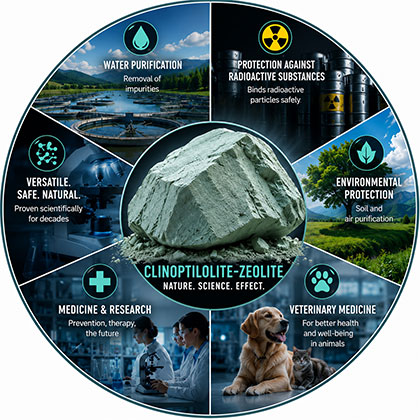
Added to this is the range of applications for zeolite, which doesn’t exactly make things any easier: There are numerous forms of zeolite – over 200 are now known – that are used in a variety of ways in industry (including for cleaning contaminated soil and water, binding radioactive substances, drying, binding pollutants, etc.), without which, for example, many people would have been left defenseless against radiation following the Chernobyl nuclear accident, and which have also become established in our households, such as an eco-friendly additive in laundry detergents or as moisture absorbers in our dishwashers.
Understandably, many people’s first reaction is to ask: “And I’m supposed to swallow something like that?”
With this level of understanding, it’s naturally easy to spread even more confusion and, in some cases – pardon the expression – downright nonsense. So let’s clarify the facts once again and distinguish between the different types. In medicine (and yes, in cat litter as well, by the way), only a single variant of these numerous zeolites is used: the so-called clinoptilolite zeolite.
And it is precisely this clinoptilolite zeolite that has been the subject of intensive scientific research in medicine for decades. What makes this zeolite so special? The reason lies in its extraordinary physical properties. Clinoptilolite has a highly porous, sponge-like microstructure with an enormous internal surface area, as well as a pronounced ability for what’s known as ion exchange.
 Simply put: Zeolite functions like a molecular filter system. It can bind certain substances to its surface while allowing others to pass through. This is precisely why clinoptilolite is used worldwide for purification, heavy metal adsorption, in environmental technology, in veterinary medicine, and increasingly in so-called conventional medicine for humans (see also: What Is Clinoptilolite Zeolite?).
This is the irony of the “cat litter” debate: The very same physical properties that make zeolite so valuable for protecting our environment outside the body are also biologically interesting within the body – or, rather, are becoming increasingly interesting to science, especially in the field of prevention, as environmental pollution rises and, as a result, the prevalence of many lifestyle-related diseases such as irritable bowel syndrome, cancer (especially colorectal cancer), neurodegenerative diseases such as Alzheimer’s or Parkinson’s, diabetes, etc. – are becoming increasingly interesting to science, particularly in the field of prevention.
Clinoptilolite Zeolite: The All-Around Performer, Both Externally and Internally, in the Spotlight of Science
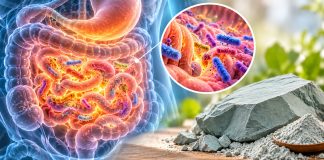
Ultimately, however, the difference between its external use and its benefits inside our bodies is not as great as many people might initially think. Put simply, clinoptilolite acts like a highly selective “pollutant sponge” wherever it is used. Outside our bodies, as already mentioned, it binds, for example, heavy metals, radioactive particles, or pollutants from water and soil. Inside our bodies – more specifically, in the gut – the same physical properties are utilized, albeit under strictly controlled medical conditions.
The mechanism remains the same: The binding of undesirable substances, especially heavy metals and ammonium, and the resulting strengthening of the intestinal barrier and the microbiome. Only the site of application is different: in the human body, it is the gut that – alongside the heart and brain – is the central organ for our health or, conversely, the onset of disease, as is now well known – and that is precisely where zeolite exerts its effect.
Modern research is increasingly showing that the gut is far more than just a “tube for digesting food.” Rather, it is a highly complex communication and regulatory center for our entire organism. Much is now known about the relevance of the so-called “gut axes.” This refers to the close interactions between the gut and other organs or systems of the body. Currently, the gut-brain axis, the gut-liver axis, the gut-heart axis, and the gut-lung axis are the subject of particularly intensive research.
The gut is in constant communication with the immune system, the nervous system, the endocrine system, and the metabolism – among other things, via neurotransmitters, immune responses, bacterial metabolites, and neural connections. Furthermore: About 80 percent – the latest research even suggests as much as 90 percent – of our immune system is located in the gut or is closely connected to the intestinal barrier and the so-called gut-associated immune system. At the same time, the gut is home to trillions of microorganisms – the microbiome – which is now considered one of the key regulators of our health.
It is therefore becoming increasingly clear what role the condition and stress on the gut play in the development of modern lifestyle diseases. At this intersection, it becomes understandable why clinoptilolite zeolite is also receiving increasing scientific attention. For if the gut truly represents one of the central hubs of our health, then the question of how we can protect or relieve this sensitive system from toxins, inflammatory processes, oxidative stress, and increasing environmental stressors automatically becomes relevant. One answer – even in medicine – is now simply: zeolite; more precisely: clinoptilolite; or, most precisely: PMA zeolite, a form of clinoptilolite perfected for human use.
Consult PubMed instead of engaging in polemics about zeolite: A glance at the scientific database is enough
 That’s why, when it comes to the benefits of zeolite, it’s truly a shame and sad to see how casually some online articles dismiss the topic of zeolite out of hand, without apparently ever having looked at the international body of research. Yet today, a simple search in “PubMed” is all it takes.
PubMed is the world’s leading medical and scientific database, operated by the U.S. National Library of Medicine. It collects and makes publicly available scientific studies, reviews, and research papers in the fields of medicine, biology, pharmacology, and health sciences. Naturally, it contains numerous scientific papers on clinoptilolite zeolite – including reviews from renowned journals as well as experimental and clinical studies. Regarding the specific PMA zeolite, which is used here in Europe primarily in hospitals and medical practices, there are now over 50 studies and investigations, all of which have yielded significant results.
Here are a few examples regarding clinoptilolite in general (see references below): For instance, a comprehensive review in the journal “Frontiers in Pharmacology” describes in detail the safety aspects and potential medical applications of clinoptilolite in humans. The authors conclude that, due to its unique physical properties, clinoptilolite has high potential in the areas of detoxification, immune regulation, and gut health, and that the safety data to date are generally favorable. Other research studies focus on clinoptilolite’s ability to adsorb – that is, bind – heavy metals such as lead, cadmium, mercury, nickel, or arsenic. Still others investigate anti-inflammatory properties, antioxidant effects, impacts on the intestinal barrier, or potential applications in the field of neurodegenerative diseases.
International research groups are, naturally, also examining whether purified clinoptilolite could physically bind or inactivate certain viruses. For example, a study published in the renowned journal *Scientific Reports* shows that, in laboratory experiments, purified, micronized clinoptilolite tuff was able to adsorb both seasonal coronaviruses and two SARS-CoV-2 variants, significantly reducing their biological activity.
The authors therefore explicitly discuss the possibility of using clinoptilolite in the future as a component of new medical devices or pharmaceutical applications to prevent or mitigate the spread of coronaviruses. Even though such results have not yet been put into practice (many further studies are needed for that),
they nevertheless impressively demonstrate how far international research on clinoptilolite has come – and how little the blanket “cat litter” argument has to do with scientific reality.
Of course – and this is also part of a serious assessment – a scientific study does not automatically mean that every claim has been proven or that every zeolite product is automatically high-quality. This is precisely where a strict distinction must once again be made: not all zeolites are created equal! As with many other medicinal active ingredients, there are significant differences among the zeolite products available in terms of their quality, purity, scientific evidence, and relevant approvals.
PMA Zeolite as the Gold Standard in Medicine: Why Zeolite Must Be Further Categorized
This brings us to what is arguably the best-known zeolite available on the market today: the so-called PMA zeolite. PMA stands for “Patented Micro-Activation.” This is an optimized form of clinoptilolite zeolite, in which the rock is mechanically modified through a patented activation process.
The goal of this micro-activation is to significantly improve the internal surface area, reactivity, and thus the physical properties of the zeolite, so that it can produce an even greater effect in humans (and, incidentally, in our animals as well – not just in the form of cat litter). For this reason, even from a scientific perspective, not just any zeolite can automatically be equated with PMA zeolite.
In the field of research, the Austrian research and development company PANACEO has therefore held a leading position for many years. This is because PANACEO has not only been exploring the biologically beneficial properties of PMA zeolite since the current “detox” trend began, but has also been conducting intensive research into its mechanisms of action and potential medical applications for over two decades.
As mentioned earlier, there are now over 50 clinical studies on PMA zeolite – covering areas such as the intestinal barrier, the microbiome, irritable bowel syndrome and leaky gut syndrome, inflammation regulation, oxidative stress, acute and chronic inflammation, immunomodulation, the reduction of side effects from chemotherapy, and, more generally, the binding of toxins in the intestine (see also: Zeolite Studies).
Is Zeolite a Dietary Supplement or a Medical Device? The Difference Is Crucial
However, it seems that not only are scientific advances regarding zeolite still far too little known, but another problem in this context is that many people do not understand the difference between dietary supplements and medical devices – and the aforementioned articles repeatedly refer to zeolite as a dietary supplement – even though this distinction is crucial for evaluating zeolite.
Approved and certified zeolite products – one of the very few being PMA zeolite – are, in fact, Class IIb medical devices. These approval processes are complex and, in terms of their scope and rigor, are entirely comparable to approvals for pharmaceuticals.
Medical device expert Dr. Horst Poosch explains: “Zeolite is not a dietary supplement because it does not supplement the diet. Zeolite does not provide vitamins or minerals in physiologically relevant amounts, but acts purely physically by binding toxins in the intestine and restoring the intestinal wall. It does not interfere with metabolism. Thus, zeolite meets the criteria for a medical device.”
Therefore, if medical-grade zeolite is to be certified as a medical device, it is already subject to strict regulatory requirements today. Clinical trials, quality management, safety assessments, and risk management play a central role in this process. Such approval is currently still voluntary, but – thankfully – this will soon change.
Requirements for a medical device: Starting in 2029, the wheat will finally be separated from the chaff
As Poosch goes on to explain: “Since 2021, zeolite has been subject exclusively to the new Medical Device Regulation (MDR) in Europe. The transition periods run until the end of 2028, but by then at the latest, all zeolite products must be fully approved under the MDR. Many suppliers will not clear these hurdles. And that’s a good thing – because ultimately, it’s about patients’ health.”
This is welcome news and urgently needed, as zeolite had indeed acquired a harmful reputation – and thus likely the basis for negative reports – due to some earlier suppliers who sold untested, contaminated zeolite products about 10 years ago. Those products have long since been removed from the market, and the authorities have responded with this new regulation, which takes effect in 2029 (see also: Interview with Dr. Horst Poosch – PANACEO International GmbH).
From then on, the zeolite landscape is likely to change dramatically. In the future, it will no longer be enough to simply market any zeolite powder as a “detox” product. For consumers and patients, this is a highly significant advantage, because it means that only quality, safety, and scientific evidence will determine whether a product is even allowed to be sold – the wheat will finally be separated from the chaff, and the cat litter debate will come to an end.
Between blind euphoria and blanket rejection: As is so often the case, the truth lies somewhere in between
In conclusion, the situation looks like this: Of course, one can and should critically question medical topics in particular. In the health sector, skepticism is important and appropriate. However, it becomes problematic when criticism turns into an unsustainable, blanket dismissal – and when scientific research is simply ignored. Just as with many other medical topics, there are different camps when it comes to zeolite: proponents, committed users, a growing number of doctors who work with PMA zeolite, but of course also skeptics and critics.
This makes it all the more important for consumers and patients not to rely solely on sensational headlines or polemical online articles, but to take a closer look for themselves.
For clinoptilolite – or PMA zeolite, as it is also known – a very clear picture emerges: the body of scientific evidence is already far more extensive than many people realize. In particular, safety data, evidence of the physical mechanisms of action, and research on various indications have increased dramatically in recent years. For this reason, a growing number of advocates in medical circles recommend that PMA zeolite plays – or should play – a fundamental role in the prevention of numerous diseases and as an adjuvant, or supportive, therapy in cases of illness (see also: Prevention, Longevity, Biohacking, and PMA Zeolite – Healthy Aging Starts in the Gut).
So it is simply time to stop automatically equating zeolite with cat litter – and instead to address the question in a sober, scientific manner, free from ideological blinders: why, of all things, is an ancient volcanic mineral in the form of PMA zeolite suddenly taking center stage in modern health research in an era of increasing environmental stress? There are now more than enough answers to this question.
References (a small selection):
Kraljević Pavelić et al.: “Critical Review on Zeolite Clinoptilolite Safety and Medical Applications in vivo,” Frontiers in PharmacologyThis comprehensive scientific review analyzes the safety data and potential medical applications of clinoptilolite zeolite in humans and veterinary medicine. The authors describe, in particular, the possible positive effects on detoxification, immune regulation, antioxidant processes, and the body’s overall homeostasis. At the same time, they emphasize that the safety data available to date for high-quality clinoptilolite products are generally favorable and that clinoptilolite is increasingly being studied scientifically due to its unique physical properties.
Velarde et al.: “Adsorption of heavy metals on natural zeolites: A review”, ChemosphereThis review article examines the ability of natural zeolites—particularly clinoptilolite—to adsorb, or physically bind, heavy metals such as arsenic, cadmium, chromium, lead, mercury, and nickel. The authors conclude that clinoptilolite is one of the most frequently and effectively studied natural zeolites worldwide in the field of heavy metal adsorption. At the same time, they point out that adsorption properties can vary depending on the origin and quality of the zeolite—sic!
Mastinu et al.: “Zeolite Clinoptilolite: Therapeutic Virtues of an Ancient Mineral,” Molecules
The authors describe clinoptilolite zeolite as a porous mineral with high adsorption and ion-exchange capacity. The review examines its antioxidant, anti-inflammatory, and detoxifying properties, as well as potential applications in the areas of gut health, oxidative stress, and neurodegenerative diseases. Particular emphasis is placed on the fact that activated forms, such as PMA zeolite, may exhibit additional beneficial effects in preclinical and clinical models.
Panaiotov et al.: “Zeolite and Neurodegenerative Diseases,” Molecules
This recent review examines the connections between clinoptilolite zeolite, gut health, the microbiome, and neurodegenerative diseases such as Alzheimer’s and Parkinson’s. The authors describe the antioxidant, anti-inflammatory, and immunoregulatory properties of clinoptilolite and discuss its potential significance in the context of the gut-brain axis. They also explain that activated forms of clinoptilolite may exert additional biological effects.
Nizet et al.: “Binding and inactivation of human coronaviruses, including SARS-CoV-2, onto purified clinoptilolite tuff,” Scientific Reports
In this experimental study, the researchers investigated whether purified, micronized clinoptilolite tuff can physically bind and inactivate coronaviruses. Laboratory experiments showed that both seasonal coronaviruses and two SARS-CoV-2 variants could be adsorbed and their biological activity reduced. The authors therefore discuss the possibility of using clinoptilolite in the future as a component of new medical devices or pharmaceutical applications to reduce or mitigate the spread of the virus.
Grifasi et al.: “Fundamental properties and sustainable applications of the natural zeolite clinoptilolite,” Environmental Science and Pollution Research
This recent review describes clinoptilolite as a versatile, sustainable natural material with applications in environmental engineering, water purification, agriculture, veterinary medicine, and human medicine. Particular emphasis is placed on the mineral’s physicochemical properties, its ability to adsorb various substances, and its importance as a cost-effective and biocompatible material for future technologies and medical applications.
Siposova et al.: “Biocompatible zeolite-dye composites with anti-amyloidogenic properties,” International Journal of Biological Macromolecules, 2023
This study investigates biocompatible clinoptilolite composites in relation to so-called amyloid deposits, which play a role in neurodegenerative diseases. The researchers observed evidence of anti-amyloidogenic properties and discuss potential applications in future diagnostic and therapeutic procedures.