The underestimated effects of olive oil: how it strengthens the liver, intestines and our overall health
Everyone is talking about olive oil – in the truest sense of the word. Hardly any other food has been praised, described and celebrated so often in recent years. But with all the headlines, the decisive factor is often overlooked: What exactly makes good olive oil so special? And what should you really look out for when buying it? Because while this liquid gold is used in millions of kitchens every day, very few people know that really high-quality olive oil has an almost pharmacological effect – scientifically proven, profound and amazingly versatile.
Recent studies have once again confirmed what primitive peoples have known for thousands of years: Olive oil can alleviate inflammation, strengthen the microbiome, relieve the liver, protect the heart and even reduce the risk of Alzheimer’s and other chronic diseases. But to do this, it needs to be of the right quality – and arrive in the body at the right time. So it’s time to take a closer look. And to discover how this natural product, together with a strong partner like zeolite, can pave the way for real health. And all with just one spoonful a day!
Polyphenols, oleocanthal and co: when plant substances become medicine
The secret of olive oil lies in its secondary plant substances – above all the polyphenols, which are found in the olive itself and pass into the oil undamaged when processed gently. These polyphenols act like little bodyguards in the body: they neutralize free radicals, protect cells from inflammation and intervene where the modern way of life leaves its mark. Three ingredients whose effects have now also been investigated in clinical studies are particularly exciting:
- Oleocanthal: specifically inhibits the inflammatory enzymes COX-1 and COX-2 – similar to ibuprofen, but in a natural way.
- Hydroxytyrosol: Considered one of the most powerful antioxidants in the world. It protects nerve cells, strengthens the mitochondria and protects the cardiovascular system.
- Oleacein: Supports blood sugar regulation and inhibits the storage of fat in the liver.
These substances do not work in isolation – they unfold their power in combination. And this is precisely where the magic of genuine, high-quality olive oil lies.
Science is following suit: New studies confirm old wisdom
Modern research has focused intensively on olive oil in recent years – and the results are remarkable. A recent study from 2025 shows that olive oil not only protects the heart, but also reduces inflammatory processes in the liver, improves insulin sensitivity and even inhibits fatty liver formation. Another study shows that olive oil promotes the growth of beneficial intestinal bacteria, strengthens the intestinal barrier and modulates the immune system. And in a highly regarded study by Harvard University, it was even shown that people who consume olive oil daily have a significantly lower risk of dying from dementia or Alzheimer’s disease. This is an important finding at a time when the prevalence of neurodegenerative diseases is rising so sharply. In short, olive oil works throughout the body – in a quiet but profound way.
The liver loves it: detox with zeolite – regeneration with olive oil
The liver in particular benefits from this combination. As our central detoxification organ, it is challenged on a daily basis and nowadays is usually overburdened – by numerous environmental toxins, heavy metals, medication, alcohol, sugar and stress.
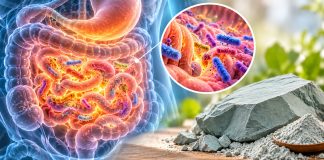
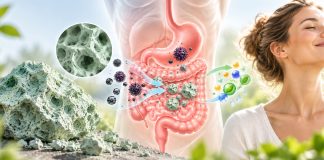
The volcanic mineral zeolite can help to take the first step here: It binds pollutants, toxins and heavy metals such as cadmium, mercury, lead, arsenic or nickel as well as the light metal aluminum in the intestine before they reach the liver – and measurably relieves this organ, which is so important for our health.
Once the liver has been freed from this constant stress, the second step comes: regeneration and protection for our entire organism – and this is precisely where olive oil comes into its own. It reduces oxidative stress in the liver cells, inhibits inflammation and prevents the storage of fat.
Our microbiome rejoices: How olive oil strengthens the good bacteria
Olive oil also acts as a gentle helper in the gut. It specifically promotes the growth of healthy bacterial strains – such as Lactobacillus and Bifidobacterium – and at the same time inhibits pro-inflammatory germs such as Escherichia coli or Clostridia. A healthy gut, in turn, is the basis for:
- a strong immune system
- a stable psyche
- good digestion
- Protection against silent inflammation
- a dense, functional intestinal barrier
A high-quality olive oil acts like an organic gardener here: it fertilizes the good plants, pulls up weeds and strengthens the ecosystem.
And a spoonful of health every day – or two
Many people believe they need to drink large amounts of olive oil every day to stay healthy. However, just one tablespoon a day can be enough to achieve positive effects. In the Harvard study, just 7 grams of olive oil a day reduced the risk of dying from dementia by as much as 28 percent. It is not the quantity that is important, but the quality.
Cook, fry, enjoy: Good olive oil is heat-stable
Incidentally, a widespread myth persists: olive oil is not suitable for cooking or frying. The opposite is true – at least when it comes to high-quality, cold-extracted olive oil. Such oils are heat-stable up to at least 180 °C and can be used for frying, steaming or baking without any problems. This means: scrambled eggs, oven vegetables, fish pan, even pancakes – anything goes. And tastes much better.
Recognize quality: How to find the real liquid gold
Recognizing a good olive oil is not that difficult – if you know what to look out for. The most important thing is the designation on the label: only if it says “extra virgin” or “extra vergine” is it the highest quality grade – anything below that is far less valuable for your health. The words “cold extracted” are just as important. Many people believe it means “cold-pressed”, but this is an outdated term. Modern extraction is technically more gentle and preserves more active ingredients, provided it has been carried out at a low temperature – this is the case with genuine top-quality oils.
If you want to delve deeper, you can look at the polyphenol content. These valuable plant substances are what make a good olive oil a real remedy. A content of over 250 milligrams per kilogram is considered particularly high – but unfortunately this value is rarely stated on the label. Some manufacturers state it voluntarily or provide it on request.
Origin is also an important criterion. An oil that uses olives from just one region is usually of higher quality than blends from different countries. So look out for clear information about the harvest and region – it shows that the oil was produced with care. And then there is freshness: the year of harvest and a traceable best-before date provide information on whether the oil is still alive or has already lost some of its strength.
And finally comes the famous moment of truth: if it scratches your throat a little when you taste it – then it’s good. This scratchiness is not a fault, but a sign of quality. It comes from oleocanthal, the anti-inflammatory plant substance that is only found in really high-quality, fresh olive oils. So if it stings gently: congratulations – the oil is alive. And it will do you good too.
If zeolite is the door opener, olive oil is a good friend that stays
While zeolite helps to free the body of ballast, bind harmful substances and stabilize the intestinal barrier, olive oil supports the next stage: build-up, care, protection and regeneration. Together they form a strong team: zeolite as a detoxifier, olive oil as a cell protector. One clears the way – the other ensures that we continue on this path in good health. And it tastes good too.
Current clinical studies on olive oil:
https://jamanetwork.com/journals/jamanetworkopen/fullarticle/2818362
https://www.mdpi.com/2072-6643/17/11/1843
https://pmc.ncbi.nlm.nih.gov/articles/PMC11941193
https://www.sciencedirect.com/science/article/pii/S0261561423002121