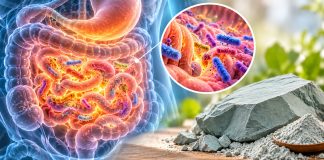
Why nitrogen-containing compounds are suspected of damaging our brain – and how zeolite acts as a filter in the gut
Almost all of us have knowingly come across ammonia – usually in the cleaning cupboard. As a versatile cleaning agent, it ensures streak-free windows, clean kitchen surfaces and removes stubborn stains. But while many people know the name, very few know that ammonia – and its chemical twin ammonium – also play a role in our bodies. And not as a cleaning helper, but as a potentially dangerous waste product.
First, a brief explanation of the terms “ammonia” and “ammonium”, as we will use both terms interchangeably in the following for the sake of simplicity: Ammonia and ammonium are like two faces of the same substance – sometimes as a gas (ammonia), sometimes in dissolved form (ammonium). For health, it hardly matters which variant is meant – both can become toxic if they accumulate.
Ammonia (chemical: NH₃) and ammonium (chemical: NH₄⁺) are automatically produced when proteins and amino acids are metabolized in our body, so they are “homemade” – but they are also a toxic by-product. Normally, the liver and kidneys do the job of neutralizing and excreting this “invisible waste gas”. However, the level of our internal ammonium load is to a certain extent in our hands: diet, the state of our intestinal flora, lifestyle and detoxification capacity all play a part in determining whether ammonium in the body becomes a normal side effect or a serious health risk.
Many studies show that elevated ammonia levels put a strain on the nervous system, promote inflammation and possibly – and this suspicion is growing – even contribute to the development of Alzheimer’s disease. This is precisely where zeolite comes in: In the intestine, it binds ammonium ions before they enter the bloodstream – thus relieving the body’s own “detoxification center”.
Where does the ammonium load come from?
It is quite normal for ammonia and ammonium to be produced in the body. They are degradation products that are produced when proteins and amino acids are broken down – similar to smoke when burning wood. As long as the fire remains small, the smoke can dissipate without any problems. But when the flames get bigger, the air becomes stuffy. The most important factors are
-
Protein-rich diet:
The more protein we consume, the more ammonium is produced. It becomes particularly critical with a very meat-heavy or one-sided protein-rich diet. This is because bacteria in the large intestine then metabolize excess proteins into ammonia. In a healthy, slightly acidic intestinal environment, this becomes bound ammonium, which can be excreted more easily. However, if the pH value becomes alkaline – due to too much animal protein and too little fiber, for example – the intestine turns into a veritable ammonia laboratory.
-
Intestinal flora and pH value:
Whether our intestines detoxify or pollute depends crucially on the microbiome. Healthy bacteria such as bifidobacteria and lactobacilli keep the environment slightly acidic and therefore detoxifying. If the balance tips in favor of putrefactive bacteria, ammonia production increases massively.
-
Liver and kidneys as a sewage treatment plant:
The liver neutralizes ammonium via the urea cycle, the kidneys excrete it via the urine. As long as these organs are intact, blood levels remain low. However, if the liver or kidneys are weak, the risk of ammonia entering the blood and then the brain increases.
-
Other causes:
Certain medications, such as valproate, can also increase ammonium levels. Rare metabolic disorders, chronic hyperacidity of the body or infections with urease-producing bacteria also play a role.
Why ammonium is so dangerous, especially for the brain
Ammonia and ammonium are not just annoying metabolic residues – they are highly toxic as soon as the concentration in the blood rises. And the dangerous thing is that both compounds easily cross the blood-brain barrier. They therefore penetrate directly into the brain and thus into the control center that regulates our thoughts, memories and feelings.
Astrocytes under pressure: when the brain’s supporting cells swell
In the brain, it is mainly astrocytes – a type of “supply cell” – that absorb ammonia. There it is processed into glutamine. However, the more ammonia arrives, the more the cells swell. This leads to a dangerous domino effect: pressure in the brain tissue, energy shortage in nerve cells and increased activity of inhibitory messenger substances. The result ranges from fatigue and confusion to severe neurological disorders.
Mitochondria in a state of emergency: energy crisis at the heart of nerve cells
Ammonia disrupts the function of the mitochondria, the tiny power plants that supply our cells with energy. Without sufficient ATP – the energy currency of the cells – nerve cells go awry. Signal transmissions are faulty, memories fade, concentration is difficult.
Inflammation and nerve damage: smouldering fire in nerve tissue
Ammonia also acts like an accelerant in the brain: it drives inflammatory processes, stimulates excessive activity of microglia (the brain’s immune cells) and can increase the formation of beta-amyloid – the plaques that are typical of Alzheimer’s disease.
Short-term shock and long-term destruction: When traces of toxins have an immediate effect that lasts for years
While acute ammonia poisoning – such as liver failure – can lead to loss of consciousness and even coma, it is the chronically slightly elevated levels that are particularly insidious. They put a strain on the brain for years, promote silent inflammation and can therefore be involved in the development of neurodegenerative diseases.
Causes of Alzheimer’s: more than just amyloid deposits – where ammonia comes into the picture
For decades, the dominant idea has been that misfolded protein fragments (β-amyloid) clump together to form plaques, triggering a cascade of inflammation, nerve cell damage and memory loss. This is commonly referred to as the “amyloid hypothesis”, although it is becoming increasingly controversial in scientific circles. Many drug developments to date have therefore aimed to remove the amyloid – with some measurable reductions in plaque in the patient’s brain, but without any real clinical benefit, as those affected feel nothing of these processes. This is where the debate ignites: combating amyloid alone is clearly not enough, as Alzheimer’s appears to be multifactorial. In addition to the deposits, chronic inflammation, energy supply disorders, vascular damage, changes in the microbiome – and also the often overlooked ammonia/ammonium – play a decisive role.
When the poison spreads: consequences of increased ammonium exposure
But ammonia and ammonium are not only dangerous for the brain. The invisible waste gases sometimes accumulate locally in the intestine, sometimes they pass through the entire organism. And wherever they arrive, they leave their mark – sometimes immediately, sometimes gradually over many years.
Liver under constant stress: when the sewage treatment plant overflows
The liver is the first and most important station for ammonium detoxification. This is where the toxic molecule is neutralized in the urea cycle. As long as the liver is healthy, the system remains stable. However, in diseases such as fatty liver, hepatitis or cirrhosis, the treatment plant overflows. The ammonia levels in the blood rise and the brain reacts sensitively, resulting in concentration problems, confusion and, in the worst case, hepatic encephalopathy and even coma.
Kidneys backed up: when the second filter weakens
The kidneys also make a decisive contribution to detoxification. They convert ammonium from glutamine and excrete it in the urine. However, if the kidneys are chronically weak, the toxin builds up. The result: an additional burden on the organ, disturbances in the acid-base balance and a growing tendency towards inflammation – a vicious circle that further weakens kidney function.
The turbo for bad bacteria: Infections as a source of ammonia
It is not only our own cells that produce ammonium. Bacteria can also release the substance – especially those that have the enzyme urease, such as Proteus or Klebsiella. In the case of urinary tract infections or drainage problems in the urinary tract, this results in a veritable flood of ammonia. In extreme cases, the levels can rise so high that acute loss of consciousness or delirium can occur within hours.
Metabolism and psyche: the silent but lasting consequences
Even more insidious are the chronically slightly elevated ammonium levels, which often go unnoticed. Studies show that they are linked to diabetes, depression and other metabolic disorders. The reason: ammonium blocks the mitochondria, increases oxidative stress and fuels silent inflammation throughout the body. These processes are like a slow glow beneath the surface that weakens tissue and organs in the long term – long before those affected notice the first symptoms.
Poison with penetrating power: even the smallest amounts are dangerous
A comparison with other blood values shows just how toxic ammonia really is: While we can tolerate blood sugar levels in the three-digit milligram range, concentrations of ammonia of less than one milligram per deciliter can be critical. This makes ammonia one of the body’s most toxic metabolic products – and its consistent detoxification is a top priority for the body.
Zeolite as a natural protective shield against ammonium
Anyone looking for ways to reduce the body’s own ammonium load will quickly come across a colorful range of so-called “binding agents”. Activated charcoal, clay minerals or humic acids are traditionally used to bind harmful substances in the intestine. Fibre-rich plant fibres can also help by stabilizing the pH value in the large intestine and slowing down the reabsorption of toxins. However, all these agents have a rather unspecific effect – although they bind a large number of molecules, they do not specifically bind ammonium!
Only the volcanic mineral clinoptilolite zeolite can actually do this. This volcanic rock has an unusual crystal structure with countless microscopically small channels and cavities. These act like a fine-meshed sieve that attracts and retains certain ions. Ammonium ions are among the molecules that can be bound particularly strongly. Zeolite therefore fulfills a very special function in the intestine: it intercepts ammonium directly where it is produced – and thus removes it from the body before it enters the bloodstream via the intestinal wall.
The effect is comparable to a filter in the sewer: While other substances continue to flow unhindered, the harmful ammonium ions remain trapped in the zeolite. This relieves the liver and kidneys, reduces the ammonium load in the entire organism and thus indirectly protects the brain from creeping neurotoxicity.
In naturopathy and also in conventional medicine, zeolite is therefore increasingly valued as a selective binding agent. However, a distinction must be made here: In conventional medicine, the special PMA zeolite is used, as clinical studies are only available for it. In general, however, unlike traditional household remedies such as activated charcoal or dietary fiber, zeolite does not bind “just anything”, but has a specific affinity for certain pollutants and waste products – including highly toxic ammonium.
Prevention with zeolite in everyday life: how we can reduce ammonium stress
Even though ammonium is an unavoidable waste product of our protein metabolism, there is a surprising amount we can do ourselves to keep the burden within limits. In addition to taking zeolite as a cure, it is our diet, lifestyle and a healthy microbiome that we can adjust on a daily basis.
How our diet turns the ammonium tap on or off
If you eat a balanced, high-fiber diet, you automatically support your gut in preventing ammonia from being converted into dangerous levels in the first place. Plant proteins, fresh vegetables and wholegrain products keep the large intestine slightly acidic – and it is precisely this environment that ensures that ammonia is present in the bound, more easily excreted form of ammonium. A meat-heavy, protein-rich and low-fiber diet, on the other hand, shifts the pH value to alkaline, which massively increases the reabsorption of ammonia.
The dark side of the keto trend: protein as an ammonium turbo
Precisely because keto and low-carb diets are currently so popular, it is worth taking a closer look: Keto does not automatically mean “lots of protein”, but actually a diet very high in fat and only moderately high in protein. In practice, however, many people do it wrong – and rely primarily on meat, sausage or protein shakes.
The problem: a permanently protein-heavy diet increases ammonium production in the intestines enormously. This not only puts a strain on the liver, but can also fuel inflammation and metabolic problems for years to come. When done correctly – with a focus on healthy fats, sufficient fiber and moderate amounts of protein – a ketogenic diet can definitely have positive effects. However, those who go keto “high protein” risk turning their gut into a veritable ammonia factory.
Intestinal bacteria as guardians: keeping the balance slows down ammonium
A healthy intestinal flora is like a guardian: it prevents putrefactive bacteria from getting out of hand and producing large amounts of ammonia. Probiotic foods such as sauerkraut, yoghurt or fermented vegetables strengthen the “good” bacteria that ensure balance.
The healthy rhythm: sleep, exercise and stress reduction as an ammonium brake
Regular exercise, sufficient sleep and stress reduction support the detoxification organs liver and kidneys. They are our body’s natural sewage treatment plant – the better they work, the lower the ammonium load remains.
The crowning glory of detoxification: why the protective shield remains incomplete without zeolite
However healthy we eat, however much we pay attention to our intestinal flora and however disciplined we are in incorporating exercise and stress reduction into our everyday lives – a residue of ammonium always remains. Because this “waste gas” from our metabolism is unavoidable. In small quantities it may seem harmless, but even small excesses can become a problem. This is exactly where zeolite comes in – and makes the decisive difference. As a natural filter in the intestine, it binds ammonium where it is produced, thus topping all other measures: Without it, the protective shield against the invisible burden remains patchy.
Zeolite has a unique crystal structure that acts like a fine-meshed sieve. Ammonium ions are electrostatically attracted and retained in its countless channels and cavities. So while diet and lifestyle influence the amount of ammonium produced, zeolite ensures that it does not enter the bloodstream in the first place. It relieves the liver, which has to neutralize less, protects the kidneys, which have to excrete less, and protects the brain by stopping the influx of toxins from the outset.
Zeolite thus takes on the role of a second, upstream filter. It not only supplements the body’s own detoxification, but reinforces it in a way that no other naturopathic measure can. Diet, exercise and the microbiome remain the basis – but only zeolite really completes the system.
Easy to do at home: cures with zeolite are effective and also serve as prevention
Ammonium is a metabolic waste that nobody can avoid – but we can prevent it from becoming a burden. Zeolite offers an uncomplicated option here: as a natural filter in the intestine that relieves daily and strengthens the detoxification system. Especially in times when our liver, kidneys and brain are already under heavy strain from environmental toxins, stress and diet, it makes sense to rely on additional protection.
The easiest way to do this is to use zeolite regularly in the form of cures – at home, without effort, but with a lasting effect. This turns prevention into a routine: simple, natural and feasible for everyone.
Studies at a glance:
- Frontiers in Molecular Neuroscience (2016)
A review describes the neurotoxic effect of ammonia: it leads to astrocyte swelling, mitochondrial stress and inflammation in the brain – all processes that also play a role in Alzheimer’s disease.
Link:
https://www.frontiersin.org/journals/molecular-neuroscience/articles/10.3389/fnmol.2016.00057/full
- npj Dementia (2025)
Recent studies emphasize the influence of ammonia on oxidative stress, inflammaging and amyloid formation. In addition, biomarkers show increased activity of MAO-B, an enzyme that releases ammonia.
- Critical Review on Zeolite Safety and Medical Use (2018/2019)
Scientific analyses confirm the special ion exchange capacity of Clinoptilolite, including the binding of ammonium ions. At the same time, the good tolerability for human use is emphasized.
Link:
https://www.frontiersin.org/journals/pharmacology/articles/10.3389/fphar.2018.01350/full
- PMA Zeolite – Molecules (2019) & current overviews (2024)
Studies on activated PMA zeolite show that it can specifically bind ammonium in the intestine. This relieves the liver and reduces the risk of systemic exposure. Clinical applications prove its safety, while further studies focus on its preventive potential.
Links:
https://pmc.ncbi.nlm.nih.gov/articles/PMC6515299
https://pmc.ncbi.nlm.nih.gov/articles/PMC10914565