Detoxification, liver detox, colon cleansing, heavy metal removal: what is the truth and how beneficial are spring cleanses really for the body?
PMA zeolite and detoxification: a zeolite detox cleanse can significantly relieve the colon and liver, allowing you to start the warm season feeling fit and healthy. Now, at the beginning of March, it is not only nature that awakens with the first warm rays of sunshine. We humans also feel the need for relief and a new beginning. Detox, detoxification, spring cleansing—these topics are at the top of many people’s lists every spring.
But opinions are divided: While many conventional doctors (still) emphasize that the body can “regulate everything itself,” there is a growing scientific debate about environmental pollutants such as heavy metals, microplastics, PFAS, and fine dust, which push even hardy organs such as the liver and intestines to their limits and beyond. This is clearly evident in daily practice, as doctors increasingly report that there are hardly any patients left whose intestinal health is stable, whose organism is free of environmental toxins, and whose microbiome is still intact.
The crucial question is therefore not “Can the body detoxify?” but rather “Is its natural capacity still sufficient under today’s conditions?” The answer is no.
Detoxification or detox: What does science say about it?
In conventional medicine, “detox” primarily refers to the treatment of poisoning or addiction. Commercial detox diets, on the other hand, are viewed critically. A widely cited review from the Journal of Human Nutrition and Dietetics concludes that the evidence for conventional detox programs is still limited, but that individual studies provide evidence of a reduction in persistent pollutants.
However, it becomes interesting when specific mechanisms are investigated: for example, a study published in the renowned journal The Lancet showed that the intestinal binding of lipophilic pollutants can significantly increase their excretion. This confirms what we have long known from science: the intestine plays a central role in dealing with certain environmental toxins.
This is precisely where a differentiated view of the meaning of detox begins: in the past—before the massive industrial pollution that began in the 1970s—the natural functions and regeneration mechanisms of the liver, kidneys, intestines, and skin were probably still sufficient in most cases to deal with natural amounts of pollutants. Today, however, we are exposed to numerous environmental toxins and pollutants on a permanent basis, the sheer volume of which can literally “knock out” even the strongest organs.
These include, in particular:
- Heavy metals such as cadmium, lead, mercury, arsenic, and nickel;
- PFAS (“forever chemicals”)
- Microplastics
- Fine dust with toxic particles
- Pesticides and countless additives in our highly industrialized food
The silent mini-doses: Why it is not the individual toxins that harm us, but their cumulative effect
In the past, “poisoning” was thought of as an acute, high dose – in other words, clear, measurable contact with a toxic substance. Today, we see a different pattern. We do not ingest single, massive amounts of toxins, but rather tiny amounts of a wide variety of environmental substances every day: through the air, drinking water, processed foods, packaging, or cosmetics. Each individual dose, taken separately and on its own, is often below official limits.
But the crucial point is that this intake is not a one-time occurrence, but rather a continuous and parallel process—over years or decades. This is referred to as chronic low-dose exposure. This means that our bodies are continuously confronted with small amounts of a wide variety of substances, some of which can accumulate or act in combination. Limit values are usually calculated for individual substances and not for mixtures of hundreds of substances. That is the crux of the matter, behind which, of course, economic interests also lie!
For our liver, intestines, kidneys, and microbiome, this does not create an acute emergency, but rather a permanent background exposure. And it is precisely this silent, daily mini-dose that presents a new challenge: How do we deal with this long-term continuous operation of our detoxification and regulatory systems?
The gut as a key organ in modern and sensible detox strategies
The liver is our central metabolic organ and it can actually regenerate remarkably well. However, its resistance has its limits, as shown by the sharp increase in the number of fatty liver patients whose liver overload was not caused by alcohol abuse. Furthermore, the liver does not work in isolation, but interacts closely with the intestine. If toxins enter the enterohepatic circulation, they can be reabsorbed again and again.
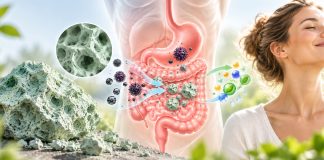
That is why the intestine is the first strategic lever for supporting and relieving the liver, and this is precisely where a modern, scientifically oriented detox strategy comes in: this detoxification strategy has nothing to do with radical fasting cures or short-term juice programs, but begins directly where harmful substances can actually be captured – in the intestinal lumen. If harmful substances can be bound in the intestine before they re-enter the circulation, the enterohepatic circulation is interrupted. The liver has less “overtime” to do, and the system is relieved.
And this is precisely where a substance comes into focus that has been playing an increasingly central role in recent years due to the increasing exposure to pollutants and toxins: the natural volcanic rock zeolite. But it is particularly important to note that not all zeolites are the same!
PMA zeolite: Difference between the active ingredient PMA and conventional zeolite
Zeolite is a natural mineral – but nature alone is not a guarantee of quality. Clinoptilolite zeolite, the correct name for the form of zeolite used in medicine, occurs worldwide in very different degrees of purity and structure.
Origin, processing, particle size, and activation are decisive factors in determining how well the material can actually work in the intestine. In fact, there have been several cases in the past where inferior zeolites without quality controls and without approval as medical products were placed on the market or withdrawn after testing by government authorities, which still leads to many misunderstandings today (see also: Zeolite Guide).
It is therefore important to make a clear distinction here: the active ingredient PMA zeolite (PMA stands for “patented micro-activation”) has been specially micro-activated and optimized for use in the human organism. It is therefore not just any powder of volcanic origin, but an approved medical device whose safety and efficacy have been tested in numerous clinical studies.
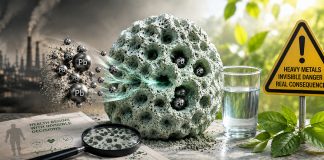
With regard to so-called “detoxification,” the effects of PMA zeolite have long been proven: this zeolite can bind heavy metals such as cadmium, lead, arsenic, nickel, and mercury, as well as the light metal aluminum (this is also a point of discussion, see: Zeolite dangerous), the harmful protein breakdown product ammonium, as well as drug residues and other toxic substances. Placebo-controlled studies also showed various improvements in gut-related parameters, indications of stabilization of the intestinal barrier, and good tolerability even with prolonged use.
Especially in a sensitive area such as gut health, quality is not a detail, but the foundation. When it comes to binding harmful substances in the intestinal lumen, the material used should be precise, tested, and safe. So, once again: not all zeolites are the same.
Detox and obesity: Why relief often also changes the metabolism
As soon as the word “detox” is mentioned, many people automatically think of weight loss, which is usually the desired outcome. However, a detoxification regimen is not a diet per se, nor is it a substitute for a long-term change in diet. And yet many people report that they actually lose weight thanks to a detoxification treatment with PMA zeolite.
However, there is another reason why this works: the underlying mechanism is less about sudden “fat burning through detoxification” and more about metabolic relief. When the intestines are calmed, inflammatory processes decrease, and the intestinal barrier becomes more stable, the metabolism can work more efficiently again. Nutrient absorption improves, flatulence and water retention are often reduced, and the body regulates and reactivates itself. This results in a more balanced metabolism that makes better use of the energy supplied through food. Weight loss in overweight people is therefore a logical consequence of intestinal and liver detoxification.
Important for the success of a detox regimen: First detoxify – then build up the microbiome
There is hardly any other area that is currently generating as much enthusiasm as probiotics. But this is precisely where a mistake in thinking often occurs.
The microbiome is not a rigid system that can be “filled up” with individual bacterial strains at will. It is as individual as a fingerprint and also highly sensitive to stress, environmental toxins, and disturbances of the intestinal barrier.
If the environment is inflamed or stressed, even “good” bacteria cannot find stable ground. That is why a sustainable intestinal strategy does not begin with indiscriminate probiotics, but with the preparation of the internal environment. In essence, this means:
- First reduce stress (in the form of a detox treatment with PMA zeolite);
- then stabilize the intestinal barrier, as it is the “breeding ground” for the intestinal flora.
Only when this groundwork has been laid can an individually tailored microbiome build-up take effect. Detox therefore means, in essence, carrying out an internal “spring clean” aimed at relieving and regenerating our organs and metabolism.
Spring reset: What a modern detox strategy can look like
A scientifically oriented relief phase does not have to be radical or ascetic. Rather, it is about consciously giving the body less stress and more support for a few weeks.
This starts with a simple but effective reduction in highly processed foods, sugar, and alcohol. Drinking enough still water helps the excretory organs in their daily work. Bitter substances from seasonal vegetables or herbs can stimulate digestive activity and indirectly support liver function.
At the same time, the focus is specifically on the intestines. A high-fiber, low-inflammation diet soothes the mucous membrane. And this is where PMA zeolite can play a fundamental role by binding harmful substances in the intestinal lumen, thereby indirectly relieving the liver.
Ideally, PMA zeolite should be used three times a day for three weeks during a detox regimen – see also: Zeolite dosage and duration of use). And of course: exercise, sufficient sleep, and stress reduction complete the picture. Chronic stress also affects the intestinal barrier and microbiome and is therefore an important part of the equation.
Spring detox that relieves rather than burdens – simple and efficient
Detox is therefore neither a myth nor a miracle cure. It is a term that is unfortunately often misunderstood. While classic “cleansing diets” should be viewed critically from a scientific perspective, there is a growing awareness that our detoxification organs are under constant strain in today’s environmental conditions.
A modern detox strategy therefore does not mean “cleansing” the body, but rather relieving it in a targeted manner. This relief begins in the gut, supports the intestinal barrier, takes the microbiome into account, and relies on proven substances rather than promises.
Spring is a wonderful time for this. But actually, any season is suitable for giving the body less stress and more balance.
https://pubmed.ncbi.nlm.nih.gov/10520643
https://pubmed.ncbi.nlm.nih.gov/25522674