What the new environmental report shows and why knowledge and prevention are more important than ever
Europe has published a new environmental report (published by the European Environment Agency (EEA), Copenhagen, Denmark). The comprehensive, scientifically precise report, which clearly describes the extent to which air, water and soil are now under pressure, shows the current situation of our environment and thus also our health burdens. And this report is not isolated: Numerous studies from environmental medicine, toxicology, human biomonitoring and climate research confirm the same direction.
Many people are already feeling the effects of these developments. They hear and read about “silent pollution”, ‘micropollutants’ or “heavy metal residues” and feel concern. This concern is quite understandable and justified: We now live in a time when environmental factors are more subtle, more complex and less visible – but at the same time penetrate deeper into our everyday lives or our bodies than ever before.
At the same time, modern science also shows something else: we are not powerless. If we are informed, we can do a lot for our health – both preventively and in everyday life for a wide variety of ailments and illnesses that have already developed.
A continent under environmental stress: What Europe’s ecosystems are telling us today
The new environmental report paints a clear picture: many European habitats are not in good condition. Our soils are losing their fertility, are enriched with pesticides and other toxic substances, surface waters often no longer achieve good ecological status and the number of regions with water scarcity is steadily increasing, even if it seems strange at first glance. Air pollutants, particulate matter, nitrate and heavy metal residues are also part of modern everyday life, even in places where we would not expect it.
The most common sources of pollution include:
- Heavy metals (e.g. cadmium, lead, mercury, arsenic, nickel)
- Industrial chemicals and solvents
- Residues from agriculture, traffic and packaging
- Fine particles and gases from the air
- Micropollutants in drinking and surface water
All these substances enter our bodies every day through our food, our drinking water and every few seconds through our breathing – usually in small but devastating quantities over many years. And while acute poisoning is (still) rare, chronic background pollution is demonstrably on the rise.
Europe is now systematically investigating these exposures as part of large human biomonitoring projects. This data clearly shows that many people already carry measurable amounts of various harmful substances in their bodies. Not in peak levels that cause illness – but in a “silent base load” that can have numerous long-term consequences for health. The sharp rise in the prevalence of various diseases, such as cardiovascular diseases, Alzheimer’s and diabetes, but also irritable bowel syndrome and leaky gut symptoms (where the intestinal wall becomes permeable, sometimes with devastating consequences), already show this.
When the silent burden of everyday life reaches the body: inflammation, stress and an overtaxed system
Pollutants do not act like dramatic poisoning from a movie. They work quietly. Many of them disrupt metabolic processes, promote oxidative stress or influence the work of the immune system.
The body often reacts with “silent inflammation” – those subliminal inflammations that are neither painful nor noticeable, but which accumulate over months and years. They are increasingly suspected of promoting numerous modern complaints, such as persistent tiredness, poor concentration, intestinal problems, skin irritation, immune stress or diffuse pain.
The organ at the center: the intestine as the central key to defense and regeneration
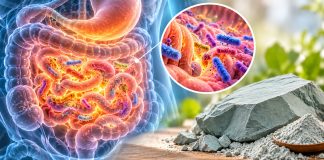
Our gut is a barrier, filter, sensor, immune center and metabolic center all in one. It alone decides which substances enter our body – and which stay out. However, if the intestine itself is under stress, its intestinal barrier can become permeable. This intestinal barrier, consisting of several layers, including the intestinal wall, is a component that is still far too underestimated for our health! The now well-known “leaky gut” phenomenon, for example, is not just a fad that more and more people are suffering from, but an expression of an overstretched intestinal mucosa that no longer closes perfectly.
A weakened intestinal barrier can:
- increase inflammatory reactions
- destabilize the microbiome
- permanently irritate and weaken the immune system
- and make the body as a whole more susceptible to numerous ailments and diseases</li
But the good news is that this is precisely where we have a decisive influence if we act and react with knowledge and on our own responsibility. Because while we can hardly change and alter the external environment, we can certainly strengthen our internal environment.
What can I do myself? Prevention starts on the inside – and it requires personal responsibility
Of course, no one can change European environmental policy on their own. We cannot control whether the rain will contain more micropollutants in future or whether soils in southern Europe will continue to dry out. We also have only limited control over the quality of the air we breathe or the soil from which our food comes.
However, we can very much influence how our own bodies deal with them.
Prevention does not begin at government conferences, but in our own bodies. Our bodies have impressive abilities to regenerate, detoxify and adapt to stress. These mechanisms work in the background every day – often unnoticed, but tirelessly.
However, our body naturally needs support for this: through a healthy diet (as far as possible), through sufficient sleep, through stress reduction, through a stable microbiome and through a healthy, intact intestinal barrier. Anyone who understands how strong these internal protective systems actually are quickly realizes that we are not just victims of our (man-made) environmental situation – we are also active shapers of our health. And every little step counts.
Zeolite as a natural protective factor: an increasingly relevant component of modern prevention
The volcanic mineral clinoptilolite zeolite, increasingly recognized in conventional medicine in the form of the active ingredient PMA zeolite for the detoxification of heavy metals such as lead, cadmium, arsenic, nickel or lead, is not a panacea against all these environmental changes. But science is increasingly describing this form of zeolite as an effective tool that, in the right context, can contribute a great deal to health and regeneration – especially where environmental pollution challenges the intestine and its barrier function.
Clinical studies show that activated clinoptilolite in the form of PMA zeolite:
- binds heavy metals in the intestine,
- increases their excretion,
- can stabilize the intestinal barrier,
- can accordingly strengthen the immune system,
- can reduce inflammation (silent inflammation)
- and forms the basis for a functioning microbiome
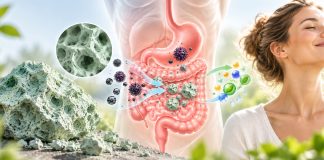
By trapping harmful substances, including the light metal aluminum, in the digestive tract and preventing their reabsorption, the zeolite in powder or capsule form can help to reduce all these internal burdens.
Its mode of action also indirectly relieves the liver, strengthens the immune system and supports the entire metabolism. This mechanism is becoming increasingly valuable, especially in the current era of increasing environmental pollution: zeolite in the special form “PMA” (PMA stands for “patented micro-activation”, as this zeolite is activated again in a special process for optimum absorption by the human body) strengthens the internal filters, which we can thus constructively influence ourselves.
Our life today: a realistic, optimistic view of the future
Europe is facing major ecological challenges. At the same time, however, people have never before had as much knowledge about how to protect themselves as they do today. Prevention is not just a medical measure, but also an attitude: the awareness that our own body has an active protective system that we can strengthen with the simplest of means.
Zeolite can be a building block among various components: PMA zeolite in particular is a clinically proven valuable partner of the intestine and a purely mineral tool that helps us to better deal with the stresses of our time. The environment is changing. But our knowledge, our strategies and our possibilities grow with it. If you want to do something for your health, both acutely and preventively, you should take a closer look at the possibilities of zeolite – also when it comes to the much-discussed microbiome.
Sources:
- European Environment Agency (EEA): Europe’s Environment 2025 – Main Report
This comprehensive report by the European Environment Agency provides a clear overview of how air, water and soil are developing in Europe and which pressures are relevant for people and the environment today. It serves as the scientific basis for many environmental and health assessments and clearly shows the current trends and risks.
Link: https://www.eea.europa.eu/en/europe-environment-2025/main-report
- European Environment Agency (EEA): Indicator – Heavy Metal Emissions in Europe
This indicator data from the EEA shows how emissions of heavy metals such as cadmium, lead and mercury have developed in Europe in recent years – with the clear indication that, despite decreases, the persistence of these substances means a long-term burden. The figures form an important basis for understanding why health prevention is so relevant today, particularly in the context of metals.
Link: https://www.eea.europa.eu/en/analysis/indicators/heavy-metal-emissions-in-europe
- European Food Safety Authority (EFSA): Metals as contaminants in food
This EFSA page summarizes current assessments of metals as contaminants in food – including cadmium, lead and mercury – and shows what risks exist for consumers and what limits are recommended. It thus provides well-founded figures and background information on the intake of metals via the food chain.
Link: https://www.efsa.europa.eu/en/topics/topic/metals-contaminants-food
- HBM4EU Policy Brief – Cadmium (PDF)
This paper shows the most important results of the European Human Biomonitoring Project HBM4EU on cadmium exposure – in particular how much cadmium is detected in the body and why this is relevant to health. It underlines the importance of long-term monitoring and the need to reduce exposure at an early stage.
Link: https://www.hbm4eu.eu/wp-content/uploads/2022/07/HBM4EU_Policy-Brief-Cadmium.pdf
- HBM4EU Substance Report – Lead (PDF)
This technical report from the HBM4EU initiative systematically examines lead exposure in the European population, its sources and health effects – from child development to cardiovascular health. It impressively shows why lead exposure continues to be an issue despite decades of decline.
Link: https://www.hbm4eu.eu/wp-content/uploads/2022/07/Lead_Substance-report.pdf
- World Health Organization (WHO) – Environmental Burden of Disease: Selected Heavy Metals (PDF)
This WHO report provides an in-depth analysis of the health effects of selected heavy metals – such as arsenic, cadmium and mercury – at a global level and shows the burden of disease associated with exposure. It thus underlines the importance of pollutant prevention for public health.
Link: https://www.who.int/publications/i/item/9789289071796
- World Health Organization Europe – WHO/EURO 2023-8983-48755-72523 (PDF)
This WHO Europe report analyzes the risk of selected carcinogenic substances, including heavy metals such as cadmium, lead and methylmercury, and assesses how much prevention could be achieved by reducing exposure. It thus provides a scientific basis for why preventive measures against environmental substances are urgently needed in Europe.
Link: https://www.who.int/europe/publications/i/item/WHO-EURO-2023-8983-48755-72523
- Le Monde – “Cadmium: a proven carcinogen has contaminated some of the most-consumed foods in France”
This newspaper article reports on an alarming French study: cadmium has been found in many staple foods and is described by doctors as a potential “public health time bomb”. It makes it clear that heavy metals have long since arrived in everyday life – not just in theory, but in food.
Link: https://www.lemonde.fr/en/environment/article/2025/06/06/cadmium-a-proven-carcinogen-has-contaminated-some-of-the-most-consumed-foods-in-france-doctors-warn-against-a-public-health-time-bomb_6742083_114.html