Recent research reveals surprising connections between the microbiome, intestinal barrier, inflammation, chronic back pain – and the benefits of zeolite
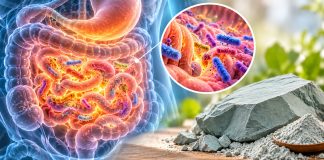
We’ve all known it for a long time: the gut is much more than just a digestive organ. It is a finely orchestrated system that influences our health through various axes at all levels – from the immune system to the brain, from the skin to the lungs. At least since research into the gut-brain axis, the gut has been considered one of the most important organs of our time. Its barrier function protects us from intruders, its microbiome controls immune reactions, metabolism and mood, and its mucous membrane is considered a mirror of our inner balance.
More and more studies are showing that a disturbed gut flora is involved in the development of numerous diseases – from allergies, autoimmune diseases and depression to fatty liver, diabetes and neurodegenerative diseases. Modern medicine recognizes that healing the gut often heals the whole person.
But who would have thought that? Science is far from finished when it comes to the gut – on the contrary. In the last two years, the focus has shifted to another organ that until now hardly anyone would associate with the gut: our spine. This is because science has also discovered the gut-back axis in the last two years!
A healthy back also starts in the gut – a paradigm shift in pain research
Millions of people suffer from back pain – it is the most common cause of chronic pain worldwide. More than one billion people are affected, and the trend is rising. In Germany alone, back pain is one of the most common reasons for visits to the doctor and sick leave – and is responsible for sometimes years-long odysseys through clinics and doctors’ surgeries as well as hundreds of thousands of operations, most of which would not even be necessary.
For decades, it was assumed that the causes were purely mechanical or degenerative in nature: Worn discs, poor posture, muscular imbalances. The result was a medical ordeal for many sufferers – from orthopaedists to physiotherapists, from injections to operations. Prof. Musa Citak, MD, one of Germany’s best-known orthopaedists, also describes in his new book “The Back Revolution” how many patients “wander from practice to practice without anyone recognizing the real cause”. However, the latest, downright revolutionary research findings show that In many cases, the “real cause” could lie much deeper – in the gut.
Revolutionary – the discovery of a new axis: the gut-back axis
Since 2023, more and more scientific studies have been describing a fascinating concept: the gut-spine axis or gut-disc axis. More and more studies indicate that the condition of our gut can have a direct impact on the health of our spine, intervertebral discs and back muscles – and vice versa.
Researchers have found that certain gut bacteria activate inflammatory processes in the body that can contribute to degenerative changes in intervertebral discs and joints. Dysbiosis in the microbiome leads to an overproduction of pro-inflammatory molecules, so-called cytokines, which reach distant tissues via the blood – including the fine structures of the spine.
Some recent studies even speak of a “missing link” between the gut and back pain: if the intestinal flora gets out of balance, this can promote chronic inflammation, which directly accelerates disc degeneration and muscle pain. And the most astonishing thing is that animal models have shown that even spinal cord injuries change the microbiome – so the axis works in both directions.
But wait a minute! Why a microbiome cannot be built up with a few standard bacterial strains
Thanks to these findings, you might think – once again – that regulating and building up a healthy microbiome with common bacterial strains that we can buy at the pharmacy or drugstore would be enough to stabilize the gut-back axis. But unfortunately it’s not that simple. Modern research is also increasingly showing that the microbiome is as individual as our genetic fingerprint.
And so, despite what the current massive amount of advertising would have us believe, there is simply no universal “bacteria cocktail” that would be equally helpful for all people. On the contrary: the indiscriminate intake of standard probiotics – in powder, capsule or drink form – can even cause more harm than good in certain circumstances, as numerous scientific studies and now countless testimonials show.
Instead, more and more experts are advising people to have their own microbiome analyzed first in order to support it in a targeted and individual way.
But one thing is most important: the foundation, the soil for the microbiome, must be right
It is important to remember that before good bacteria can colonize, their habitat must be intact – and that is the intestinal barrier. In a way, it is the fertile soil in which the microorganisms thrive.
A damaged intestine with holes, on the other hand, is like an asphalt floor on which no seed can take root. Only when the intestinal wall is dense, elastic and stable again is the basis created on which the microbiome can grow healthily and fulfill its protective functions.
The intestinal barrier – our inner protective wall and the foundation of our microbiome
Anyone talking about the gut-back axis – and all other gut axes – must also talk about the intestinal barrier. It is the sensitive gateway between the inner and outer world and consists of three levels of protection:
- The mucus layer (mucosa), which acts like a biological film to trap harmful substances
- The epithelial cells, which lie against each other like tightly sealed bricks and form the actual protective wall
- And then the microbiome, the trillions of microorganisms that act like guards in this system – they form the “living protective film” of the intestinal wall.
If this barrier is damaged – for example by stress, environmental toxins, medication and, above all, heavy metals such as cadmium, lead, arsenic, mercury and the light metal aluminum, as well as an unhealthy diet – the gut becomes permeable (“leaky gut”). Toxins, bacterial components and inflammatory messengers enter the bloodstream and trigger dangerous low-grade and, above all, permanent inflammation (silent inflammation). It is precisely these processes that are now regarded as another central mechanism – also in chronic back pain and degenerative spinal diseases!
Zeolite: preparing the ground for healing and regeneration
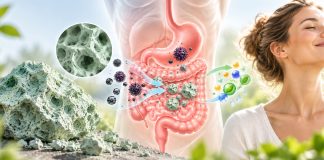
This is where zeolite comes into play – a natural mineral that is attracting increasing scientific attention. Zeolite acts as both a cleanser and regulator in the intestine. Its highly porous crystal lattice can bind heavy metals such as cadmium, mercury, arsenic, lead or nickel, the metabolic waste products ammonium, biogenic amines and other harmful substances and remove them from the body. For a special form of zeolite, the so-called PMA zeolite (PMA stands for “patented micro-activation”), this has already been proven in numerous clinical studies. By taking it as a cure in the form of powder or capsules, the intestinal wall is demonstrably relieved, the environment is stabilized and the intestinal barrier can regenerate.
You can imagine it like a farmer loosening and detoxifying the soil before sowing new life on it. The zeolite prepares the ground for a healthy microbiome, which in turn keeps the metabolism and immune system in balance.
Zeolite can also form the crucial link to the gut-back axis
A stable, relieved intestine with an intact barrier therefore forms the basis for reducing inflammatory processes that can put a strain on intervertebral discs, muscles and nerves. In future, zeolite can therefore gain importance not only as prevention but also as additive support in the treatment of back pain where nothing is mechanically “broken” but everything is systemically imbalanced.
It should therefore be emphasized once again: The all-important microbiome can only regenerate and develop optimally in a cleansed, stabilized gut.
And the following applies: each person’s microbiome is as individual as a genetic fingerprint – and should therefore be developed in a targeted manner and with professional support. Doctors and pharmacists who are familiar with microbiome diagnostics and intestinal rehabilitation know exactly which strains and combinations make sense in each case.
Strengthening the intestinal barrier with zeolite creates the conditions for beneficial microorganisms to take root – and for the entire organism, including the back, to regain its natural balance.
Intestinal-back axis: a new understanding of back pain – and therefore new treatment strategies
The new scientific findings on the gut-back axis have once again changed many things: back pain is therefore often not just an orthopaedic problem, but a systemic process in which the gut, immune system and metabolism are closely intertwined.
The good news is therefore: what strengthens the gut can also help the back
A diet low in inflammation, sufficient exercise, stress reduction and the targeted development of healthy intestinal flora are not only prevention, but possibly also therapy – especially if chronic pain was previously “unexplained”.
And this is where the circle closes: substances such as zeolite, which regenerate the intestines from the inside, could create the basis for the back to finally come to rest again.
Intestinal-back axis: a new chapter in medicine
Research into the gut-back axis is still in its infancy – but what is emerging here is revolutionary.
As with the gut-brain axis, it could turn out that healing begins where it was never suspected before: inside our digestive system. Perhaps in a few years’ time we will be saying: “If you want to heal the back, you have to understand the gut.”
Selection of studies and sources:
In this narrative review, the authors explicitly propose the term gut-spine axis for the first time and summarize the existing findings on how dysbiosis in the gut could promote degenerative changes in spinal structures via immune signaling pathways, metabolites and inflammatory processes, stating that the microbiome can have an influence on bones, intervertebral discs, joints, connective tissue and muscle components of the spine, and that these different spinal structures influence each other (negative spiral).
https://www.frontiersin.org/journals/microbiology/articles/10.3389/fmicb.2023.1290858/full
This paper presents the “gut-disc axis” model and identifies three possible mechanisms: Immunomodulation, bacterial translocation/colonization, and metabolite alterations by gut microbiota as ways in which dysbiosis can negatively impact intervertebral disc cells. They also discuss potential therapeutic approaches to influence disc degeneration through targeted modulation of the microbiome.
https://pmc.ncbi.nlm.nih.gov/articles/PMC11549883/
This study goes beyond the intervertebral discs and shows that the composition and diversity of the gut microbiome is closely correlated with spinal diseases such as spinal stenosis.The authors also refer to Morimoto et al. discussing a possible gut-ligament axis in lumbar spinal stenosis in their review, albeit without definitive mechanisms.
https://www.frontiersin.org/journals/immunology/articles/10.3389/fimmu.2024.1360132/full
This study uses Mendelian randomization (MR) to provide evidence of causal links between specific gut bacteria / microbiome metabolites and chronic low back pain (LBP). Key finding: A lower proportion of the Ruminococcaceae and Lactobacillaceae family was associated with an increased risk of back pain (OR ~ 0.77 and 0.875, respectively), providing genetically supported evidence that microbiome changes may be not only associatively but causally linked to back pain.
https://www.frontiersin.org/journals/microbiology/articles/10.3389/fmicb.2023.1157451/full
This study is the first to show a significant association between gut microbiome dysbiosis and lumbar degenerative disease (e.g. in disc herniation or degeneration) – especially in terms of diversity and specific taxonomic markers.
https://onlinelibrary.wiley.com/doi/full/10.1002/jsp2.70005