MedUni Vienna shows: Impaired intestinal barrier plays a key role in post-COVID – zeolite can help stabilize it
New study proves link between intestinal health, fatigue, and post-COVID symptoms – and opens up new avenues for regenerating the intestinal barrier.
The coronavirus has left many scars that refuse to heal. Long Covid and post-Covid have long since become an integral part of our everyday lives. According to a modeled inventory by the Risklayer & ME/CFS Research Foundation, an estimated 1.500,000 people in Germany will be living with Long Covid or Post Covid by the end of 2024. In Austria, it is estimated that up to 850,000 people have been affected or are still suffering from the consequences – from leaden exhaustion and concentration problems to digestive issues. These are interim estimates because official overall data is lacking – they are currently considered the most complete figures available and are also being picked up by major media outlets.
New scientific findings: The intestinal barrier as an underestimated hub
A research team from the Medical University of Vienna has now published groundbreaking findings in the journal Allergy (2025). The Vienna study did not measure “just any” inflammation, but rather a pattern that fits with the intestinal barrier theme. The LBP/sCD14 ratio is central to this. LBP stands for lipopolysaccharide-binding protein – in simple terms, it increases when bacterial components enter the body from the intestine. sCD14 is a soluble activation marker of the innate immune system (especially of monocytes).
If both are elevated and the ratio shifts, this indicates that material from the intestine is entering the bloodstream through a leaky barrier – a classic sign of leaky gut. At the same time, the researchers found lower levels of IL-33. IL-33 is a so-called “alarm signal” of the mucous membrane: it normally helps with the repair and regeneration of epithelial tissue. Less IL-33 can mean that these self-healing impulses of the intestinal mucosa are weakened. Finally, IL-6 levels were elevated – IL-6 is a pro-inflammatory signal that indicates that the body is systemically “on alert.”
Together, this paints a picture of a weakened intestinal barrier, through which bacterial components enter the body, putting the immune system on constant alert and thus promoting ongoing inflammatory processes that may be associated with fatigue and other post-COVID symptoms.
Post-COVID: A puzzle of diverse symptoms
Many affected individuals report that their actual COVID illness was mild—a few days of coughing, perhaps fever, then everything seemed to be over. But weeks or months later, diffuse symptoms began to appear that were initially difficult to connect: leaden fatigue, concentration problems, muscle pain, palpitations, or indigestion. The tricky thing about post-COVID is that it does not follow a uniform course, but rather resembles a colorful mosaic of symptoms that varies from person to person.
The gastrointestinal tract in particular is becoming increasingly noticeable. Some sufferers report bloating, flatulence, irregular bowel movements, or a permanent feeling of pressure in the abdomen—symptoms that may have existed before the infection. This suggests that an already sensitive or inflamed intestine acts as an open door for immune imbalance. Researchers therefore refer to a “predictive phenotype,” i.e., a risk profile that can be identified based on intestinal health even before infection.
Those with a stable intestinal barrier appear to be better equipped to cope, while those without run the risk of a viral infection permanently disrupting the finely tuned system between the gut, immune system, and nervous system.
Brain fog: When the gut and brain communicate with each other
But that’s not all: The “brain fog” that is widespread in post-COVID symptoms, in which many of those affected fear the onset of dementia, also has its (partial) cause in the gut.
Using state-of-the-art imaging, the Japanese study showed that certain signal receptors in the brain, known as AMPA receptors, have increased significantly in long COVID patients. These receptors control how nerve cells communicate with each other. If there are too many of them, the brain can become “overstimulated,” so to speak—information processing becomes out of sync, which can manifest itself in concentration problems, forgetfulness, and the typical “brain fog.” These findings also point to underlying inflammation in the body—possibly triggered by leaks in the intestinal barrier and the associated immune processes.
What do these findings mean for post-COVID sufferers?
The new research results are much more than a scientific detail – they show where a way out of the post-COVID vicious circle can begin: in the gut. Because when the barrier between the gut contents and the bloodstream is disrupted, the immune system, metabolism, and detoxification become unbalanced. Toxins, bacterial residues, or pro-inflammatory molecules can enter the body unhindered, while valuable nutrients are no longer properly absorbed. The result: an organism that is internally “under stress,” constantly busy regulating itself—and in the process losing energy that is lacking elsewhere.
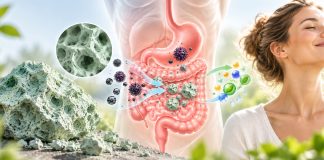
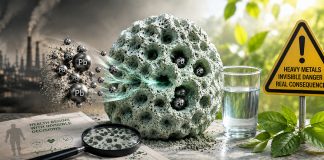
This is where zeolite comes in – more precisely, PMA zeolite, whose effects have now been scientifically investigated in numerous clinical studies. Zeolite is a microporous volcanic mineral that acts like a fine-meshed sponge in the intestine. Its crystal structure is able to bind and excrete pollutants, heavy metals, ammonium, and other metabolic residues without being absorbed into the body itself. This relieves the intestines and allows them to concentrate on what is essential: protection, regeneration, and balance.
The particular advantage of PMA zeolite (PMA stands for: patented micro-activation) lies in its activated surface. A special process increases its absorption capacity many times over, allowing it to work even more effectively. Studies show that the use of PMA zeolite can contribute significantly to the regeneration of the intestinal barrier by reducing oxidative stress, neutralizing harmful substances, and stabilizing the tight junctions, i.e., the microscopic connections between the intestinal cells. PMA zeolite therefore acts precisely where, according to the Vienna study, the problem begins in post-COVID cases.
For those affected, this means that although zeolite rock cannot eliminate the virus, it can help repair the damage to the intestine and thus support the overall balance of the body. Strengthening the intestinal barrier also strengthens the immune system, the nervous system, and ultimately the energy production in the cells.
Many zeolite users also report that after a period of relief with PMA zeolite, they feel clearer, lighter, and more energetic. This is plausible, because when the intestinal wall is sealed again, calm returns to the immune system—and this is felt by both the body and the mind.
From irritable bowel to systemic disease – the new understanding of the intestine
What used to be considered a mere “stomach problem” is increasingly turning out to be a systemic disease. The intestine communicates with almost all organs – the liver, the lungs, and above all the brain – via nerve pathways, messenger substances, and immune cells. An unstable intestinal barrier can therefore have effects far beyond the digestive tract: from chronic fatigue to neuroinflammatory processes that affect thinking and feeling.
Zeolite as an increasingly relevant building block for regeneration
There is still no standard therapy for post-COVID, but there are ways to support the body in its self-regulation. PMA zeolite can be a valuable building block here: as a natural companion that binds, protects, and stabilizes. In combination with a low-inflammatory diet, exercise in the fresh air, and sufficient rest periods, a regenerative environment is created in which healing becomes possible again.
Because in the end, it’s like in nature: only on clear, uncontaminated soil can new things grow. When the gut regains its original stability, order returns to the whole body – powerfully and from within.
Studies and sources:
https://onlinelibrary.wiley.com/doi/10.1111/all.16593
https://academic.oup.com/braincomms/article/7/5/fcaf337/825847
https://mecfs-research.org/en/costreport-long-covid-and-mecfs