
The Charité professor who recognized the potential of clinoptilolite zeolite early on and lived to be 98 years old
Today, when people talk about clinoptilolite zeolite as a versatile natural mineral to support health and prevention, one name comes up again and again: Prof. Dr. Karl Hecht. The Berlin neurophysiologist, stress and sleep researcher and professor emeritus at Charité is considered by many experts to be one of the most important pioneers of modern zeolite research. And that is true: The medical doctor was the doyen of zeolite science and without him, research would be one major chapter poorer.
For decades, Karl Hecht dealt with the question of how natural minerals, environmental factors and biological regulatory systems interact – and what role clinoptilolite zeolite can play in this. Until his death in 2022 at the age of 98, Karl Hecht remained scientifically active, published over 40 books and gave countless lectures on health, prevention and environmental medicine, because education – both in professional circles and among the general public – was his top priority alongside research. His life’s work combines classical medical research with a deep trust in the forces of nature, which is unfortunately rarely found in science today.
Karl Hecht: An important scientist at Charité – and pioneer of modern stress and sleep research
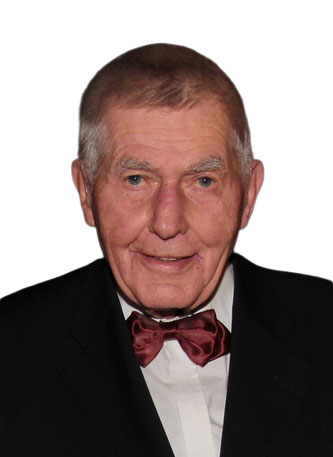
Karl Hecht was born in 1924 and studied human medicine at the Humboldt University in Berlin. After completing his doctorate and habilitation, he developed into an internationally recognized physiologist. He became Professor of Experimental and Clinical Pathological Physiology at the renowned Charité hospital, where he led research into stress physiology, chronobiology, sleep medicine and neurophysiology.
As early as the 1970s, he was working on biological rhythms, stress regulation and the adaptability of the human organism – topics that play a central role in modern preventive medicine today. He was also active in space medicine: in the international Interkosmos program, he coordinated research work on chronobiology and chronomedicine for many years.
Clinoptilolite zeolite as a subject of research – and lifelong companion of Prof. Karl Hecht
After his retirement at the beginning of the 1990s, Karl Hecht began his second, equally productive scientific phase: zeolite research. What particularly fascinated Karl Hecht was the unusual crystal lattice structure of the mineral. Zeolite has microscopically small channels and cavities that enable ion exchange and adsorption processes. These properties were already well known from geochemistry and environmental technology.
However, the question of what significance this structure could have for biological systems had hardly been investigated in medical research. The experienced physiologist therefore began to study the international literature intensively, particularly work from Russia, Japan and Eastern Europe, where clinoptilolite zeolite had already been the subject of scientific research for decades. And the deeper he delved into this research, the more he realized that this was a topic that had been largely overlooked in Western medicine.
This initial curiosity eventually developed into a new scientific field of work. Karl Hecht began to publish books and articles on the role of silicon minerals for health and prevention and to publicly advocate an objective scientific discussion on zeolite. What had begun as a scientific question thus became one of the central topics of his later years of research.
Clinoptilolite zeolite also became his daily companion in his private life. He took around six grams himself every day and was convinced on the basis of his research that zeolite was an important – though of course not the only – building block for a long and healthy life.
Karl Hecht was therefore of the opinion that clinoptilolite zeolite should generally play a fundamental supporting role in the regulation of biological systems in medicine. In numerous publications and books, he campaigned for the scientific basis of these effects to be presented in an understandable way. At the same time, he warned against viewing zeolite as a “miracle cure”, because for him it was much more a basic therapeutic agent that can usefully complement other therapies. This serious, differentiated attitude characterized his scientific work, which was also highly regarded by his colleagues.
A tireless fighter against misinformation about zeolite
 Now, as is well known, the zeolite market has become increasingly confusing in recent decades. Very different qualities or products without any proof of quality, untenable marketing promises due to increasing competition and contradictory information led (in some cases to this day) to many people being unsettled. Karl Hecht saw it as his task to create clarity here. He criticized both exaggerated promises of healing and unfounded warnings and campaigned for a scientifically sound evaluation of clinoptilolite zeolite.
In his numerous statements, he wrote that nonsense and false information often spread faster than scientific findings – and that serious research and education were therefore necessary. His aim was to bring zeolite out of the gray area between naturopathy and marketing and to establish it as a subject of serious scientific discussion.
The PMA zeolite from the research and development company PANACEO is a good example of this: this form of zeolite (PMA stands for patented micro-activation) is probably the only clinoptilolite zeolite available on the market in Europe to date, which has been extensively researched over the past 20 years in numerous studies and scientific papers on both its effectiveness and its safety for consumers (see also: Zeolite studies). Accordingly, Prof. Hecht preferably recommended PMA zeolite and was in close contact with Jakob Hraschan, the philanthropic founder of the company PANACEO, and his team.
Prof. Karl Hecht: An exceptionally productive scientist to the end
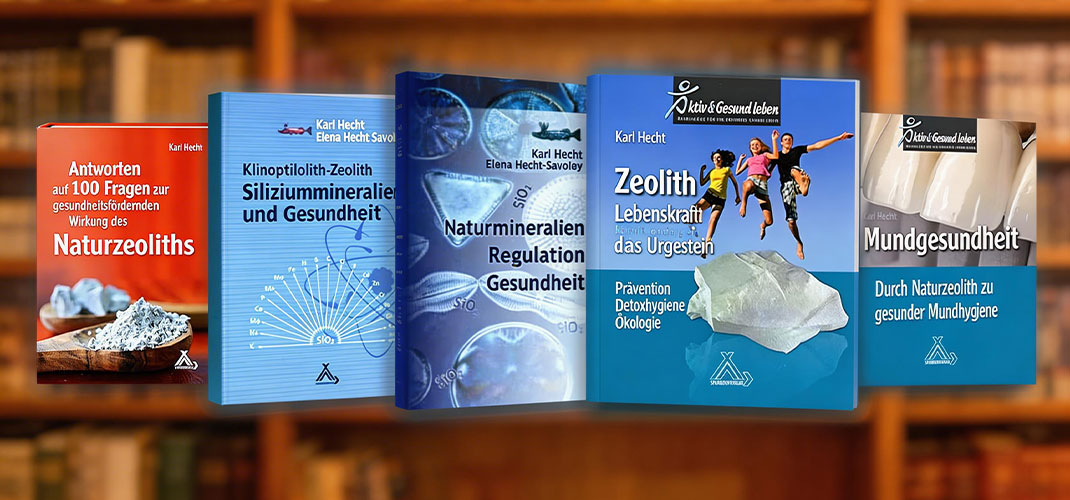
Karl Hecht’s scientific record is truly impressive. Over the course of his life, he published several hundred scientific papers, registered numerous patents and wrote dozens of books on topics such as sleep, stress, environmental medicine, mineral metabolism, preventive medicine and, of course, zeolite.
Many of his works are aimed at specialists, i.e. doctors, therapists and scientists. Others are deliberately aimed at the general public. One example is the book “Alt werden und jung bleiben” (Spurbuch-Verlag 2011), in which Hecht describes in an understandable way how lifestyle, environment and natural factors can influence health. This made him one of the early proponents of what is often discussed today under terms such as longevity or well ageing.
Health is more than medicine – Karl Hecht’s holistic view of people
One guiding principle ran like a red thread through Karl Hecht’s scientific and personal life: health is more than medicine. For him, health was not a condition that could be restored by medication or technical procedures alone. Rather, he saw the human organism as a highly complex biological system that constantly reacts to its environment – to nutrition, exercise, stress, environmental pollution, social relationships and mental attitudes.
Hecht was also an early proponent of the view that many chronic diseases do not arise in isolation, but are an expression of a disturbed balance between the human body and its environment. In his work, he repeatedly showed how strongly factors such as sleep patterns, mental stress or the increasing burden of environmental toxins can affect the regulation of the body.
He therefore advocated a form of medicine that takes greater account of prevention, the adaptability of the organism and natural regulatory mechanisms. This view made him a pioneer of a type of medicine that is becoming increasingly important again today.
Prevention: Prof. Karl Hecht as a pioneer of a medical direction that is only now taking center stage
Decades ago, he also advocated a form of medicine that places a stronger focus on prevention. Bear in mind that this was at a time when “prevention” was not yet a commonly used term and, unlike today, prevention was not yet a high priority in medicine. For Karl Hecht, prevention primarily meant actively strengthening the body’s ability to adapt – in other words, providing targeted support for the body’s own biological regulatory mechanisms that keep our organism healthy before an illness even develops.
In this context, he also regarded clinoptilolite zeolite as a fundamental measure for the benefit of the organism in order to better cope with the stresses of the modern environment. Hecht was therefore also convinced that medical progress would not only result from new medicines, but also from a deeper understanding of the natural processes of life. For him, science was therefore always an invitation to understand people more strongly as part of nature and to see health not just as a medical task, but as a joint project between science, the environment and a conscious lifestyle.
A scientist with attitude: nature, ethics and responsibility
Anyone who met Karl Hecht (I myself had a very insightful, enjoyable conversation with him in 2016) or read his books quickly realized that this was not a scientist who saw research as a dry academic discipline. For him, science was always also an ethical responsibility towards people and the environment.
Karl Hecht was convinced that modern civilization was increasingly distancing people from the natural foundations of their health. He saw environmental pollution, chronic stress, lack of exercise and an increasingly industrialized diet as the main causes of many of the chronic diseases of our time.
For this very reason, he advocated a return to the body’s natural regulatory mechanisms. He was by no means interested in romanticizing nature, but rather in scientifically based preventive medicine that takes biological connections seriously.
In his lectures and books, he repeatedly emphasized that people must learn to treat their environment, their body and their lifestyle more responsibly again. Health does not begin in the doctor’s office, he said, but in everyday life – in exercise, sleep, nutrition, mental balance, dealing with pollutants and toxins and in the conscious use of the earth’s natural resources.
Prof. Karl Hecht was a visionary researcher – and gave us a legacy for the future
Karl Hecht was undoubtedly a visionary scientist. But his visions had nothing to do with speculative ideas or fashionable health promises. On the contrary: his convictions were always the result of decades of scientific work, clinical experience and careful analysis of international research findings.
On this basis, he came to the conclusion that clinoptilolite zeolite should play a much greater role in the prevention and supportive treatment of chronic diseases in the future.
His often quoted idea was as simple as it was fundamental: zeolite should become something like “daily bread” for people – a natural component of preventive healthcare. By this he by no means meant uncritical or indiscriminate use. Rather, he recommended integrating clinoptilolite zeolite into a health-conscious lifestyle, either as a cure or on a regular basis, similar to the way many people cultivate their daily rituals around coffee, tea or other habits. Karl Hecht was convinced that this ancient volcanic mineral could be used both preventatively and as an adjunct to existing chronic illnesses in order to relieve the body and support its natural regulatory mechanisms.
Science, health and nature in harmony: Prof. Karl Hecht’s message
When the great Berlin physiologist passed away in 2022 at the age of 98 – in the middle of working on two more books, by the way – numerous scientific papers had already substantiated many of his fundamental beliefs. But like all serious science, this story does not end with a single researcher. Research into clinoptilolite zeolite continues – in universities, clinics and numerous research institutes.
It thus builds on the life’s work of a man who dedicated his life to the question of how nature, science and health can be brought into harmony. This attitude also shaped his decades-long involvement with minerals such as clinoptilolite zeolite, especially in its special form PMA zeolite.
Many of Prof. Karl Hecht’s books can be found on Amazon.