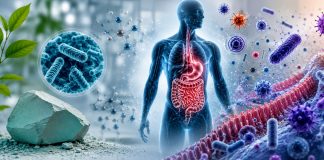
Spring, pollen and histamine – why many people’s bodies are now out of balance
Spring not only brings blooming landscapes and finally warmer temperatures, but also an increased pollen load. For many, this means runny noses, itchy, burning eyes and constant sneezing fits. But for people with a histamine intolerance, this time of year can be even more stressful. This is because the increased release of histamine due to pollen exposure can exacerbate their symptoms and lead to a variety of complaints. Zeolite can be a helpful supporter here.
Our body is a fascinating masterpiece of balance – which unfortunately sometimes gets out of sync. One of our most important messenger substances is called histamine. This is a small but powerful signal transmitter that controls inflammation, alerts our immune system and regulates many vital processes. In some people, histamine is increasingly released when the first warm rays of sunshine arrive – and this stress can overwhelm the natural degradation capacities. If you already have a histamine intolerance, the symptoms can increase dramatically. Important: However, a histamine intolerance does not develop suddenly, but develops over a long period of time, initially unnoticed. It is often caused by genetic factors, intestinal damage, chronic inflammation or certain medications – and only suddenly becomes apparent through the interaction with pollen in the air.
What is histamine? A vital messenger substance with two faces
Histamine is everywhere: in our body, in our food, and especially in our intestinal flora. But what is histamine anyway? Histamine is a so-called “biogenic amine”, which is one of the tissue hormones and fulfills a variety of necessary functions in the body. It plays a central role in allergic reactions, regulates the sleep-wake rhythm, influences the gastrointestinal tract and acts as a neurotransmitter in the brain. Excess histamine is normally broken down by the enzyme diamine oxidase (DAO).
The role of the DAO enzyme: the invisible helper in the fight against excess histamine
Diamine oxidase, or DAO for short, is an enzyme that is produced in the intestine, more precisely in the upper small intestine. Its main task is to break down excess histamine from food before it enters the bloodstream. However, if DAO activity is too low, histamine is not broken down sufficiently – and the typical symptoms arise.
When the balance tips: How histamine can throw the whole body into turmoil
Histamine intolerance upsets the finely balanced equilibrium in the body. Either too much histamine is released – for example due to overactive intestinal flora, a permeable intestinal barrier or a high dietary intake – and the breakdown no longer works sufficiently. The result: histamine floods the body and can trigger symptoms such as headaches, reddening of the skin, palpitations, indigestion or chronic fatigue.
Antihistamines, which block the effect of histamine, are often used to alleviate these symptoms. However, these medications can cause side effects such as tiredness, dizziness, dry mouth or headaches. It is therefore also important to know: Classic antihistamines such as cetirizine do not inhibit the DAO. In addition, there are other medications – such as certain painkillers or psychotropic drugs – which can also hinder the breakdown of histamine in the body.
The intestinal barrier: our natural protective shield against histamine floods
Our intestines therefore also play a key role here. The intestinal mucosa, a part of the intestinal wall, forms a barrier against harmful substances such as lead, cadmium, arsenic – or even aluminum, ammonium and other unwanted metabolic products. If the intestinal barrier becomes permeable – keyword “leaky gut” – histamine and other irritants can enter the body in an uncontrolled manner. This in turn overwhelms the mast cells, which release even more histamine in response. The result: a spiral of inflammation, irritation and overreaction.
Mast cells: The silent alarm systems of our immune system
Mast cells sit like silent scouts in the tissue – ready to sound the alarm in case of danger. They release messenger substances such as histamine, which in turn triggers inflammation. This is actually a sensible process of the organism, but if the mast cells are permanently irritated, for example due to a permeable intestinal environment or stress, the system gets out of control. Incidentally, a chronically elevated stress level can not only stimulate the mast cells, but also lower the cortisol level – which further complicates the regulation of the immune system.
When the gut becomes leaky: The dangerous spiral of histamine intolerance
If the intestinal mucosa is not healed, inflammation increases, the mast cells become overactive and histamine levels continue to rise – creating a classic vicious circle. At the center of this development is often the so-called leaky gut syndrome, in which the intestinal barrier becomes permeable and harmful substances enter the body unhindered.
Incidentally, many people do not even know that they suffer from it, as leaky gut syndrome is still far too rarely taken into account in conventional diagnostics. According to estimates, around 10 million people in Germany alone are affected by this silent disease of civilization – although leaky gut is still not recognized as an independent clinical picture in conventional medicine. This makes it all the more important to focus attention on healing the intestinal mucosa. The repair of the intestinal barrier is a crucial element in the causal treatment of histamine intolerance – and an important step back to more inner balance and health.
The volcanic mineral zeolite can help with histamine intolerance in a very simple and fascinating way.
It has long been scientifically proven that zeolite strengthens the intestinal barrier, reduces the permeability of the intestinal wall and thus significantly lowers its irritation load. Zeolite also provides valuable stimuli for the DAO enzyme – in particular through the release of zinc, copper and magnesium, which are partly responsible for its activity. Zeolite can also contain harmful germs in the intestine and thus support the growth of healthy bacteria – a plus point for the microbiome. In addition, initial scientific studies show that zeolite may also be able to bind histamine in the intestine before it enters the circulation – a promising mechanism that is currently being researched further.
Natural zeolite instead of permanent pills: the way out of the histamine spiral
While medications such as antihistamines, as already mentioned, primarily combat the symptoms, zeolite tackles the causes – in a completely natural way. Antihistamines can help to slow down histamine in the short term, but they do not intervene in the development process. They have a symptomatic effect – and often have to be taken permanently without improving the cause.
Zeolite, on the other hand, offers precisely this different approach: it gets to the root of the problem – where histamine is produced and regulated – in the intestine. As a natural detoxifier, it helps to bind and excrete harmful substances, thus relieving the mast cells and strengthening the intestinal barrier. The result: less histamine, less irritation, more inner balance. Zeolite regenerates the center of histamine processing – our intestines – and can thus pave the way for a real improvement in symptoms. In short: causal instead of cosmetic. Natural instead of chemical. Holistic instead of selective.
Zeolite and accompanying measures: How holistic approaches strengthen the body
In addition to taking zeolite – and please only in the form of a certified medical product! – a conscious, low-histamine diet is also important. Fresh, minimally processed foods, avoiding matured cheese, sausage products or alcohol – all this helps to relieve the body. Reducing stress is also essential, as stress activates the mast cells enormously. Exercise, mindfulness and a healthy lifestyle also support the body.
A new beginning with zeolite: back in balance with knowledge and nature
Histamine intolerance is therefore not an irreversible dead end. With the right knowledge, targeted support and a conscious lifestyle, the restless dragon can be tamed. Zeolite can be a strong partner – a natural rock in the surf that helps the body to regain its balance. Because sometimes all it takes is an impulse for our guardian angel histamine to spread its wings again.