Why the underestimated widespread disease periodontitis needs new solutions – and how PMA zeolite significantly improves clinical parameters according to a study
 Periodontitis – often referred to as “periodontitis” in common parlance – is one of the most underestimated chronic diseases of all. Gum inflammation, oral dysbiosis, silent inflammation, the oral microbiome, antibiotic resistance and PMA zeolite: all of these are directly linked when it comes to understanding and treating this systemic disease. Millions of people suffer from this chronic inflammatory gum disease – and that is hardly surprising. Our mouth is the great gateway to our organism: this is where digestion begins, where environmental toxins and other harmful substances first encounter our tissues.
What many people don’t know: Chronic periodontitis is not a localized problem. It is a systemic hotspot that can promote cardiovascular disease, diabetes, arthritis, respiratory problems and even dementia – because inflammatory messenger substances and bacteria from the gum pockets enter the bloodstream and spread throughout the body.
The big problem of our time (and this applies far beyond dentistry): Many antibiotics are increasingly losing their effectiveness, even in periodontitis. Resistance is increasing rapidly and antimicrobial protocols therefore often only have a limited effect. At the same time, our immune system is under pressure: heavy metals such as mercury from old amalgam fillings, environmental toxins and chronic stress weaken the immune system and promote silent inflammation in the mouth.
However, there are new scientific findings – and therefore new ways to treat periodontitis. For the first time, a clinical study clearly shows how PMA zeolite can intervene here. This opens up new possibilities for prevention, care and additive therapy for periodontitis.
What is PMA zeolite – and why does it play a key role in inflammation in particular?
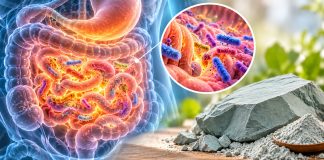
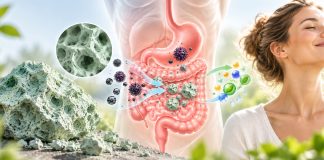
PMA zeolite is a specially micro-activated volcanic mineral whose microporous crystal structure can bind harmful substances in the body like an extremely fine sieve. The patented “PMA technology” of the research and development company PANACEO makes clinoptilolite zeolite, which is commonly used in medicine, many times more effective: the surface area is greatly increased, the binding power is strengthened and the absorption capacity of the crystals is optimized.
Even in the oral cavity, PMA zeolite can bind and neutralize bacterial metabolic toxins, acids, inflammatory mediators and heavy metals such as mercury, lead, cadmium, nickel and arsenic – also proven in clinical studies. At the same time, it has been proven to improve the microbial balance. This is precisely why it works where periodontitis begins: in the deep, inflamed gum pockets and in the oral microbiome, which typically tilt into dysbiosis in periodontitis.
What is periodontitis? Why it develops and why it is so dangerous
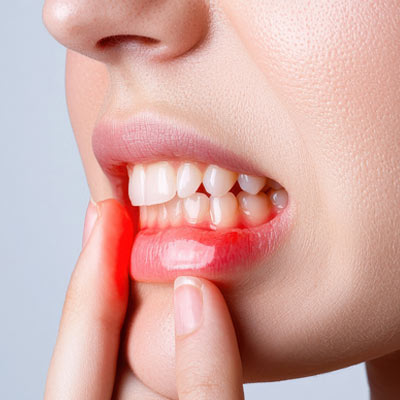
Over 700 species of bacteria colonize our oral cavity – most of them harmless or even beneficial. However, if the microbial balance is upset, dysbiosis (a disruption of the bacterial balance) occurs: Pathogenic germs take control and displace those microorganisms that protect our tissue. An inflammation develops, the gums swell, begin to bleed and recede over time.
Periodontitis is not a localized dental problem, but a gradual, destructive process
Chronic periodontitis gradually attacks the entire periodontium – the network of fibers, connective tissue and jawbone that provides a stable anchor for each tooth. If the inflammation is not stopped, these structures gradually dissolve. The gum pockets deepen, the bone deteriorates and support is lost.
For those affected, this often means a painful and stressful process: first one tooth becomes loose, then a second – and it is not uncommon for people to lose several teeth within a short space of time. Not because the teeth themselves are diseased, but because the “ground” beneath them is literally eroding.
Untreated periodontitis can lead to serious secondary diseases
Long-term periodontitis has an effect far beyond the mouth. The continuous exposure to bacteria, toxins and inflammatory mediators enters the body via the bloodstream and increases the risk of:
- heart attack & stroke
- diabetes
- rheumatoid arthritis
- Respiratory diseases
- Pregnancy complications
- neurodegenerative diseases such as Alzheimer’s, Parkinson’s and other dementias
- Depression
Antibiotics are increasingly failing – new therapeutic approaches are therefore urgently needed
Antibiotics used to be the standard treatment for periodontitis. But those days are over: resistance is increasing and systemic antibiotics are also changing the oral and intestinal microbiome – often with long-term consequences.
Although traditional treatment at the dentist remains essential, it is increasingly reaching its limits when it comes to deep gum pockets and stubborn biofilms.
Modern approaches therefore start directly at the point of origin: for example, subgingival treatment (under the gum line) with PMA zeolite. In combination with professional cleaning and a specially prepared PMA zeolite solution, which is applied specifically to the diseased pockets, a new therapeutic approach is created: locally effective, non-antibiotic, microbiome-friendly and without resistance risks.
New clinical study – PMA zeolite significantly changes the course of periodontitis
The new prospective, controlled study with 36 patients clearly shows that periodontitis is not just a mechanical problem, but an inflammatory disease and an expression of dysbiosis in the microcosm of the mouth. This is where PMA zeolite comes in – by changing the environment.
After just a few applications, the gums became brighter and less sensitive, swelling decreased and objective parameters visibly improved.
The most important results:
- Pocket depth: significant improvement in two thirds of patients
- Bleeding status: significant decrease
- Plaque index: stable decrease
- Subjective perception: 24 out of 36 patients felt clearly better
However, the decisive change took place in the oral microbiome.
Oral microbiome: how PMA zeolite restores balance
Many people are unaware that the mouth – like the gut – has its own microbiome. Billions of microorganisms form a sensitive protective system that stabilizes our mucous membranes and supports our immune system.
If this system breaks down, the inflammation-promoting groups of bacteria that can survive in deep gum pockets multiply. This is precisely where PMA zeolite works: it binds acids, toxins, bacterial metabolic products and heavy metals, deprives pathogenic germs of their living conditions and creates space for microorganisms that promote regeneration.
The microbiome analysis of the study confirms this:
- Inflammation-associated bacteria such as Desulfobulbus oralis decreased significantly, while health-associated genera such as Lachnospiraceae increased.
- PMA zeolite therefore does not modulate individual bacteria – it changes the entire environment, making health possible again.
Incidentally, the French scientist Antoine Béchamp formulated a sentence over a hundred years ago that is more relevant today than ever:
“The microbe is nothing, the environment is everything.”
Basically, he was describing exactly what we know today about periodontitis – and many other inflammatory diseases: It is not the bacteria themselves that are the problem – but the conditions in which they grow. Only when the environment changes, when stress, heavy metals, nutrition, biofilms or an unstable microbiome shift the balance, does the inflammation begin its destructive course. PMA zeolite starts at precisely this point: the environment.
Why PMA zeolite is a completely new approach in periodontitis therapy
In the study, PMA zeolite was used both at home (via a toothpaste, commercially available as “CARE Zeolith Zahncreme“; eng. CARE Zeolite Toothpaste) and directly in the gum pockets. This combination relieves the tissue, stabilizes the microbiome and enables the periodontium to regenerate.
PMA zeolite thus represents a new therapeutic approach for those affected, as this zeolite can not only be introduced into the mouth via the aforementioned toothpaste, but can also be easily applied at home in the form of powder or capsules as part of a cure.
Both concerted applications of PMA zeolite fundamentally change the environment both in the mouth and in the intestine so that inflammations can subside – without any risk of resistance or burdening the rest of the body.
Zeolite: a small mineral with increasing importance
The fact that zeolite, a simple mineral – ancient, micro-activated, scientifically tested – in the form of PMA zeolite can soothe inflammation, organize the microbiome and restore stability to the periodontium is a groundbreaking finding of scientific research.
The results of this study show that we can break new ground – ground that is not based on destroying germs, but on regulation, binding harmful substances and biological relief.
PMA-Zeolith thus becomes a link between modern dentistry, microbiome research and systemic health prevention. And this is precisely the decisive progress: no longer just combating the consequences, but changing the conditions under which health can develop in the first place.
New PMA study summary:
The study examined 36 patients with chronic periodontitis who were treated with PMA zeolite for 10 weeks. Key clinical parameters improved significantly: pocket depth, bleeding status and plaque index decreased significantly. Two thirds of the patients stated that they felt “clearly better” subjectively. The color and sensitivity of the gums also visibly normalized (from inflamed-red to healthy-pink).
The microbiome analysis showed that the PMA zeolite significantly reduced several inflammation-associated bacteria (e.g. Desulfobulbus oralis, Desulfobulbaceae) and at the same time promoted health-associated genera such as Lachnospiraceae. Overall, the data indicates that PMA zeolite significantly improves both inflammatory status and oral dysbiosis and is suitable as a safe, complementary therapeutic option for periodontitis.
Link to the study: