ZEOLITH WISSEN (ZW): “Mr. Schmidt-Staub, the number of people with neurodegenerative diseases and psychiatric diagnoses is rising rapidly – despite all the advances in medicine. What are we overlooking?”
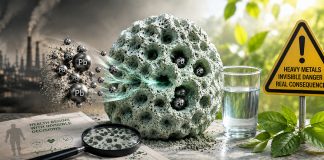
Frank Schmidt-Staub (FSS): “We overlook the causes and what has changed in the conditions of our lives today. In many diagnoses, medicine is still at the level of symptoms. We measure dopamine levels, prescribe medication and wait for an effect. But that’s not enough, because it doesn’t explain why the disease developed in the first place. We now know very well that environmental factors such as heavy metals, especially lead, arsenic, cadmium, arsenic and copper, pesticides and particulate matter play a significant role in Parkinson’s and other neurological diseases – and not just as one-off triggers, but also as long-term exposure that promotes inflammation in the nervous system. “
“In your practice, you therefore look beyond the classic medical grid.”
“Yes, I believe it is necessary to view the human being as an open system – not just what is visible in an MRI or a classic blood count. Many of my patients suffer from stress that can only be found through targeted laboratory diagnostics: increased concentrations of copper, lead, mercury and aluminum, for example. These substances have a neurotoxic effect and are often decisive factors in the progression of a disease – especially if they remain unnoticed in the body for years. A diagnosis that does not take this into account remains incomplete and this is unfortunately the case in most cases.
“So you’re not talking about extreme individual cases here?”
“Not at all. I see this pollution regularly. People absorb these substances through the air, water, food and also through cosmetics and dental materials. What is particularly problematic is that these heavy metals do not leave the body on their own – they accumulate, including in the brain. And this leads to chronic inflammation, mitochondrial dysfunction and ultimately to degeneration. These are important aspects that are an important part of the explanation as to why more and more people, especially younger people, are developing dementia.”
If the soil is sick, even the best seed will not sprout.
Frank Schmidt-Staub on the underestimated role of the intestinal barrier in the treatment of neurological and psychiatric diseases
Gut-brain axis Gut-blood axis & microbiome: Why health starts in the gut
“It is now becoming increasingly clear that the gut is not only responsible for digestion. What exactly does the gut have to do with neurological and psychiatric disorders?”
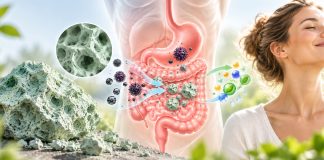
“A lot – more than most people think. The gut is directly connected to the brain via the so-called gut-brain axis, for example via nerve connections, immune cells and messenger substances. 95 percent of the body’s serotonin is produced in the gut – the neurotransmitter that is essential for our mood, our drive and our mental balance. If something gets out of balance in the gut, we often feel it psychologically first: through depression, anxiety, concentration problems or inner emptiness. This is also one of the reasons why so many people today suffer from so-called “burn-out”. This is not an imaginary fashionable condition, but a serious syndrome that needs to be taken seriously.”
“And the trigger is often in the microbiome?”
“Exactly – but not only there. There is still a big misunderstanding here, partly due to the somewhat superficial media coverage: the microbiome is of course extremely important, it is like a highly sensitive community that lives in a stable environment – a kind of “biological garden”. But this garden can only thrive if the soil is also healthy. And this soil is the intestinal barrier and the intestinal-blood barrier. If they become permeable – for example due to environmental toxins, heavy metals, light metals, medication or highly processed foods – chronic silent inflammation occurs, which not only affects the gut, but the entire system – including the brain.”
“So for the microbiome to work, the intestinal barrier has to be healthy first?”
“Yes, that’s right. That’s why I don’t think it’s a good idea to simply take pro- or prebiotics indiscriminately in the hope of strengthening the microbiome. If the soil is sick, even the best seed will not sprout. Many patients suffer from a permeable intestinal wall without realizing it – so-called leaky gut syndrome, which is estimated to affect around 12 million people in Germany alone. Irritable bowel syndrome, which is associated with similar mechanisms, is also often underestimated.
So before a targeted microbiome build-up can begin, the intestinal wall, intestinal mucosa and the intestinal-blood barrier must be regenerated. Only then can a stable, healthy microbiome develop. Today, there are very well-evaluated, simple diagnostic tests that can reliably detect a disturbed barrier function – we also offer these in our practice. They help to create customized treatment plans instead of supplementing at random. This not only saves time, but also leads to better, more sustainable results. “
“Do you experience such connections in your daily practice?”
“More and more frequently. The picture has changed dramatically in the last ten to fifteen years. Today, I hardly see any patients – especially among younger people – who are not exposed to some form of environmental pollution. This ranges from heavy metals such as copper, lead or aluminum to microplastics, which have now been proven to be able to cross the blood-brain barrier, to ammonium, which in turn is caused by increased ammonia levels in the body – an underestimated toxin that is increasing massively due to modern nutrition. And, as already mentioned, this is increasing the number of leaky gut and irritable bowel syndrome patients, who subsequently develop neurological and/or psychiatric disorders.”
“What is ammonium?”
“I know that very few people have heard of it. Ammonium is a metabolic waste product that is produced during protein utilization in the intestine – in itself a completely normal process. However, due to the greatly increased consumption of meat and the denatured quality of food, the body now produces far too much of it. This initially produces ammonia, which acts like a neurotoxin in the body – and which is quickly converted into ammonium at a neutral pH value. Many people feel constantly tired, dizzy and listless – without realizing that they are simply poisoning themselves internally.”
“How do you counteract these poisonings? You’re using zeolite here?”
“Yes, of course. Zeolite has proven to be highly effective in my practice – especially in removing ammonium, but also in binding and eliminating heavy metals and environmental toxins. Zeolite works via ion exchange – exactly where ammonium as a positively charged ion (NH4+ – Editor’s note .) can be bound and discharged. We now use it almost compulsorily because so many patients are contaminated – and very successfully.”
“Can you give us an example of this?”
“Of course. I particularly remember a patient with severe depressive symptoms and neurological abnormalities. Her laboratory values showed a massively increased copper load that had gone unnoticed for years – I had never seen such a high load either! It turned out that the patient had worked in a cable factory in the 1990s, where she had naturally come into contact with copper on a daily basis. We carried out a targeted detoxification treatment with zeolite – three cycles of four weeks each, with breaks in between. After that, the copper levels were in the normal range – and the symptoms gradually disappeared with them. We then carried out oral chelation therapy with alpha-lipoic acid and glutathione, supplemented with targeted micronutrients to support detoxification – including vitamin C, methionine, selenium, coenzyme Q10 and phytochemicals. She was also given high doses of vitamin C intravenously once or twice a week. Finally, zeolite was used – at a later stage than mobilization – to bind the excreted toxins in the intestine and prevent reabsorption. After three elimination cycles, the copper levels were within the normal range – and the symptoms gradually disappeared along with them. ”
“That’s a real zeolite cure. What do you have to bear in mind?”
“Such cures should not be carried out on your own! You need a sound diagnosis and, ideally, medical supervision. And above all: you should only use a certified medical product for zeolite cures – not just any powder or capsules from the internet without proof of origin, just because they are cheap. I therefore deliberately work with PMA zeolite from PANACEO because it is the only one that has been tested in clinical studies for its effectiveness and safety and guarantees the necessary quality. That is crucial for me as a doctor.”
You should only use a certified medical product for zeolite cures – not just any powder or capsules from the Internet without proof of origin, just because they are cheap.
Frank Schmidt-Staub on the responsible use of zeolite in medical detoxification
New approaches to therapy: rTMS, neurofeedback and ketamine
“Once your patients have regained some organic balance thanks to these basic measures, the therapy continues. In addition to diagnostics and detoxification, you also work with a variety of state-of-the-art neurological-physical procedures – pioneering methods, as we know, which have not yet been adopted by many conventional practices. What exactly do you use?”
“Among several other neuromodulation methods, I mainly use repetitive transcranial magnetic stimulation, or rTMS for short, as well as neurofeedback and – with great success – ketamine therapy. These methods are based on completely different principles, but they have one thing in common: they offer opportunities to intervene therapeutically where medication often no longer helps.”
“We would like to know more about that. Let’s start with magnetic stimulation. What makes rTMS so special?”
“rTMS is a non-invasive method in which certain regions of the brain are stimulated with electromagnetic impulses. No substance is administered – we work purely physically. In cases of depression, for example, activity in the left prefrontal cortex is often reduced. rTMS can specifically activate this region and thus alleviate depressive symptoms – often quickly noticeable, sometimes even after just a few sessions that only last a short time. rTMS is also an increasingly important therapeutic component for chronic pain, obsessive-compulsive disorder or post-traumatic stress and has been investigated in thousands of studies.”
“And what is neurofeedback?”
“Neurofeedback is a kind of self-training for the brain. Neurofeedback can automatically influence brain activity – with the help of EEG recordings and direct feedback in real time. It is particularly helpful for ADHD, anxiety disorders, sleep problems, but also for cognitive deficits. The method is gentle, has no side effects and strengthens self-regulation – i.e. the brain’s ability to bring itself back into balance. Incidentally, it is the oldest neuromodulation method and has been extensively scientifically proven.”
“Ketamine is a much-discussed topic – also because of its original use as an anesthetic. Can you explain this in more detail?”
“Ketamine is a very exciting substance with great potential – provided it is used correctly! In psychiatry today, we use ketamine primarily for treatment-resistant depression. The special thing about it: Ketamine works quickly – often within hours – and in a completely different way to traditional antidepressants. It virtually opens a window in the brain in which new neuronal connections can form. I therefore usually combine it with therapeutic conversations, rTMS or neurofeedback – to stabilize the effect and integrate it into everyday life.”
“So you work on several levels at the same time?”
“Yes – because life itself ultimately also works on several levels. Depression is never just a serotonin deficiency. It has biological, psychological and social causes – and it needs a therapy that addresses precisely that. That’s why I combine biophysical methods with talk therapy, micronutrients and detoxification. Everything interacts – and that’s what makes the difference.
We have to learn to protect ourselves again” – Frank Schmidt-Staub on prevention, responsibility and the courage to change
“Listening to you, one gets the feeling that our medicine has to change fundamentally?”
“Yes, it has to. We are experiencing a drastic increase in neurological and psychiatric illnesses – and not because people have suddenly become weaker, but because the stress levels have increased: Environmental-toxic, also emotional and social. And we are still reacting to this with too much routine, with far too little research into causes and treatment of causes. If we as doctors don’t change our way of thinking soon, we will be overwhelmed by a wave of chronically ill people in the next few years that we will no longer be able to cope with. This is already becoming drastically apparent, just look at the overburdening of health insurance companies and the care sector. Blaming it all on the increasing ageing of our society is one-eyed and fatal. Around 10 percent of Alzheimer’s patients today are under the age of 60, and the situation is even worse with Parkinson’s disease: There are already patients here who are only in their mid-20s or early 30s.”
Prevention is no longer a wellness issue – it is a survival strategy.
Frank Schmidt-Staub on the changes in medicine in times of increasing environmental pollution
“What can you do? What would be the first step?”
“The first step is always education. This is where the media and information portals on the internet like yours are needed. We need to empower people to understand their bodies again – and to protect them. This includes knowledge about the gut, the microbiome, environmental toxins, nutrition, but also about our own psyche. It is no longer enough to wait passively for help. Prevention is no longer a “wellness issue” – it is a survival strategy!”
“What can I do as an individual? And where should I start?”
“With the gut! A healthy gut is the basis for everything – for the immune system, for the brain, for emotional stability. I recommend a combination of detoxification with zeolite, building up the microbiome and a conscious lifestyle: exercise, a healthy diet, sleep and social interaction are immanently important. And zeolite can be an important door opener here – to clean up first, relieve the gut and stabilize the foundation.”
“Mr. Schmidt-Staub, as a doctor, what do you wish for the future of medicine?”
“I wish I had more courage. Courage to think outside the box. Courage to break new ground. And the courage to see people in their entirety – not as a bundle of symptoms, but as a complex, sensitive, adaptive being. The medicine of the future will not be technical or chemical. It will be networked – biologically, emotionally, ecologically. And it will put people back at the center. In my view, everything else is outdated.”
“Mr. Schmidt-Staub, thank you very much for this informative interview!”

 Frank Schmidt-Staub is a specialist in psychiatry and psychotherapy, a specialist in neurology and a specialist in neurology, and runs a practice in Hanover with a wide range of activities. In addition to neurodegenerative diseases such as Alzheimer’s, dementia, Parkinson’s and post-stroke conditions, his main focus is on psychiatric and psychological conditions such as anxiety disorders, depression, burnout, trauma management, pain syndromes, autism, ADHD, schizophrenia and addiction. Frank Schmidt-Staub and his team use an impressive range of medical options in diagnostics and therapy for their patients.