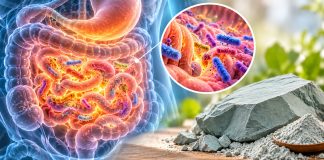
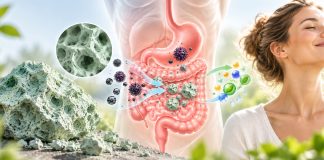
A new clinical study has now shown that the active ingredient PMA zeolite can significantly reduce inflammation in periodontitis and have a positive effect on the oral microbiome. Against this background, ZEOLITH WISSEN spoke with Dr. Hans Krehn, physician, dentist, and specialist in oral and maxillofacial surgery, as well as an expert in prevention with practices in Hamburg and Budapest. In the interview, the renowned physician explains why the mouth must be considered a “constantly open wound,” what role environmental pollution and our microbiomes play—and why new, non-antibiotic therapeutic approaches are urgently needed.
Zeolith Wissen (ZW): “Dr. Krehn, in the preliminary discussion for this interview, you said something that was initially confusing: ‘The mouth is an open wound.’ What do you mean by that?”
Dr. Hans Krehn (HK): “It’s quite simple: if you look at the oral cavity anatomically and biologically, it becomes very clear very quickly: Our mouth is constantly open and in permanent contact with the outside world. We use it to take in food, water, and air—and thus inevitably also environmental pollutants, germs, harmful substances, and a wide variety of microorganisms. If gum inflammation or even periodontitis occurs, deep gum pockets develop. These pockets are nothing more than chronically inflamed, open wounds. Bacteria, their metabolic products, and inflammatory mediators can enter the bloodstream unhindered through these areas. Think of it as a permanently open gateway into the body—and that is precisely why periodontitis is so dangerous.”
ZW: “Many people still consider periodontitis to be purely a dental problem that can be neglected for a long time. Why do you think this is wrong?”
HK: “Because periodontitis is a chronic inflammatory disease and inflammation never remains localized. The gums are very well supplied with blood. Anything that develops there spreads relatively quickly throughout the entire body. We now know that periodontitis is associated with an increased risk of cardiovascular disease, diabetes, rheumatic diseases, respiratory diseases, and even neurodegenerative diseases. This is not just a theory, but has been well documented by numerous studies. Added to this is the enormous psychological strain on those affected. Loose teeth, tooth loss, pain, bad breath: all of this often leads to social withdrawal, shame, and psychological stress. Periodontitis not only destroys the periodontium, it can also have a massive impact on overall health and quality of life.”
ZW: “The oral microbiome is now also frequently discussed in scientific circles. What role does this oral microbiome play in periodontitis?”
HK: “A very central one. Several hundred species of bacteria live in the oral cavity, which are normally in a balanced equilibrium. This equilibrium protects us. However, if dysbiosis occurs, i.e., a shift in favor of pro-inflammatory germs, a creeping process begins. These germs produce toxins, acids, and pro-inflammatory substances. At the same time, the immune system is permanently activated. The inflammation then perpetuates itself. What is particularly problematic is that these germs do not remain in the mouth. They can enter other organs via the bloodstream. Today, we are seeing more and more clearly that oral dysbiosis can have an impact on the gut microbiome—and thus on the entire immune system. The mouth is, in a sense, the first section of our digestive tract, and any imbalance here has consequences.”
ZW: “What role do environmental pollutants, such as fine dust, pesticides in our food, or heavy metals, play in this context?”
HK: “A greater one than most people are aware of. Heavy metals, environmental toxins, fine dust, pesticides, and many other pollutants, most of which are man-made, assault our organism on a daily basis. All these substances promote inflammation, weaken the mucous membranes, and impair the immune system. If a patient also has untreated periodontitis, the problem is exacerbated. The inflamed gum pockets facilitate the entry of these pollutants into the body. At the same time, the immune system is already busy fighting the chronic inflammation. This is an unfavorable combination. Periodontitis should therefore never be viewed in isolation. It is embedded in a person’s overall lifestyle. Nutrition, stress, environmental pollution, which we can only partially escape, and the general health of the individual always play a role.”
The mouth is not an isolated part of the body—it is a constantly open wound and thus a central gateway for inflammation, pollutants, and systemic diseases.
Dr. Hans Krehn
ZW: “Many people initially associate periodontitis with bleeding gums or bad breath. The actual damage often only becomes apparent at a very late stage – namely when teeth become loose or are lost. What exactly happens to our teeth when we have periodontitis?”
HK: “This is a very important point that is unfortunately often not explained sufficiently. Periodontitis is not a disease of the teeth themselves, but of the periodontium. This consists of the gums, special fibers, and the jawbone that anchors the tooth. Chronic inflammation gradually destroys these supporting structures. First, the gums recede, then the gum pockets deepen. Inflammatory, mostly anaerobic bacteria multiply in these pockets, further damaging the surrounding tissue. Bone loss is particularly critical. The inflammation activates processes that cause the jawbone to slowly resorb. The tooth literally loses its hold. It becomes loose—and is eventually lost, even though it may be completely healthy. Many patients are genuinely shocked by this. They say, “But my teeth were fine.” And that is often true. The problem is not the tooth itself, but the inflamed base on which it stands. You can think of it like a house: if the foundation is destroyed, even the most beautiful facade is useless.”
ZW: “So tooth loss is not a sudden event, but the final stage of a long inflammatory process?”
HK: “Exactly. Tooth loss is never a coincidence or an acute event in periodontitis. It is the result of a process that often takes years to develop. The insidious thing about it is that this process causes hardly any pain for a long time. Many people only notice occasional bleeding gums or slight sensitivity. The fact that bone is already being broken down in the background goes unnoticed. By the time the tooth finally becomes loose, the damage is often already well advanced. That is why periodontitis is so dangerous: it destroys slowly, quietly, and permanently. And that is precisely why early diagnosis and consistent treatment are so crucial—not only to preserve teeth, but also to prevent chronic inflammation throughout the body.“
ZW: ”Traditionally, periodontitis has often been treated with antibiotics. Why is this approach reaching its limits or losing importance today?”
HK: “Antibiotics are effective against bacteria, but they also alter the microbiome – not only in the mouth, but throughout the entire body. In recent years, numerous, sometimes groundbreaking new findings have emerged in this area of science. In addition, we are seeing increasing antibiotic resistance. This means that the effect is diminishing, but the side effects remain. Periodontitis is also not purely an infection problem. It is a complex inflammatory disease in which the environment is crucial. If I don’t change the environment, antibiotics alone will not help. That’s why we need new, complementary approaches that work locally, respect the microbiome, and do not promote resistance.”
ZW: In connection with the strain on the body caused by the condition of the teeth, the question of old amalgam fillings that are still present often arises. They are considered toxic – at the same time, we hear time and again that removing them can be problematic. What is your view on this from a medical perspective?”
When amalgam is drilled out, mercury vapors and fine particles are released, which can enter the body via the mucous membranes and lungs and place additional strain on the organism. Therefore, amalgam should not be removed routinely and not without clear medical indication.
Dr. Hans Krehn
HK: “Amalgam is indeed not a harmless material. Among other things, it contains mercury, which we must view critically from an environmental health perspective. At the same time, it is important to take a very differentiated approach here and not to stir up fear. Many people have had amalgam fillings for decades without experiencing any acute symptoms. In such cases, ill-considered removal can do more harm than good. When amalgam is drilled out, mercury vapors and fine particles are released, which can enter the body via the mucous membranes and lungs and place additional strain on the organism. Therefore, amalgam should not be removed routinely and without clear medical indication. If removal is necessary—for example, in the case of defective fillings or specific symptoms—it should only be done under strictly controlled conditions with appropriate protective measures for both the patient and the practitioner. Panic is not a good advisor here. What is crucial is an individual assessment of the situation, good information, and responsible handling of possible stressors.“
ZW: ”Thank you very much for this important information. Let’s get back to periodontitis: A new clinical PMA zeolite study is currently attracting attention. How do you assess these results?“
HK: ”In my opinion, this study is very interesting. It shows that PMA zeolite can improve clinical parameters such as pocket depth, bleeding status, and plaque index, as well as positively influence the oral microbiome. I find it particularly noteworthy that inflammation-associated germs decreased significantly, while health-promoting bacteria increased. This suggests that it is not individual bacteria that are being “combated” here, but rather the entire environment that is being changed. The subjective improvement experienced by many patients is also clinically relevant. When patients experience less pain, less bleeding, and a better feeling in their mouth, this is an important success, especially in the case of a chronic disease.”
If we want to curb inflammation in the long term, we need to change the environment—this is exactly where PMA zeolite can provide meaningful support: locally in the mouth and systemically in the body.
Dr. Hans Krehn
ZW: “In your opinion, what role can PMA zeolite play in periodontitis therapy?”
HK: “I see it as an additive, i.e., additional, non-pharmacological measure. PMA zeolite is known to bind pollutants, bacterial metabolites, and heavy metals such as mercury, lead, cadmium, and arsenic. This relieves the inflammatory environment. In practice, it has been shown that both local application—for example, via PMA zeolite toothpaste—and systemic intake can be useful. The quality of the product is always important. This is because the effects of toothpaste on the bacterial ecosystem of the mouth are often overlooked. The right toothpaste keeps harmful bacteria at bay, protects the gums, supports digestion, and consequently has systemic effects on the entire organism. Ultimately, for me it’s not about “either/or,” but about an integrative approach: mechanical cleaning with appropriate materials, good oral hygiene, which reduces stress, and supportive measures such as PMA zeolite and, of course, certain probiotics to strengthen the microbiome itself.”
ZW: “You are a strong advocate of prevention. What is your most important message to our readers?”
HK: “Oral health is not a minor issue. It is a central component of overall health, including prevention. Anyone who ignores inflammation in the mouth risks long-term consequences that go far beyond the periodontium. Prevention means regular check-ups, good oral hygiene, a healthy diet, stress reduction, and an awareness that detoxification and microbiome balance play a role. In other words, health begins in the mouth. And the earlier we start there, the better we can prevent chronic diseases such as periodontitis.“
ZW: ”Of course, many people know that dental health is important. However, they shy away from necessary treatments not only because of fear of the dentist, but also because they simply cannot afford them. Extensive restorations or dentures in particular are hardly affordable for many. How do you experience this in your daily practice?“
HK: ”Unfortunately, this is a very real and growing problem. I repeatedly see patients who put off necessary treatment for years, not out of negligence, but for financial reasons. In many countries, dentistry has become a cost factor that is hardly affordable for a large part of the population. This is particularly tragic from a medical point of view, because untreated inflammation or missing dentures affect not only the local area, but overall health. Those who wait for financial reasons often end up paying a much higher price in terms of their health and emotional well-being.“
ZW: ”That’s why you developed a practice concept that addresses this very issue and breaks new ground. What was your motivation behind it?”
HK: “From the outset, my aim was to ensure that high-quality dentistry was not considered a luxury. Good medicine should not be a privilege, but should be made accessible to as many people as possible. Through our practices in Hamburg and Budapest, I can make this a reality. We combine the highest medical quality, modern technologies, and specialist expertise with structures that allow for significantly lower costs. This enables us to offer treatments that would otherwise simply not be feasible for many people. One thing is particularly important to me: trust. Patients should know that they are receiving the highest level of medical care—without compromising on quality, safety, or aftercare.“
ZW: ”That’s very good news. But of course, it doesn’t always have to come to that. That’s why you provide people with comprehensive advice on prevention in your regular online lectures. So, to summarize – chronic inflammation in the mouth, environmental pollution, disturbed microbiomes, and the limitations of conventional therapies – what role do you think PMA zeolite can play in fundamental terms?”
HK: “For me, zeolite, like prebiotics and probiotics, is not an isolated product, but part of a broader understanding of health. We live in a time of constant stress, caused by the environmental toxins, stress, nutrition, and chronic inflammation already mentioned. The body is increasingly reaching its limits. What the active ingredient PMA zeolite can do is provide targeted relief for this system. In periodontitis therapy, I therefore see PMA zeolite as a useful, complementary measure: providing local support, systemic relief, and without the disadvantages of long-term pharmacological solutions. For many patients, this is an important building block on the road back to greater stability, both in the mouth and throughout the body.”
ZW: “Dr. Krehn, thank you very much for this insightful conversation.”
Dr. Hans Krehn, MD – Sharing knowledge, providing guidance, promoting prevention
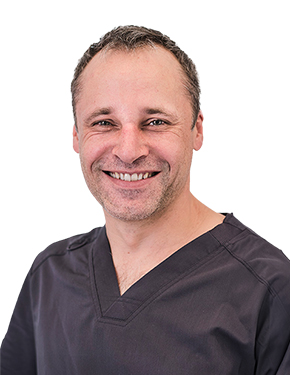 Dr. Hans Krehn is a physician, dentist, and specialist in oral and maxillofacial surgery. After studying human medicine and dentistry, he completed his specialist training at Charité – Universitätsmedizin Berlin. Today, together with his wife Dr. Veronika Krehn, also a dentist and specialist in oral and maxillofacial surgery, he runs an established practice in the heart of Hamburg and another practice in Budapest.
In addition to his clinical work, Dr. Krehn has been intensively involved in education and prevention for many years. He is particularly keen to explain complex dental issues in an understandable way and to empower patients to make informed decisions about their health.
With this in mind, Dr. Krehn offers regular online and hybrid lectures aimed at interested laypeople as well as those affected who would like more in-depth information. In these lectures, he talks about topics such as:
- Holistic dental health and prevention
- Periodontitis and its systemic consequences
- Modern therapy and treatment concepts
- Environmental pollution, inflammation, and microbiomes
- Options for high-quality, affordable dental prostheses
The lectures take place approximately every four weeks, are free of charge and non-binding, and offer participants the opportunity to ask individual questions. Dr. Krehn deliberately takes time for personal concerns and addresses the respective situations of the participants—without time pressure and without obligations.
The aim of these lectures is not to sell treatments, but to impart knowledge, provide guidance, and build confidence in the possibilities of modern dentistry. Because informed decisions start with good information.
Further information can be found on the websites of Dr. Hans Krehn and his practices:
Hamburg practice:
https://www.medi-kuss.de
Budapest practice:
https://medi-smile.com/en

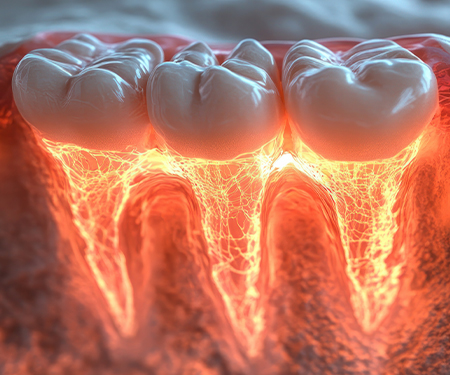 Periodontitis is one of the most common chronic diseases worldwide and, according to current data from the World Health Organization (WHO), ranks sixth among the most widespread diseases – yet this inflammatory disease, which affects not only the gums but also the jawbone, continues to be underestimated. It has long been known that an inflamed oral cavity is much more than a local gum problem. It can become the starting point for systemic inflammation, permanently strain the immune system, and promote diseases that at first glance appear to have nothing to do with teeth or gums. In particular, the development of cardiovascular diseases, especially coronary heart disease (CHD), is closely related to gum health.