The nutrient content is in free fall – and hardly anyone is talking about it
“An apple a day keeps the doctor away” – this is a saying that has shaped entire generations. But what if this very apple can no longer deliver what it once promised? When it still looks red, round and flawless, but inside it hardly contains what used to make it so valuable: vitamins, minerals, trace elements and therefore simply vitality, even for us humans. In fact, our food has changed dramatically over the last few decades. What we call “food” today often has little to do with “life”.
This silent devaluation of our food is not without consequences. After all, a demineralized diet low in vital substances has far-reaching effects on our health: the number of so-called diseases of civilization is increasing rapidly – including chronic fatigue, type 2 diabetes, cardiovascular diseases, neurodegenerative diseases such as Alzheimer’s, as well as skin problems, depression and increasing immune deficiency.
The once so hopeful phrase “An apple a day saves the doctor” – that’s the German version – seems almost bitterly ironic in this light.
From nutrient bomb to nutrient shell: what happened?
Our soils have long been exhausted: decades of monocultures, artificial fertilizers, pesticides and a lack of crop rotation have resulted in many arable areas containing hardly any minerals. And what is missing in the soil can no longer grow in fruit and vegetables. As a result, carrots, spinach, apples and broccoli now provide significantly fewer nutrients than they used to.
According to a much-cited US study by Donald Davis (2004), the nutrient content of 43 horticultural crops examined fell by an average of 15 to 38 percent between 1950 and 1999 – particularly in the case of calcium, iron, vitamin B2 and vitamin C.
 Other sources report that we would have to eat up to 100 apples today to get the same amount of vitamin C as we did 70 years ago with a single apple.
And broccoli? This former superfood is also listed in almost every nutrition guide as a prime example of a healthy vegetable. It would be nice! In many cases, broccoli is now just an empty, sad shell of what was once a powerhouse of vital nutrients. Studies show drastic decreases in the content of magnesium, calcium and vitamin A – all nutrients that are crucial for our energy metabolism, our bones and our immune system.
The second wave: destruction through industrial processing
Anyone who thinks they can compensate for the loss of nutrients through increased consumption will be disappointed again on closer inspection. This is because the modern food industry is doing its bit to destroy vital nutrients: fruit and vegetables are harvested unripe in order to survive the long transportation routes. This is followed by storage in cold stores, then on supermarket shelves and finally in the fridge at home. Many vitamins, especially the sensitive vitamin C, are irrevocably lost in the process. Cooking, pasteurizing, freezing and preserving do the rest.
What’s more: Many products that are sold to us as healthy are highly processed foods. At first glance, they appear practical and modern, but they no longer have anything to do with natural food. They contain hardly any fiber, but an above-average amount of sugar, artificial additives and problematic fats – especially so-called trans fats.
Trans fats are produced during the industrial hardening of vegetable oils and are particularly common in convenience products, baked goods, potato chips, margarine and fast food. They are considered particularly harmful to health because they promote inflammation, increase the “bad” LDL cholesterol and lower the “good” HDL cholesterol.
The European Food Safety Authority (EFSA) warns that even small amounts can increase the risk of cardiovascular disease. And all this in foods that are sold to us as modern, convenient and even healthy!
The silent collapse from the center: What our gut gets or doesn’t get
What the body doesn’t get, it can’t use. A nutrient-poor, fiber-free diet inevitably leads to a weakened intestinal flora. And with it, the finely balanced ecosystem that protects our health on a daily basis tips over. Studies show: A permanently poor diet massively changes the composition of our microbiome, weakens the protective functions of the intestinal barrier, promotes silent inflammation and makes the entire organism vulnerable.
The result: immunodeficiency, chronic inflammation, autoimmune reactions, mental exhaustion, allergies, skin problems – the gut is involved in everything, even if, logically, we don’t recognize this at first glance.
Because our gut is much more than just a digestive tube. It is the center of our health – closely connected to our brain, our liver, our lungs and our skin. The so-called gut-brain axis, the gut-liver axis, the gut-skin axis and the gut-lung axis show this: A weakened gut simply means a holistically weakened person.
Prime example of vitamin C – from scurvy to cell protection: why we are all undersupplied
Hardly any other substance illustrates the crisis of our food as well as vitamin C. It is a multi-talent: it strengthens the immune system, protects our cells from free radicals, supports the formation of collagen for healthy skin, blood vessels and connective tissue, promotes iron absorption in the intestines and even plays a role in the synthesis of important neurotransmitters such as noradrenaline and serotonin.
At the same time, it is one of the most sensitive vitamins: light, oxygen, storage, heating – all of these rapidly destroy it. The apple in the supermarket, the strawberry from the plastic bowl, the spinach after days in the fridge – they all provide only a fraction of what previous generations got from fresh fruit and vegetables.
What’s more: Unlike most animals, humans cannot produce vitamin C themselves. We lack a crucial enzyme, L-gulonolactone oxidase. We are therefore completely dependent on our dietary intake. And, as has been shown, this is often not enough. Particularly in phases of increased stress such as stress, illness, exposure to environmental toxins or during competitive sport, the requirement increases massively. At the same time, the intestine’s ability to absorb high oral doses decreases significantly. Only a fraction reaches the bloodstream.
This is why many doctors today recommend not only oral vitamin C supplements, but also infusions with high doses of vitamin C, especially for therapeutic use. These bypass the digestive tract and ensure that the cells are actually supplied with what they so urgently need.
Doctors are therefore increasingly having the vitamin C status of their patients specifically determined – with a clear result: hardly anyone still has healthy reference values, which should be between 6 and 15 mg/l serum. A sometimes drastic deficiency is much more common.
A good supply of vitamin C is also essential for mental health. This is because vitamin C is involved in the formation of the neurotransmitters serotonin and noradrenaline – the very neurotransmitters whose imbalance is associated with depressive disorders. Many experts therefore suspect that today’s widespread vitamin C deficiency could also be a factor in the increasing frequency of depressive moods and states of exhaustion.
But it’s not just vitamin C that is in short supply – other nutrients are also lacking
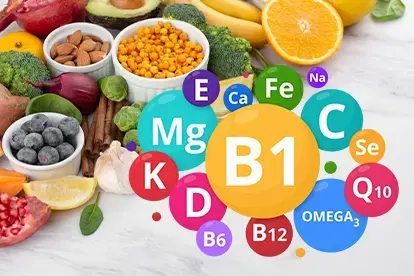 In addition to vitamin C, other essential substances are also in short supply today. Numerous studies show this: Around two thirds of the world’s population do not consume enough calcium. The situation is no better for magnesium, iron, zinc, folic acid, vitamin D and vitamin B12: These deficiencies not only affect developing countries, but also western industrialized countries.
The symptoms? They go far beyond an occasional low mood. Those who take in too little iron or vitamin B12 often feel permanently tired and listless. A lack of zinc or vitamin D can weaken the immune system, so that infections become a permanent loop. Folic acid deficiency can impair concentration, while magnesium and calcium deficiency can lead to muscle weakness, cramps and bone loss.
The external appearance also suffers: Hair loss, pale skin, brittle nails – they are all often an expression of an invisible nutrient deficiency. And if the deficiency persists for a long time, the body begins to suffer at the deepest level: Chronic diseases, silent inflammation, hormonal imbalances and accelerated ageing of all systems are imminent.
The drama with lithium: the silent trace element with a big impact
Lithium as an essential trace element is hardly known, but is being discussed more and more frequently. It is found in nature in minute quantities and was once naturally present in drinking water and plant food due to the mineral-rich soil. Today, it has almost or even completely disappeared in many places – with potentially far-reaching consequences.
The well-known physician and researcher Dr. Michael Nehls has already tirelessly pointed out that a chronic lithium deficiency could accelerate neurodegenerative development in old age – including dementia. This is because lithium fulfills several key functions in the body: It has a neuroprotective effect, can promote the formation of new nerve cells and has a stabilizing effect on mood. Studies show that, in low doses, it can have a positive influence on the course of neurodegenerative diseases.
It is also particularly worrying that a long-term deficiency of lithium is also associated with the development of affective disorders, especially so-called bipolar disorders. In clinical medicine, lithium has been used successfully for decades to stabilize manic-depressive phases. Some researchers now suspect that the increasing disappearance of this element from our diet could be a previously underestimated risk factor for the rising number of mental illnesses.
Lithium is therefore recommended by some holistic doctors as a preventative measure in very small quantities – known as microdosing. A silent return of an ancient trace element – with great potential for our mental health.
What to do? Supplementation as a realistic way out?
Anyone who thinks they can still provide themselves with everything their body needs through a balanced diet alone is living in an illusion. Even organic products can only be as good as the soil on which they grow. What’s more, certain institutions are still almost stoically saying that a “healthy and balanced diet” is enough and that any form of nutritional supplementation is superfluous. However, such statements, as widespread as they may be, are simply no longer tenable in today’s reality – and dangerous to boot.
This is because they lull people into a false sense of security. This outdated information prevents early supplementation – and means that deficiencies often go undetected and untreated.
The health consequences not only affect the individual, but ultimately also impact our already overburdened healthcare system. After all, chronic exhaustion, increased susceptibility to infections, cognitive problems and depression not only mean suffering for those affected, but also rising costs for the entire system.
That’s why many experts today specifically recommend dietary supplements – as a sensible and necessary addition to a healthy diet. This does not mean blindly swallowing everything that the advertising promises! Instead, fill up what is missing. Laboratory values can help to create an individual profile.
Zeolite: The underestimated secret weapon for our gut
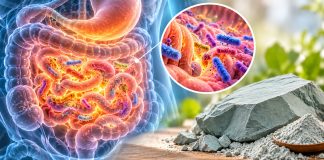
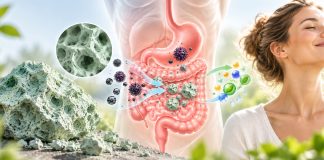
Zeolite, the natural form clinoptilolite for use in humans and animals, is a fascinating mineral of volcanic origin – and for many people still a real insider tip that is thankfully becoming increasingly popular: The micro-fine lattice structure of the zeolite rock acts like a sponge: it can bind harmful substances such as the metabolic waste product ammonium, heavy metals such as cadmium, lead, arsenic or nickel, the light metal aluminum, pesticide residues and other environmental toxins in the intestine and safely eliminate them from the body. But that is only part of its effect!
At the same time, zeolite releases valuable minerals such as magnesium, calcium and bioavailable silicon to the body in the form of orthosilicic acid – substances that our bodies often lack today. Zeolite therefore not only contributes to detoxification, but also to remineralization.
It is particularly important to know the connection between the microbiome, which is currently on everyone’s lips, and the intestinal wall as its basis: a healthy microbiome – i.e. the entirety of the “good” intestinal bacteria – can only flourish if the environment is also right. And this includes, above all, an intact intestinal barrier.
This in turn consists of several protective layers: the actual intestinal wall with its tight junctions, the mucous membrane and the intestinal immune system. If this protective wall becomes permeable due to toxins, stress or an unfavorable diet, experts speak of so-called leaky gut – a condition that promotes numerous complaints and chronic diseases.
Zeolite can play a key role here: By keeping harmful substances out of the intestine, it strengthens the barrier function and thus creates an environment in which the microbiome can stabilize and recover. For this reason, zeolite has long been regarded in innovative clinics and practices not only as a “detoxifier”, but also as an integral part of holistic intestinal and health concepts.
In addition, zeolite can be a simple and long-lasting companion: High-purity zeolite products – especially those that are approved as certified class IIb medical products, such as the well-known PMA zeolite – can be taken permanently or as part of cures without putting any strain on the body. On the contrary: many people report more energy, better digestion and a strengthened immune system.
Time for a new slogan – and a new awareness
We therefore need to rethink and act more responsibly. Instead of “An apple a day keeps the doctor away”, today it would probably be more appropriate to say: “A clean gut and smart nutrients keep your health intact.” Or in other words: “A healthy gut and smart nutrients keep you really healthy.”
Because times have changed. Our food still looks like it used to – but its insides are empty. The shiny shell belies the loss of vital nutrients. What we used to take for granted, we now have to consciously supplement, protect and care for ourselves. This is why it is essential to implement prevention into our lives from an early age. So it’s time to think, examine and act for ourselves again. For ourselves. For our gut. For our own future.
Studies and literature on the subject:
https://pubmed.ncbi.nlm.nih.gov/15637215
https://pmc.ncbi.nlm.nih.gov/articles/PMC2768965
https://www.mdpi.com/2076-3921/12/2/231
https://pmc.ncbi.nlm.nih.gov/articles/PMC4617723